Rubber Tapping: The Process of Harvesting Natural Latex
The production of natural rubber begins with a precise agricultural process known as tapping. This method involves the strategic extraction of latex—a milky fluid—from the trunks of rubber trees. To ensure a sustainable yield and high-quality raw material, tappers must employ specific techniques that balance efficiency with the health of the tree.
The Art and Science of Tapping
To harvest latex, a skilled tapper removes a thin layer of bark along a downward half-spiral on the tree trunk. This created area, known as the tapping panel, is designed to allow the latex to flow downward into a collecting cup. When performed with precision, a single panel can yield latex for up to five hours.
To allow the tree to recover, tappers rotate their work; once one side is exhausted, they tap the opposite side, giving the first side time to heal over.
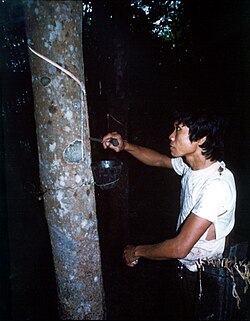
Timing and Temperature
Timing is critical in the harvesting process. Tapping is typically conducted at night or in the very early morning before temperatures rise. This is because cooler temperatures delay coagulation—the process where the liquid latex thickens and solidifies—allowing the fluid to drip for a longer period before the cut is naturally sealed.
Latex Collection and Preservation
Depending on the intended final product, the method of collection and the chemicals used vary. In some instances, an ammonia solution is added to the collecting cup to prevent natural coagulation, keeping the latex in a liquid state for longer periods.
In many Malaysian plantations, traditional cups have been replaced by plastic bags containing a coagulant. This specific form of latex serves as the raw material for latex concentrate, which is essential for manufacturing ribbed smoke sheet grades and various dipped rubber products.
Processing Coagulated Latex
When latex is allowed to coagulate naturally in the cup, it is referred to as cup lump. This material is collected and processed into block rubbers known as technically specified rubbers (TSRs). A byproduct of this coagulation process is the serum, which contains a high concentration of quebrachitol, a type of cyclitol or cyclic polyol.
Intensive and Destructive Tapping Methods
As rubber trees reach the end of their productive lifespan, growers may employ intensive tapping. This involves maximizing the remaining latex yield through frequent tapping, the use of yield simulants, and making double cuts shortly before the tree is cut down.
Historically, a more aggressive method known as slaughter tapping was used in the late nineteenth century. This was a destructive practice designed to extract the largest possible quantity of natural latex regardless of the tree's survival.
Key Facts
- Tapping Panel: A thin layer of bark removed in a half-spiral to guide latex into cups.
- Optimal Timing: Night or early morning to prevent premature coagulation.
- Preservation: Ammonia solution is used to maintain the liquid state of latex.
- TSRs: Technically Specified Rubbers produced from naturally coagulated "cup lumps."
- Chemical Byproduct: The serum from coagulation is rich in the cyclic polyol quebrachitol.
| Method/Material | Additive/Tool | Primary End Product |
|---|---|---|
| Liquid Preservation | Ammonia Solution | Latex Concentrate / Dipped Products |
| Coagulated Collection | Plastic bags with coagulant | Ribbed Smoke Sheets |
| Natural Coagulation | None (Cup Lump) | Technically Specified Rubbers (TSRs) |
Frequently Asked Questions
Why is rubber tapped at night or early in the morning?
Tapping occurs during cooler hours to prevent the latex from coagulating too quickly. Lower temperatures allow the latex to drip for a longer duration before the cut seals.
What is the difference between cup lump and latex concentrate?
Cup lump is naturally coagulated latex used to create block rubbers (TSRs), while latex concentrate is derived from preserved liquid latex and used for dipped rubber products.
What is quebrachitol?
Quebrachitol is a cyclitol (or cyclic polyol) found in the serum that remains after latex has undergone coagulation.
What is the purpose of the spiral cut on the tree?
The downward half-spiral ensures that the latex flows efficiently down the trunk and into the collecting cup.
How does intensive tapping differ from slaughter tapping?
Intensive tapping is a method used on older trees just before they are cut to maximize final yields. Slaughter tapping was a destructive historical practice from the 19th century used to extract maximum latex at the expense of the tree.