Royal Regiment of Artillery
The Royal Regiment of Artillery is a cornerstone of the British Army, serving as the primary provider of artillery support for the United Kingdom's land forces. From its early days as marching companies to its current role as a high-tech force utilizing unmanned aerial systems and precision rockets, the regiment has evolved alongside the science of warfare. Guided by the motto Ubique Quo Fas Et Gloria Ducunt ("Everywhere That Right And Glory Lead"), the regiment is unique in that its guns are regarded as its regimental colours.
Key Facts
- Active Since: 1716
- Current Headquarters: Larkhill Garrison, Wiltshire
- Captain-General: King Charles III
- Structure: 13 Regular regiments and 5 Reserve regiments
- Primary Role: Artillery, including air defence and surveillance
- Distinctive Tradition: The guns serve as the regimental colours
Historical Evolution
Formation and Early Years (1716–1799)
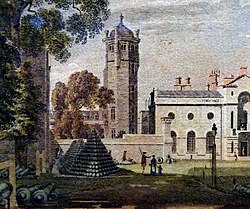
The regiment's origins trace back to marching companies that were renamed the "Royal Artillery" in 1720. On April 1, 1722, these were grouped with independent units from Gibraltar and Menorca to officially form the Royal Regiment of Artillery under its first commander, Colonel Albert Borgard. Early operations were lean; by 1720, the entire British establishment consisted of only 41 master gunners and 178 assistants.
To professionalize leadership, a cadet company was established at the Royal Military Academy (RMA) Woolwich in 1741. This institution trained officers for the regiment, the Royal Irish Artillery, and the East India Company. By 1780, the regiment had grown significantly, comprising 32 companies across four battalions, including the Royal Artillery Band, with a total strength of 5,241 personnel.
The Napoleonic Era and 19th Century Expansion
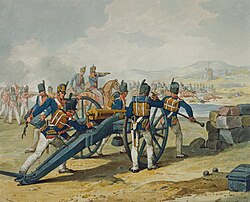
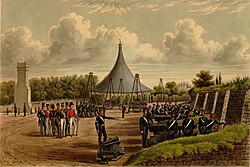
The regiment played a pivotal role in all major campaigns of the Napoleonic Wars. This era saw the introduction of the Congreve rocket, a solid-fuel projectile based on Indian designs. These rockets were used during the War of 1812 and are famously referenced in the United States national anthem, "The Star-Spangled Banner."
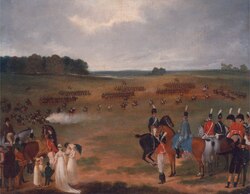
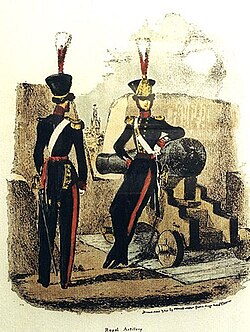
Administrative shifts occurred in 1855 when the Board of Ordnance was abolished, transferring the Royal Artillery to the British Army under the War Office. Further expansion occurred in 1862 when the artillery functions of the dissolved East India Company were absorbed. By 1872, the regiment's strength had surged to 34,943 men and officers across horse, field, and heavy batteries.
The World Wars and 20th Century Integration
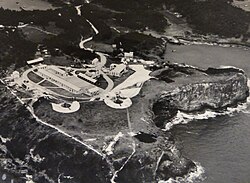
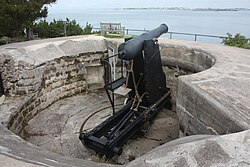
The early 20th century was marked by reorganization. In 1908, the Territorial Force was created, and the Militia became the Special Reserve. While many Home units were disbanded in 1909, some colonial units, such as the Bermuda Militia Artillery, remained vital to imperial fortress defense.
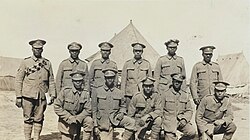
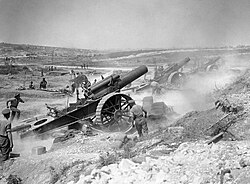
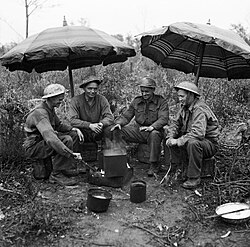
During World War I, the regiment utilized heavy weaponry like the BL 8-inch Howitzer. Following the war, the various branches—the Royal Field Artillery (RFA), Royal Horse Artillery (RHA), and Royal Garrison Artillery (RGA)—were amalgamated back into a single regiment in 1924. World War II saw the regiment reach a massive scale, with over 1 million men serving across 960 gunner regiments.
Modern Capabilities and Equipment
Today, the Royal Artillery is a versatile force capable of performing a wide array of specialized roles. These include ISTAR (Intelligence, Surveillance, Target Acquisition, and Reconnaissance), air defence, and the operation of multiple launch rocket systems.
Current Operational Roles
- Commando and Airborne Artillery: Specialized units like the 29th Commando Regiment RA provide support for the UK Commando Force, utilizing L118 105 mm light guns.
- Self-Propelled Artillery: Heavy mobile firepower for rapid deployment.
- Air Defence: Protecting ground forces from aerial threats.
- Surveillance: Utilizing unmanned air systems (UAS) for target acquisition.
Weaponry and Technology
The L118 light gun remains a staple for close support, operated by several regular and reserve regiments. Historically, the regiment also managed nuclear-capable artillery, including the M109 and M110 howitzers, as well as tactical ballistic missiles like the Corporal, Honest John, and Lance during the Cold War era.
| Category | Details |
|---|---|
| Regular Regiments | 13 |
| Reserve Regiments | 5 |
| Key Current Weapon | L118 105 mm Light Gun |
| Headquarters | Larkhill Garrison (since 2003) |
| Ceremonial Unit | King's Troop, Royal Horse Artillery |
Legacy and Remembrance
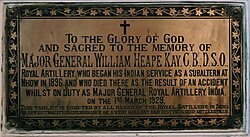
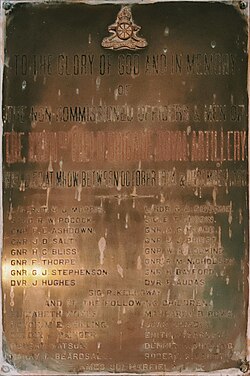
The regiment maintains a strong connection to its global history. Memorials to fallen gunners can be found worldwide, including plaques in Christ Church, Mhow, honoring officers like Major General William Heape Kay and the men of the 27th Field Brigade.
Frequently Asked Questions
What are the "regimental colours" of the Royal Artillery?
Unlike many infantry regiments that carry flags as their colours, the Royal Regiment of Artillery regards its guns as its regimental colours.
Who is the current Captain-General of the regiment?
The current Captain-General is King Charles III.
Where is the Royal Artillery based?
While historically based in Woolwich, the headquarters moved to Larkhill Garrison in the Salisbury Plain Training Area in 2003. However, the King's Troop, Royal Horse Artillery, relocated back to Woolwich in 2012.
What is the role of the 29th Commando Regiment?
The 29th Commando Regiment (The Commando Gunners) provides artillery support for the UK Commando Force, primarily using L118 105 mm light guns.
What was the significance of the Congreve rocket?
The Congreve rocket was one of the first solid-fuel projectiles used by the British Army, notably employed during the War of 1812.