Royal Naval Reserve
The Royal Naval Reserve (RNR) is the United Kingdom's volunteer naval reserve, serving as a critical extension of the Royal Navy. From its origins as a register of professional mariners to its modern role as a provider of specialist support, the RNR has evolved to meet the changing demands of global maritime security and national defense.
Key Facts
- Established: 1859 via the Naval Reserve Act.
- Allegiance: King Charles III.
- Primary Role: Volunteer Reserve providing reinforcements for the Royal Navy.
- Current Leadership: Commander Maritime Reserves (Commodore Jo Adey) and Commodore-in-Chief (Prince Michael of Kent).
- Distinctive History: Originally composed of professional Merchant Navy and fishing fleet sailors.
The Origins and Establishment of the RNR
The roots of the RNR trace back to the Register of Seamen created in 1835. However, the Crimean War of 1854 revealed a significant flaw: only 400 men volunteered for duty out of 250,000 registered. This inefficiency prompted a Royal Commission on Manning the Navy, leading to the Naval Reserve Act 1859.
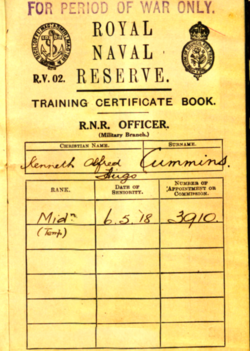
This legislation formally established the RNR as a reserve of professional seamen from the British Merchant Navy and fishing fleets. While initially limited to seamen, the service expanded in 1863 to include the recruitment and training of reserve officers, who were distinguished by unique lace uniforms featuring interwoven chain stripes.

The Rise of the Volunteer Reserve (RNVR)
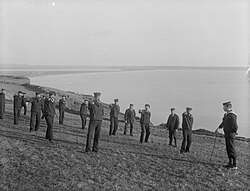
By the early 20th century, the Admiralty recognized that the RNR alone could not support a greatly expanded fleet. Many sailors in the merchant service were not British subjects, and the pool of professional officers had shrunk. To address this, the Royal Naval Volunteer Reserve (RNVR) was created by an Act of Parliament in 1903.
Unlike the RNR, which required professional sea experience, the RNVR was open to civilians with no prior maritime background. By the start of World War I, the RNVR had established six divisions in major UK ports.

The RNR and RNVR in Global Conflict
World War I
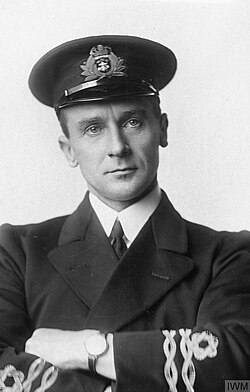
Upon mobilization in 1914, the RNR comprised 30,000 personnel. Officers took command of destroyers, submarines, and Q-ships, while others served in the battle fleet, including the West Indies Squadron. RNR fishermen played a vital role, operating trawlers converted into minesweepers, often facing high casualty rates.
World War II and the "Wavy Navy"
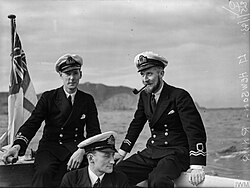
In 1936, the Royal Naval Volunteer (Supplementary) Reserve (RNV(S)R) was created for civilians with proven sea experience, such as yachtsmen, to provide a rapid mobilization cadre. By 1945, the RNVR had grown to 43,805 officers.
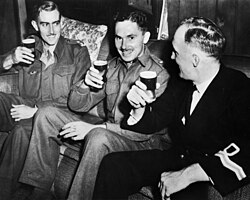
These officers became known as the "Wavy Navy" due to the 3/8-inch wavy sleeve rings used to distinguish them from regular Royal Navy (RN) and RNR officers. Initially assigned to convoy escorts and amphibious warfare, RNVR officers eventually gained equal footing with regular officers, serving on battleships and aircraft carriers.
Post-War Evolution and Amalgamation
Following World War II, the RNVR was reconstituted in 1946 with 12 divisions. During the Cold War, the RNVR took on a specialized role in coastal minesweeping, operating Ton-class minesweepers as part of the 101st Minesweeper Squadron, a commitment to NATO.
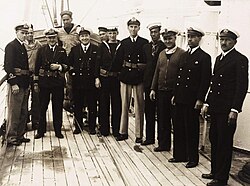
In 1958, the RNR and RNVR were amalgamated into a single service. While the RNR's legal identity was preserved, the structure primarily followed the RNVR model, consisting mostly of trained civilians rather than professional mariners.
Adapting to Modern Warfare
The Falklands War in 1982 led to the creation of the AW Branch to maintain a reserve of personnel experienced in handling large merchant ships. It also prompted the formation of the Public Affairs Branch (now Media Operations) to improve crisis communication.
Throughout the 1990s, defense reviews led to fluctuations in strength and the loss of independent sea-going capabilities. However, the Iraq War saw the return of mine-warfare roles and the creation of the Above Water Force Protection branch.
Modern Structure and Specializations
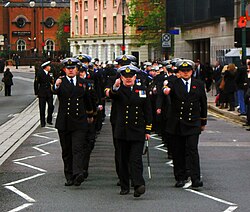
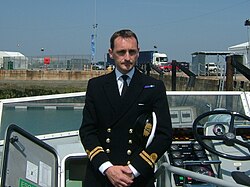
Today, the RNR provides a diverse pool of specialists to reinforce the Fleet. These are organized into several key branches:
- General Warfare (GW): Includes Mine Warfare, Amphibious Warfare, and Submarine Operations.
- Information Warfare (IW): Covers Intelligence, Cyber, and Media Operations.
- Supporting Functions: Logistics, Medical (including the Queen Alexandra's Royal Naval Nursing Service), and Chaplaincy.
- Air Branch: Open to ex-regulars for flying and engineering operations.

RNR Units and Presence
The modern RNR operates sixteen units across the UK, including HMS President in London, HMS Forward in Birmingham, and HMS King Alfred in Portsmouth.

| Component | Origin/Era | Primary Membership | Key Characteristic |
|---|---|---|---|
| RNR (Original) | 1859 | Professional Mariners | Merchant Navy/Fishing background |
| RNVR | 1903 | Civilians | "Wavy Navy" insignia |
| RNV(S)R | 1936 | Experienced Civilians | Rapid mobilization cadre |
| Modern RNR | 1958-Present | Mixed Volunteers | Specialist support and reinforcement |
Notable Members
The RNR has counted many distinguished individuals among its ranks, including the explorer Sir Ernest Shackleton, broadcaster Richard Baker, and the fourth officer of the RMS Titanic, Joseph Boxhall.
Frequently Asked Questions
What is the difference between the RNR and the RNVR?
Historically, the RNR consisted of professional sailors from the Merchant Navy and fishing fleets, while the RNVR was open to civilians with no prior sea experience. They were amalgamated into a single service in 1958.
Why was the RNVR called the "Wavy Navy"?
The nickname came from the distinctive 3/8-inch wavy sleeve rings worn by RNVR officers to distinguish them from the straight lace worn by regular Royal Navy and RNR officers.
What is the role of the RNR today?
The modern RNR provides an expanded pool of personnel to reinforce the Royal Navy, focusing on specialist roles in logistics, communications, intelligence, and mine warfare.
Who is the current Commodore-in-Chief of the RNR?
The Commodore-in-Chief is Prince Michael of Kent, GCVO.
What is the significance of the Blue Ensign in relation to the RNR?
Since 1865, the Blue Ensign of the United Kingdom has been worn by British-registered merchant vessels commanded by active or retired RNR officers, provided they have Admiralty authorization.