Battle of the River Plate: The First Naval Clash of World War II
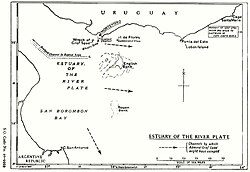
The Battle of the River Plate, fought between December 13 and 17, 1939, stands as one of the most dramatic naval engagements of the early Second World War. Occurring in the South Atlantic off the coast of Argentina and Uruguay, this confrontation pitted a powerful German "pocket-battleship" against a squadron of British and New Zealand cruisers. The engagement not only halted a significant commerce-raiding threat but also served as a high-stakes game of tactical maneuvering and psychological warfare.
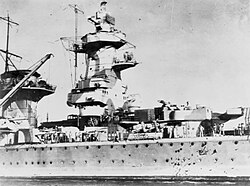
The conflict centered on the Admiral Graf Spee, a Panzerschiff (armored ship) designed for commerce raiding. Having sailed into the South Atlantic before the official outbreak of war, the Graf Spee began attacking merchant shipping in September 1939. To counter this threat, the British Admiralty deployed several search groups, one of which, led by Commodore Henry Harwood, eventually sighted the German raider near the estuary of the River Plate.
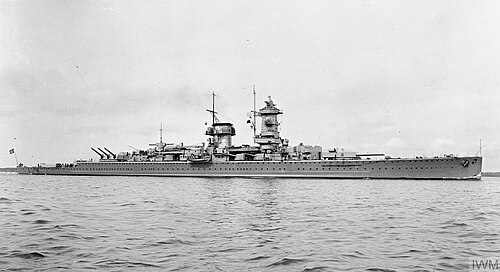
Key Facts
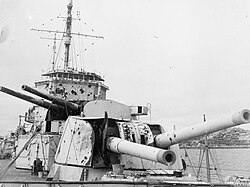
- Date: December 13–17, 1939.
- Location: Off the River Plate, South Atlantic.
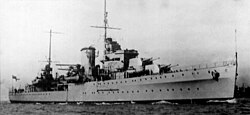
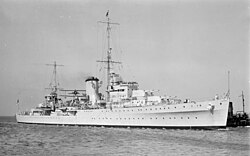
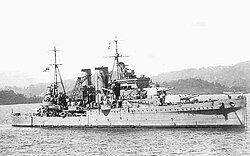
- Allied Forces: HMS Exeter (heavy cruiser), HMS Ajax, and HMS Achilles (light cruisers).
- German Forces: Admiral Graf Spee (Panzerschiff).
- Outcome: Allied victory; Admiral Graf Spee was scuttled.
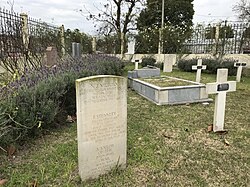
- Casualties: 72 Allied killed; 36 German killed.
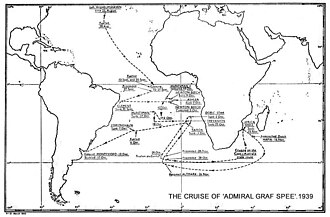
The Opening Engagement
On the morning of December 13, 1939, the British squadron was patrolling east of Montevideo. At 06:10, smoke was sighted to the northwest. HMS Exeter was ordered to investigate and soon signaled the presence of a "pocket-battleship." Captain Hans Langsdorff of the Graf Spee initially suspected the British ships were smaller destroyers protecting a merchant convoy, a prize he was eager to capture.
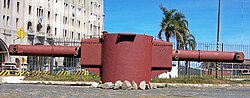
Langsdorff attempted to close the distance at 24 knots, hoping to engage the British ships before they could reach full speed. However, he soon realized he was facing three cruisers. While the Graf Spee possessed superior firepower with its 283 mm (11.1 in) guns, the British cruisers had a speed advantage of 4–6 knots, allowing them to dictate the range of the engagement.
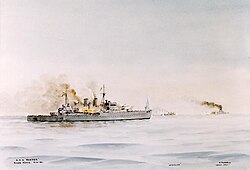
Tactical Maneuvers and Damage
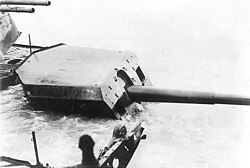
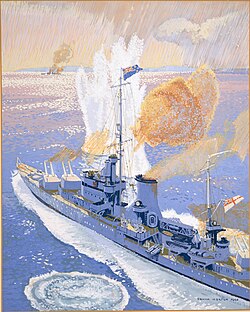
The British executed a coordinated plan: Exeter turned northwest while Ajax and Achilles turned northeast to split the German ship's fire. The Graf Spee opened fire at 06:18, focusing heavily on the Exeter. The heavy cruiser suffered devastating hits, including a direct strike on its "B" turret and severe damage to the bridge, which killed or wounded most personnel except the captain and two others.
Despite heavy listing and taking on water, Exeter continued to fight until its electrical systems failed, forcing it to break off the action. This left Ajax and Achilles to engage the Graf Spee. Through a series of turns and smoke screens, the light cruisers managed to damage the German ship and force it to maneuver defensively.
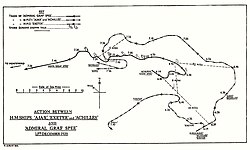
By 07:40, the British cruisers were running low on ammunition. Commodore Harwood decided to shift tactics, shadowing the Graf Spee and planning for a night attack using torpedoes to maximize their speed and maneuverability while minimizing the risk from the German ship's heavy armor.
The Pursuit and the Trap of Montevideo
The battle transitioned into a pursuit. The British and New Zealand cruisers split up, flanking the Graf Spee at a distance of approximately 15 miles. During this phase, the Graf Spee encountered the SS Shakespeare; after a brief exchange, the German ship allowed the merchant vessel to escape.
Seeking refuge and repairs, Captain Langsdorff steered the Graf Spee into Montevideo, Uruguay, on December 14. This proved to be a critical political error. Although Uruguay was neutral, it had strong British influence. The wounded German sailors were treated at the British Hospital, the city's leading medical facility, and the British were able to exert diplomatic pressure.
Langsdorff was deceived into believing a far superior British force was waiting outside the harbor. In reality, the only new arrival was the HMS Cumberland. Furthermore, the Graf Spee had expended two-thirds of its 283 mm ammunition, leaving only enough for about 20 minutes of firing—insufficient to fight its way out of the estuary.
Aftermath and Legacy
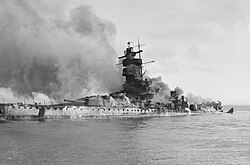
Unable to escape and unwilling to sacrifice his crew in a hopeless battle, Captain Langsdorff ordered the Admiral Graf Spee to be scuttled on December 17, 1939. The ship was set ablaze and sunk in the River Plate estuary.
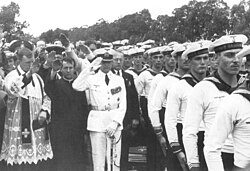
Following the scuttling, over 1,000 German sailors were interned in Buenos Aires and other locations in Argentina. Some eventually settled in Villa General Belgrano, a town founded by German immigrants. The battle also holds a special place in New Zealand's history, as it was the first time the New Zealand flag was flown in battle, aboard HMS Achilles.
| Feature | Allied Forces | German Forces |
|---|---|---|
| Ships Involved | HMS Exeter, HMS Ajax, HMS Achilles | Admiral Graf Spee |
| Commanders | Henry Harwood | Hans Langsdorff |
| Casualties (Killed) | 72 | 36 |
| Primary Weaponry | 6-inch and 8-inch guns | 283 mm (11.1 in) guns |
| Final Result | Victory | Ship scuttled |
Frequently Asked Questions
Why was the Admiral Graf Spee called a "pocket-battleship"?
The term refers to the ship's unique design: it had the heavy armament of a battleship (283 mm guns) but was smaller and faster, allowing it to outrun ships it couldn't outfight and outfight ships it couldn't outrun.
Why did Captain Langsdorff choose to scuttle his ship?
Langsdorff believed he was facing a superior force and had very limited ammunition remaining (enough for only 20 minutes of firing), making a successful breakout from Montevideo unlikely.
What was the significance of the battle for New Zealand?
The battle marked the first time the Flag of New Zealand was flown in combat, specifically from the HMS Achilles.
How did the neutral status of Uruguay affect the outcome?
While neutral, Uruguay's strong ties to Britain and the influence of the British Hospital in Montevideo created a diplomatic environment that disadvantaged the German crew and contributed to the psychological pressure on Langsdorff.
What happened to the crew of the Admiral Graf Spee?
Over 1,000 sailors were taken to Buenos Aires and interned in various locations across Argentina, with some eventually settling permanently in the region.