River Mouths: Dynamics, Landforms, and Human Impact
A river mouth is the specific point where a river terminates by flowing into a larger body of water. This receiving body can take many forms, including another river, a lake, a reservoir, a bay, a gulf, a sea, or an open ocean. These areas are critical transition zones where the energy of flowing freshwater meets the stillness or turbulence of a larger aquatic system.
As a river reaches its mouth, the current typically slows down. This reduction in speed decreases the water's carrying capacity, leading to the deposition of sediments that the river has transported from upstream. This process fundamentally shapes the landscape and the surrounding environment.
The Mechanics of Water Flow
The way river water enters a receiving body is not uniform; it is influenced by the Earth's rotation, ambient motions such as seiches (standing waves in an enclosed body of water) or tides, and the relative density of the two water masses.
Density and Flow Patterns
The interaction between the river and the receiving water often depends on density:
- Overflow: When river water is lighter than the receiving water—which is common when fresh water enters a salty sea—it floats along the surface.
- Underflow and Interflow: If the river water is denser than the surface of the receiving body, it will plunge beneath the surface, creating an underflow or an interflow within the lake or sea.
In addition to these advective transports (the physical movement of water), the inflowing water also undergoes diffusion, where particles move from areas of higher concentration to lower concentration.
Landforms and Geomorphology
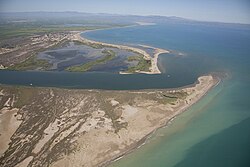
The deposition of sediment at the river mouth creates distinct geological features that alter the local ecosystem. These landforms often act as protective barriers, sheltering sensitive environments and providing them with essential nutrients carried by the river.
Common River Mouth Landforms
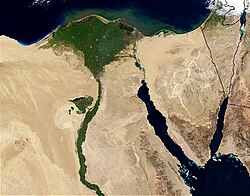
- Deltas: Fan-shaped deposits of sediment that form where the river splits into several smaller channels.
- Sand Bars: Ridges of sand built up by deposition.
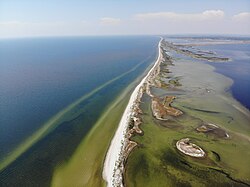
- Spits: Narrow tongues of sand or shingle extending from the land into the sea.
- Tie Channels: Specific channels that connect the river to floodplain lakes.
However, human intervention can disrupt these natural processes. The damming of rivers often starves the mouth of necessary sand and nutrients, creating a sediment deficit that can destabilize the coastline.
Cultural and Urban Influence
Throughout history, river mouths have been prime locations for human settlement. Their ability to facilitate easy travel and the creation of ports make them ideal for trade and urban growth. This influence is clearly visible in global toponymy (place names).
In the United Kingdom, many cities are named after their position at a river's mouth, such as Plymouth (Plym River), Sidmouth (Sid River), and Great Yarmouth (Yare River). Similarly, Celtic languages use the terms Aber or Inver to denote a river mouth, leading to names like Aberdeen, Abercrombie, Abernethy, Inverness, Inverkip, and Inveraray.
Today, these coastal cities face new challenges. The combination of rising sea levels due to climate change and sediment starvation caused by upstream damming has placed many river-mouth cities at a heightened risk of flooding.
Key Facts
- River mouths occur where a river meets a lake, sea, ocean, or another river.
- Sediment is deposited at the mouth because the slowing current reduces the water's carrying capacity.
- Freshwater typically floats as an overflow when entering saltwater due to lower density.
- Key landforms include deltas, spits, sand bars, and tie channels.
- Damming rivers can lead to sediment starvation, increasing the risk of coastal erosion and flooding.
| Factor | Effect/Outcome |
|---|---|
| Low Current Speed | Sediment deposition and landform creation |
| Low River Density | Surface overflow (common in seas) |
| High River Density | Underflow or interflow (common in lakes) |
| River Damming | Sediment starvation and increased flood risk |
Frequently Asked Questions
What happens to sediment at a river mouth?
As the river current slows down upon entering a larger body of water, it loses the energy required to carry its sediment load. This causes the sediment to drop and accumulate, forming landforms like deltas and sand bars.
Why do some rivers flow under the surface of a lake?
This occurs when the river water has a higher density than the surface water of the receiving lake, causing the river water to plunge downward and form an underflow or interflow.
How does damming affect the river mouth?
Dams trap sediment upstream, preventing it from reaching the mouth. This "sediment starvation" can shrink deltas and remove the natural barriers that protect coastal areas from flooding.
What is the relationship between river mouths and city names?
Because river mouths are ideal for ports and transport, many cities were founded there. This is reflected in names like Plymouth or Inverness, where the name itself indicates the city's location at the mouth of a river.
How does climate change impact these areas?
Climate change causes sea levels to rise, which, when combined with the loss of protective sediment deposits, significantly increases the risk of flooding for coastal cities located at river mouths.