Ritual Purification Across Global Religious Traditions
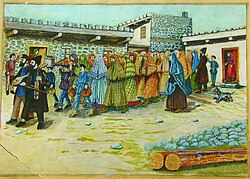
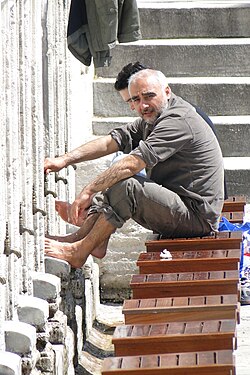
Ritual purification is a spiritual practice used to free a person, object, or place from ritual impurity. This process is typically performed before worship or when coming into contact with the sacred. It is important to distinguish ritual impurity from ordinary physical impurity; while the two are different concepts, the methods used to achieve ritual purity often involve washing, ablution (the act of washing oneself for ritual purposes), or other prescribed rites.
Depending on the theological context, these practices can range from broad systems that govern access to sacred spaces to limited preparatory acts for specific ceremonies. These rituals are often shaped by the legal and historical frameworks of the faith in which they are practiced.
Key Facts
- Ritual purity is distinct from physical hygiene, though washing is a common method of achievement.
- Purification can apply to people, physical objects, and entire locations.
- Many traditions use water as the primary medium for spiritual cleansing.
- Practices often relate to bodily states, such as childbirth, menstruation, or sexual intercourse.
- Some traditions offer non-water alternatives (such as prayer) when water is unavailable or harmful.
Purification in Abrahamic and Related Faiths
The Baháʼí Faith
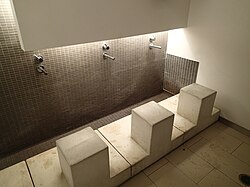
In the Baháʼí Faith, the founder Bahá'u'lláh prescribed ablutions in the Kitáb-i-Aqdas. Believers wash their hands and face before obligatory prayers and before reciting the Greatest Name 95 times. These acts hold significance beyond simple cleanliness and must be performed for each devotion. If water is unavailable or would worsen an illness, the verse "In the Name of God, the Most Pure, the Most Pure" may be repeated five times instead.
Christianity
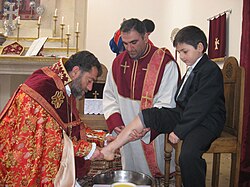
Christianity employs various forms of ritual purification. Baptism is the most prominent, serving as a rite of initiation and cleansing. Many denominations also practice the Washing of Feet, typically on Maundy Thursday, to emulate the humility of Jesus.
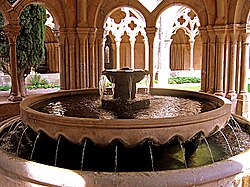
In Eastern and Oriental Orthodox traditions, a cantharus (a fountain of running water) is often located in the church's exonarthex for worshippers to wash their hands, face, and feet before entering. This symbolizes a separation from spiritual sins. In the Latin rites of the Catholic Church, this is often replaced by sprinkling holy water before entering the nave.
The Ethiopian Orthodox Tewahedo Church maintains specific hand-washing requirements after using the bathhouse or before prayer. Additionally, certain restrictions apply to entering the temple during menses or the day after intercourse.
Historically, the "churching of women" was a ritual of purification after childbirth. While rare in Western Christianity, it remains practiced in several Eastern Christian churches.
Judaism and Mandaeism
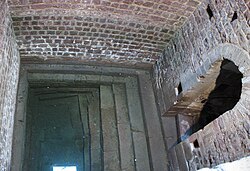
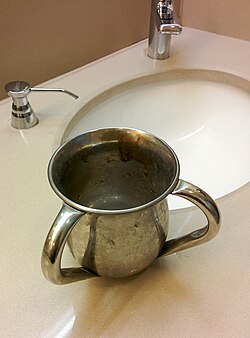
Ritual purity is a foundational element in Judaism, involving specific tools and spaces for cleansing.
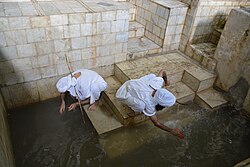
Similarly, Mandaeans perform specific preparations, such as the tamasha, to prepare for the masbuta (ritual baptism).
Eastern and Indigenous Traditions
Hinduism
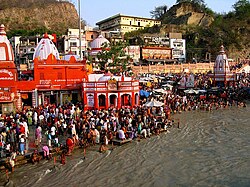
In Hinduism, full-body bathing in holy rivers, most notably the Ganges, is a central purification act, especially before festivals or following a death.
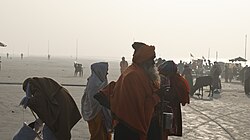
Specific rules known as Sūtaka govern impurity after childbirth. This involves social isolation and abstention from family meals and religious activities for a period of 10 to 30 days for the mother, depending on her varna (social class). Fathers may be purified more quickly through ritual bathing.
Shinto and Buddhism
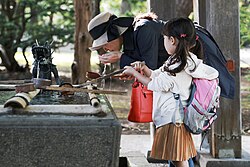
In Shinto practice, purification is essential before entering a shrine. This often involves washing the hands and mouth at a water basin.
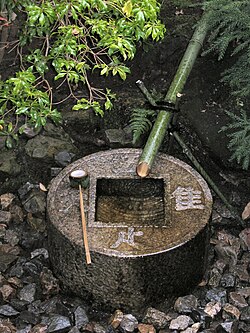
In Japanese Buddhism, the tsukubai (a stone washbasin) is used for ritual cleansing, reflecting the intersection of Zen aesthetics and spiritual purity.
Other Forms of Purification
Ceremonial Magic
In Western esotericism and ceremonial magic, the concept of "banishing" is used. These rituals are intended to remove non-physical negative influences or spirits and are often a prerequisite for invocation or consecration.
Ancient and Indigenous Sites
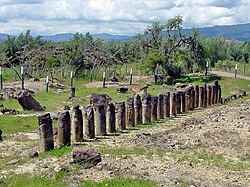
Archaeological evidence, such as the El Infiernito ruins of the Muisca, shows that purification rituals were central to ancient Indigenous American spiritual life.
Summary of Ritual Purification Practices
| Tradition | Primary Method | Key Context/Timing | Symbolism/Purpose |
|---|---|---|---|
| Baháʼí Faith | Washing hands and face | Before obligatory prayers | Spiritual readiness |
| Christianity | Baptism, Holy Water, Foot Washing | Initiation, entering church, Maundy Thursday | Cleansing from sin, humility |
| Hinduism | Bathing in holy rivers (Ganges) | Festivals, after death, after childbirth | Auspiciousness, removing Sūtaka |
| Shinto | Washing hands and mouth | Before entering a shrine | Ritual purity for the Kami |
| Ceremonial Magic | Banishing rituals | Before invocation/consecration | Removal of negative influences |
Frequently Asked Questions
What is the difference between ritual impurity and physical dirt?
Physical impurity refers to actual dirt or a lack of hygiene. Ritual impurity is a spiritual state defined by religious law, which may be triggered by specific events (like childbirth or death) regardless of whether the person is physically clean.
What happens if water is not available for ritual washing?
Some traditions provide alternatives. For example, in the Baháʼí Faith, if water is unavailable or harmful to one's health, a specific verse ("In the Name of God, the Most Pure, the Most Pure") may be repeated five times.
What is a cantharus in a Christian context?
A cantharus is a fountain of running water traditionally located in the exonarthex (outer porch) of Eastern and Oriental Orthodox churches, used by the faithful to wash their hands, face, and feet before entering the sanctuary.
What is Sūtaka in Hinduism?
Sūtaka refers to the rules of impurity followed after the birth of a child. It involves a period of social isolation and abstention from religious activities to maintain spiritual order.
How does "banishing" differ from traditional washing?
While washing uses physical elements like water to cleanse the body, banishing in ceremonial magic is a ritual intended to remove non-physical influences, such as negative spirits, from a space or person.