Reggaeton: The Evolution of a Global Urban Phenomenon
Reggaeton is more than just a catchy beat; it is a powerful cultural movement that has transitioned from the underground streets of the Caribbean to the top of the global music charts. Often mistaken for simply being "reggae in Spanish," reggaeton is a distinct genre with a complex lineage rooted in the Afro-diasporic sounds of Panama and Puerto Rico.
At its core, the genre is defined by its infectious rhythm and urban energy, serving as a creative outlet for youth culture. From its early days of bootleg cassettes to the streaming era of "Despacito," reggaeton has redefined the landscape of modern pop music.
Key Facts
- Origins: Emerged in Panama in the late 1980s and consolidated in Puerto Rico and Miami during the early 1990s.
- The Foundation: Heavily based on the Jamaican dembow rhythm, specifically the "Pounder (Dub Mix II)" and Shabba Ranks' "Dem Bow."
- Key Figures: Daddy Yankee and Don Omar are both widely referred to as the "King of Reggaeton."
- Distribution: Originally spread via informal networks and bootleg cassettes sold from car trunks.
- Global Reach: Now a dominant force across Latin America, the United States, Spain, and Asia.
The Stylistic and Cultural Roots
Reggaeton is a fusion of various influences, blending Jamaican dancehall, reggae en Español, soca, and hip hop. A critical element of its vocal style is toasting—a Jamaican tradition of rhythmic chanting over a beat.
The genre's technical evolution took place primarily in Puerto Rico, where it was initially known as "underground rap." Early pioneers like DJ Playero and DJ Nelson were inspired by hip hop and dancehall to produce riddims (instrumental backing tracks), which provided the skeletal structure for the music.

Because it emerged from the fringes of society, the early underground scene faced significant opposition. Puerto Rican police once launched campaigns to confiscate cassette tapes under obscenity codes, demonizing the artists in the media. However, this pressure only strengthened the youth culture surrounding the music, relying on word-of-mouth and bootleg recordings until the genre coalesced into modern reggaeton around 1998.
The Anatomy of the Sound
The defining characteristic of reggaeton is its percussion. The dembow rhythm serves as the basic building block for over 80% of all productions. This specific beat was highlighted by Shabba Ranks in his 1991 song "Dem Bow," which utilized the "Pounder (Dub Mix II)" produced by Dennis the Menace.
Modern reggaeton is produced using a variety of digital tools, including:
- Drum machines and synthesizers for the rhythmic base.
- Samplers to incorporate existing sounds.
- DAWs (Digital Audio Workstations) for recording and mixing.
- A combination of rapping and melodic vocals.
The Rise to Global Dominance
The early 2000s marked the "crossover" era, where reggaeton broke into the mainstream international market. This period saw the rise of superstars who brought the sound to the Billboard charts.
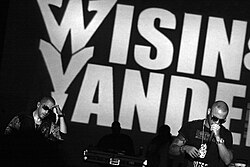
In 2007, Daddy Yankee's El Cartel III: The Big Boss set a first-week sales record for a reggaeton album with 88,000 copies sold, peaking at number nine on the Billboard 200. Similarly, Wisin & Yandel achieved massive success with Wisin vs. Yandel: Los Extraterrestres, which topped the Top Latin Albums chart.
![Don Omar (left) and Daddy Yankee (right) are both referred to as the "King of Reggaeton".[22][23]](/images/23/a4/23a4daba1671dc76eb03464c6ded6d9e7b40d778d3e73b8f998c9947d671c46b.png)
The genre's trajectory shifted again after 2017, following the massive success of "Despacito," which triggered a global surge in Latin music consumption. This era also saw the rise of more minimalist dembow styles, such as those popularized by the hit "Te Boté."
Diversification and Subgenres
As the genre evolved, it branched into various subgenres and fusions to suit different moods and regions:
- Romantic Reggaetón: A softer, more melodic approach.
- Malianteo: Focused on street life and tougher themes.
- Pop-reggaetón: Polished versions designed for mainstream radio.
- Fusion Genres: Including Bachatón (Bachata), Cumbiatón (Cumbia), and Trapeton (Trap).

Modern Influence and Inclusivity
Reggaeton continues to evolve, with new artists pushing the boundaries of gender and sexuality. In 2023, queer artists like Young Miko and Tokischa gained significant visibility. Young Miko, for instance, charted on the Billboard Hot 100 with "Classy 101" and gained national prominence after appearing on stage with Bad Bunny.

Summary of Reggaeton's Framework
| Category | Details |
|---|---|
| Primary Rhythm | Dembow (based on "Pounder Dub Mix II") |
| Core Instruments | Drum machine, Synthesizer, Sampler, DAW |
| Key Regions | Puerto Rico, Panama, USA, Spain, Latin America |
| Major Subgenres | Romantic, Malianteo, Neoperreo, Cubatón, Dominican Dembow |
| Influences | Dancehall, Hip Hop, Soca, Reggae en Español |
Legal Controversies
The genre's reliance on a few foundational rhythms has led to legal disputes. In 2019, the estate of Steely and Clevie sued Universal Music Group and Warner Chappell Music. They alleged that approximately 1,800 reggaeton tracks infringed upon the "Fish Market" (also known as "Poco Man Jam") riddim, which they created in 1989 and which served as the basis for the dembow beat.

Frequently Asked Questions
Where did reggaeton actually start?
Reggaeton has complex origins; it began in Panama in the late 1980s and was later developed and consolidated as an independent genre in Puerto Rico and Miami during the early 1990s.
What is the "dembow" in reggaeton?
Dembow is the skeletal percussion rhythm that forms the basis of most reggaeton songs. It is derived from Jamaican dancehall, specifically the "Pounder (Dub Mix II)" and Shabba Ranks' song "Dem Bow."
Who is considered the King of Reggaeton?
Both Daddy Yankee and Don Omar have been referred to as the "King of Reggaeton" due to their massive influence and commercial success.
How was reggaeton distributed before the internet?
In its early "underground" phase, the music was shared through informal networks, bootleg recordings, and cassettes sold on the street, often directly from the trunks of cars.
Is reggaeton the same as reggae?
No. While it was influenced by reggae en Español and Jamaican dancehall, reggaeton is a distinct genre with its own specific rhythmic structure (dembow) and urban cultural identity.