Hacienda Systems: The Legacy of Spanish Colonial Estates
The hacienda was more than just a farm; it was a cornerstone of the economic and social structure of Spain and its former empire. Derived from the Spanish word hacer (to make), the term refers to a productive business enterprise. These vast estates, similar to the Roman latifundium (large landed estates), functioned as plantations, mines, or factories, and often combined all three to maximize profit.
While the term is often used broadly today, historically it referred to estates of significant size. Smaller holdings were typically called estancias or ranchos. These lands were owned almost exclusively by Spaniards and criollos (people of Spanish descent born in the colonies), creating a rigid social hierarchy that lasted for centuries.
![Hacienda Lealtad is a working coffee hacienda which used slave labor in the 19th century, located in Lares, Puerto Rico.[1]](/images/71/3d/713d88ae49c519fba307056f4a8b263f3c9c051e5ab2b47b902bc023215011af.jpg)
Key Facts
- Origin: Started in Andalusia, Spain, and expanded throughout the Spanish Empire.
- Purpose: Productive enterprises including agriculture, livestock, mining, and manufacturing.
- Ownership: Primarily held by the Spanish elite and criollos.
- Regional Variations: In Argentina, large estates are typically called estancias, whereas in Mexico they are haciendas.
- Decline: Most systems were dismantled through 20th-century agrarian reforms or industrialization.
The Evolution of Haciendas in Mexico
The Mexican hacienda system is traced back to 1529, when the Spanish crown granted Hernán Cortés the title of Marquis of the Valley of Oaxaca. This grant included the modern-day state of Morelos and vast encomienda (labor grants) rights. While the elite received the largest grants, ordinary Spaniards could also petition the crown for land.
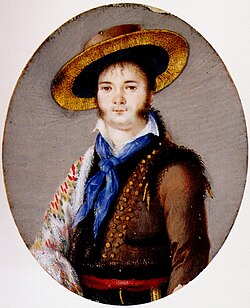
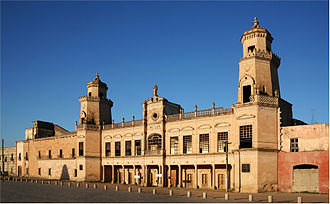
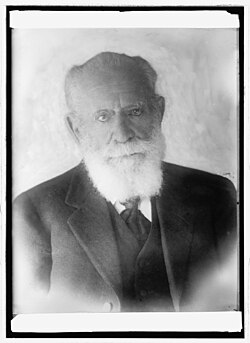
By the 17th and 18th centuries, the economy shifted from mining toward agriculture and husbandry. Some owners amassed staggering wealth; for example, Juan Nepomuceno de Moncada y Berrio of the Jaral de Berrios hacienda became one of the largest landowners in the world. Similarly, Don Luis Terrazas of Chihuahua owned approximately 8 million acres and over 1 million head of cattle by 1910.
Haciendas in South America
Chile: From Mining to Wheat
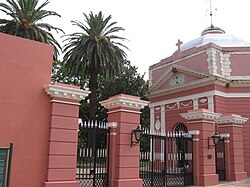
In Chile, the hacienda system gained prominence after the 1598 Battle of Curalaba, which led to the loss of gold districts and indigenous labor. As the colony became more rural, the economy shifted toward agriculture. By the late 17th century, Chilean haciendas began exporting high-quality wheat to Peru, which was suffering from earthquakes and stem rust epidemics.
To combat labor shortages, these estates often acted as merchants, purchasing wheat from independent farmers. However, by the 20th century, these estates were often characterized by poor worker conditions and economic stagnation until the land reforms of 1962–1973 eliminated the inquilinaje (tenant farming) system.
Bolivia and Peru
In Bolivia, the system persisted until the 1952 Revolution led by Víctor Paz Estenssoro, who implemented a massive land distribution program. Peru followed a similar path in 1969 under Juan Velasco Alvarado, who expropriated land from the hacendados (estate owners) to redistribute it to the peasantry.
The Caribbean and the Philippines
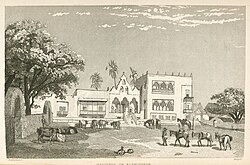
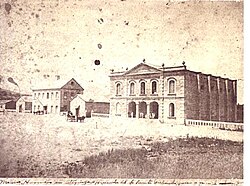
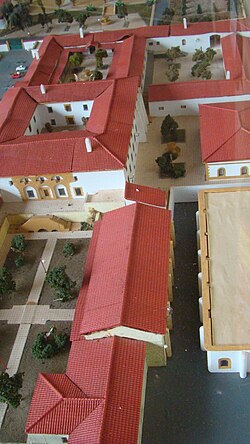
In Puerto Rico, haciendas were larger than estancias and focused on export crops like sugar cane, coffee, and cotton. A key distinction existed between the two: estancias grew "minor crops" (frutos menores) such as corn, beans, and plantains for local consumption, while haciendas utilized industrial machinery to process crops into derivatives for wholesale export.
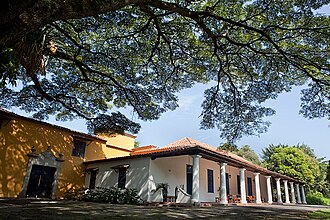
The decline of Puerto Rican haciendas began in the 1950s with "Operation Bootstrap," an industrialization initiative. Sugar-based haciendas transitioned into centrales azucarelas (sugar mills), but the last of these closed by 2000.
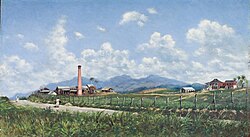
Summary of Estate Types
| Feature | Hacienda | Estancia (Puerto Rico) |
|---|---|---|
| Primary Goal | Wholesale and Export | Local Consumption |
| Typical Crops | Sugar, Coffee, Tobacco | Rice, Corn, Beans, Fruits |
| Infrastructure | Industrial processing machinery | Basic farming tools |
| Relative Size | Generally very large | Generally smaller |
Frequently Asked Questions
What is the difference between a hacienda and an estancia?
Generally, a hacienda was a larger estate focused on industrial production and export, while an estancia was a smaller holding focused on local crops. However, this terminology varied by region; in Argentina, the term estancia is used for the large estates that Mexico would call haciendas.
Who owned the haciendas during the colonial era?
Ownership was almost exclusively reserved for Spaniards and criollos, with mixed-race individuals owning them only in rare instances.
How did the hacienda system end in South America?
The system was largely dismantled through government-led agrarian reforms in the mid-20th century, specifically in Bolivia (1952), Peru (1969), and Chile (1962–1973), which redistributed land to peasants.
What were the main products of Puerto Rican haciendas?
The primary export crops were sugar, coffee, and tobacco. Some, like Hacienda Mercedita, eventually transitioned into rum production.
Why did the Chilean hacienda system shift toward wheat?
Chilean soil and climate were better suited for cereal production than Peru's. When Peru faced earthquakes and crop epidemics, Chilean haciendas filled the demand by exporting cheaper, higher-quality wheat.