Raised Fist: The History of a Global Symbol of Resistance
The raised fist is one of the most recognizable gestures in modern history, serving as a powerful visual shorthand for solidarity, defiance, and social change. While its exact origins remain elusive, the gesture evolved from a metaphor for collective strength into a global icon adopted by diverse political and social movements across the 20th and 21st centuries.
The Early Roots of the Clenched Fist
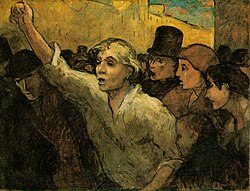
By the 1910s, the raised fist had begun to surface within trade unionism (the organized effort of workers to improve conditions), anarchism, and the broader labor movement. One of the earliest conceptual uses occurred during the 1913 Paterson silk strike, where William "Big Bill" Haywood, a founding member of the Industrial Workers of the World, used the fist as a metaphor to describe a force that is greater than the sum of its individual parts. This sentiment was echoed by socialist activist and journalist John Reed.
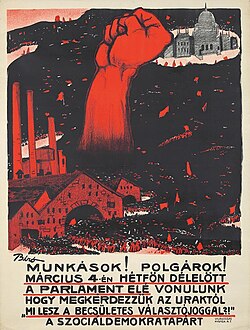
Visual representations of the gesture appeared shortly thereafter. In 1912, a poster in Budapest depicted a massive fist rising from a crowd of striking workers to promote a mass strike. By 1914, the American magazine Mother Earth explicitly described the clenched fist as being "symbolical of the social revolution."
The Rise of the Anti-Fascist Salute
In the 1920s, the gesture transitioned from a metaphor into a formal salute. In 1924, the Roter Frontkämpferbund (Alliance of Red Front-Fighters) of the Communist Party of Germany adopted the raised fist. This adoption sparked a political rivalry; two years later, the Nazi Party responded by adopting the Roman salute.
The gesture gained significant international visibility during the Spanish Civil War (1936–1939). Known as the "anti-fascist salute" or the "Popular Front salute," the raised right fist was used by the Republican faction to distinguish themselves from the Nationalists, who used the Roman salute.
![Children preparing for evacuation during the Spanish Civil War (1930s), some giving the Republican salute. The Republicans showed a raised right fist whereas the Nationalists gave the Roman salute.[9]](/images/6a/72/6a7274c6d964b1b9a450813cabf38112a46ca1816d7a277b137d6337c1ee8b6c.png)
Global Expansion and Graphic Evolution
The transition of the fist from a physical gesture to a graphic symbol was accelerated in 1948 by the Taller de Gráfica Popular, a Mexican print shop dedicated to revolutionary social causes. This artistic influence reached the United States in the 1960s through the work of artist and activist Frank Cieciorka.
Cieciorka produced a simplified version of the fist for the Student Nonviolent Coordinating Committee. This streamlined graphic was subsequently adopted by other influential groups, including the Students for a Democratic Society and the Black Power movement.
The Fist in France and South Africa
The symbol continued to evolve during the May 1968 revolt in France. Posters such as La Lutte continue featured the clenched fist atop a factory chimney, symbolizing industrial resistance. Meanwhile, in South Africa, the South African Students' Organization adopted the raised black fist as its logo, cementing it as a primary symbol for the Black Consciousness Movement. The image was so central to this struggle that it appeared on the coffin of anti-apartheid activist Steve Biko.
Feminism and Modern Adaptations
The symbol was also adapted to represent gender equality. In 1969, Robin Morgan designed a feminist version of the symbol, placing the raised fist inside the Venus symbol for a protest against the Miss America pageant.
The versatility of the symbol persists today. For example, in 2011, a version incorporating the outline of the state of Wisconsin was designed for union protests against the rescinding of collective bargaining rights.
Key Facts
- Early Use: Emerged in labor movements and trade unionism by the 1910s.
- Political Divide: Used by the Roter Frontkämpferbund in 1924, contrasting with the Nazi Roman salute.
- Spanish Civil War: Served as the "Popular Front salute" for the Republican faction.
- Graphic Influence: Popularized as an art form by Mexico's Taller de Gráfica Popular in 1948.
- Civil Rights: Adopted by the Black Power movement and the Black Consciousness Movement in South Africa.
- Feminist Adaptation: Integrated into the Venus symbol by Robin Morgan in 1969.
| Era/Year | Movement/Group | Significance |
|---|---|---|
| 1912-1914 | Labor Movements | Symbol of social revolution and collective strength. |
| 1924 | Roter Frontkämpferbund | Adopted as a formal communist/anti-fascist salute. |
| 1936-1939 | Spanish Republicans | Used as the "Popular Front salute" during the Civil War. |
| 1948 | Taller de Gráfica Popular | Popularized the fist as a graphic art symbol. |
| 1960s | Black Power Movement | Used a simplified graphic version for civil rights activism. |
| 1969 | Feminist Movement | Combined with the Venus symbol for gender equality protests. |
Frequently Asked Questions
When did the raised fist first become a political symbol?
While its exact origin is unclear, it was used in trade unionism, anarchism, and labor movements by the 1910s, notably during the 1913 Paterson silk strike.
What is the difference between the Republican and Nationalist salutes in the Spanish Civil War?
The Republican faction used the raised right fist (the anti-fascist or Popular Front salute), while the Nationalists used the Roman salute.
How did the symbol reach the Black Power movement?
The symbol was popularized graphically by Mexico's Taller de Gráfica Popular in 1948 and later simplified by artist Frank Cieciorka for the Student Nonviolent Coordinating Committee before being adopted by the Black Power movement.
Who created the feminist version of the raised fist?
Robin Morgan designed the symbol, which placed a raised fist within the Venus symbol, for a 1969 protest of the Miss America pageant.
Was the raised fist used in South Africa?
Yes, the South African Students' Organization used the raised black fist as its logo, and it became a central symbol for the Black Consciousness Movement and activist Steve Biko.