Rain and Snow Mixed: Understanding Sleet and Wintry Precipitation
When winter weather approaches, the atmosphere often undergoes complex transitions that result in more than just simple rain or snow. One of the most common, yet frequently misunderstood, phenomena is rain and snow mixed. This precipitation consists of a blend of liquid rain and partially melted snow, creating a soft, translucent substance often referred to as slush. Unlike hard ice pellets or fluid freezing rain, this mixture contains traces of ice crystals from partially fused snowflakes.
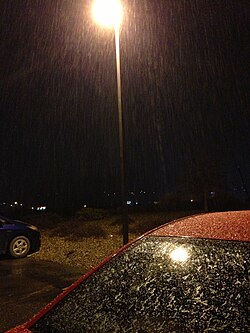
In a meteorological context, this transition usually occurs briefly as the weather shifts from rain to snow, or vice versa. Because it is a transitional phase, the precipitation often hits the ground before it has fully transformed into a single state. In professional weather reporting, this is identified by the METAR codes RASN or SNRA.
Key Facts
- Composition: A mixture of rain and partially melted snow containing ice crystals.
- Appearance: Soft and translucent, unlike hard ice pellets.
- Formation: Occurs when the lowest part of the atmosphere is slightly above freezing (0 °C or 32 °F).
- Terminology: Called "sleet" in Commonwealth English, but "ice pellets" in American English.
- Meteorological Codes: Identified as RASN or SNRA.
How Mixed Precipitation Forms
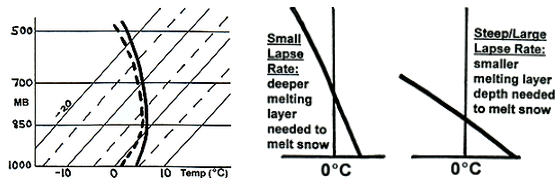
The formation of rain and snow mixed depends heavily on the temperature profile of the atmosphere. For snow to melt into a mixture, there must be a layer of warm air near the surface. Specifically, the depth of this low-level warm air—the area below the freezing level—needs to be between approximately 230–460 meters (750–1,500 feet).
If this warm layer is too thin, the snow may not melt sufficiently; if it is too deep, the snow may melt completely into rain. When the melting layer falls within this specific range, the snow begins to transform, resulting in the characteristic mix. The exact depth required depends on the mass of the individual snowflakes and the lapse rate, which is the rate at which air temperature decreases with an increase in altitude.
Regional Terminology: Wintry Showers vs. Wintry Mix
Depending on where you are in the world, the terms used to describe mixed winter weather can vary significantly between the United Kingdom and the United States.
Wintry Showers (United Kingdom)
In the UK, wintry showers is an informal term used to describe various mixtures of rain, snow, and graupel (small, soft ice pellets). This term is typically used when there is no significant accumulation of snow on the ground. It often occurs when the ground temperature is above 0 °C (32 °F), which prevents snow from building up, even if the air near the surface is slightly below freezing.
Wintry Mix (United States)
In the United States, a wintry mix refers to a combination of freezing rain, ice pellets, and snow. Unlike the UK usage, American meteorologists generally use this term when both the air and ground temperatures are below 0 °C (32 °F) and when some surface accumulation of ice and snow is expected.
These mixed conditions are common during large winter storms. As counterclockwise winds rotate around a storm system, they push warm air northward ahead of the system (a warm front), causing snow to transition into ice pellets, then freezing rain, and finally rain. Behind the departing low-pressure system, the process can reverse, though precipitation often transitions directly from rain to snow or stops entirely before a full transition occurs.
Comparison of Precipitation Types
| Type | Physical Characteristics | Key Distinction |
|---|---|---|
| Rain and Snow Mixed | Soft, translucent, contains ice crystals | Often called "slush" |
| Ice Pellets | Hard, small ice particles | Known as "sleet" in Commonwealth English |
| Freezing Rain | Fluid liquid upon impact | Freezes fully when striking an object |
| Graupel | Soft, white ice particles | Commonly included in UK "wintry showers" |
Frequently Asked Questions
What is the difference between sleet and rain and snow mixed?
In Commonwealth English, "sleet" refers to rain and snow mixed. However, in the United States, the National Weather Service uses "sleet" specifically to refer to hard ice pellets, whereas rain and snow mixed is treated as a separate category.
How deep must the warm air layer be to create a mix?
To create a mixture of rain and snow, the warm air layer near the surface typically needs to be between 230 and 460 meters (750 to 1,500 feet) deep.
Why does snow sometimes not accumulate on the ground during wintry showers?
If the ground surface temperature remains above 0 °C (32 °F), it can prevent snow from accumulating, even if the air temperature near the surface is slightly below freezing.
What causes the transition from snow to rain during a storm?
This is often caused by a warm front, where counterclockwise winds around a storm system move warm air northward over retreating cold air, melting the falling snow as it descends.
What are the METAR codes for mixed precipitation?
Meteorologists use the codes RASN or SNRA to identify rain and snow mixed in weather reports.