Radio History: From Electromagnetic Discovery to the Digital Age
The evolution of radio is a saga of scientific curiosity and engineering brilliance. It began in the late 19th century with the discovery of electromagnetic radiation—invisible waves of energy that travel through space—and evolved into a global medium that redefined communication, entertainment, and safety.
Initially, radio was used for wireless telegraphy, transmitting on-off signals like Morse code for private point-to-point communication. However, the leap to audio transmission in the early 1900s transformed the technology from a specialized tool for operators into a mass medium capable of reaching millions of non-technical listeners.
Key Facts
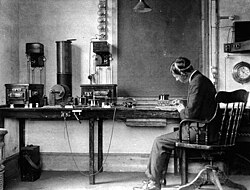
![Fessenden operating an underwater oscillator in 1915.[36]](/images/55/ed/55ed9b6d35d377df323425ce4b54dbd8c1b9345a00c811f74ea1dcd475966800.jpg)
- Scientific Origin: Heinrich Rudolf Hertz proved the existence of electromagnetic radiation in the late 1800s.
- Pioneering Commercialization: Guglielmo Marconi established the first wireless factory in Chelmsford, England, in 1898.
- First Transatlantic Link: A regular radio-telegraph service began on October 17, 1907, between Ireland and Canada.
- Technological Shift: The transition from vacuum tubes to transistors in the 1950s made radios portable and durable.
- Regulatory Milestone: The Radio Act of 1927 created the Federal Radio Commission to manage licenses and frequencies.
The Dawn of Wireless Communication
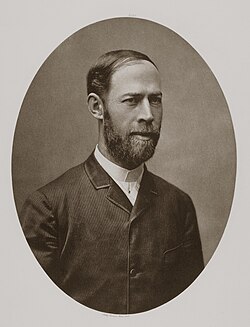
The foundation of radio science was laid by researchers exploring the optical qualities of electromagnetic waves. Heinrich Rudolf Hertz provided the critical proof that these waves existed, paving the way for others to experiment with their transmission and detection.
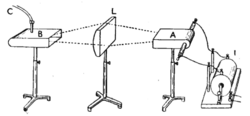
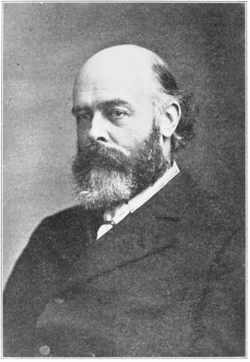
Early experiments, such as those by Oliver Lodge in 1894 and John Ambrose Fleming in 1897, demonstrated how radio waves could be manipulated and refracted. These scientific breakthroughs shifted the focus from theoretical physics to practical application.
Marconi and the Rise of Telegraphy
Guglielmo Marconi turned these scientific discoveries into a commercial industry. In 1897, he established a radio station on the Isle of Wight and later opened a factory in Chelmsford, England. Marconi focused on high-powered stations to facilitate communication with ships at sea, eventually launching a commercial news service for subscribing vessels in 1904.
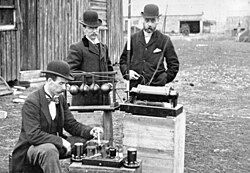
The British Marconi company, along with its American and Canadian subsidiaries, dominated ship-to-shore communication. This monopoly was strict; the company often refused to communicate with ships using non-Marconi equipment, a policy that contributed to communication delays during the sinking of the Titanic in 1912.
The Transition to Audio and Broadcasting
The shift from clicking Morse code to transmitting the human voice required new technology. The invention of the Audion (a triode vacuum tube) by Lee De Forest in 1906 was a pivotal moment, enabling the creation of the first commercial AM transmitters.
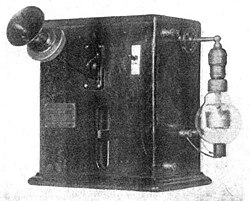
Broadcasting as a form of entertainment began to emerge around 1919. In The Hague, Hanso Idzerda's station PCGG conducted regular entertainment broadcasts using narrow-band FM transmissions. In the United States, station 9XM at the University of Wisconsin began broadcasting human speech to the public in February 1919.
Improving the Listening Experience
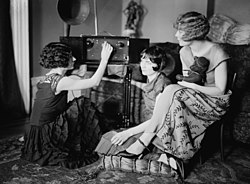
Early radio listeners struggled with fading signals and fluctuating volumes. This was solved by the superheterodyne receiver, which first hit the market in 1924. While initially expensive, this technology eventually became the standard for high-quality reception.
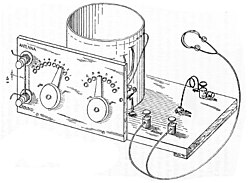
For those on a budget, crystal radio receivers provided an affordable alternative. In the 1920s, the U.S. government even published guides on how to build these simple devices at home.
The Transistor Revolution and Modern Navigation
For decades, radios relied on vacuum tubes, which were fragile and generated significant heat. This changed in 1954 with the introduction of the Regency TR-1, the world's first commercially produced transistor radio. Sony followed shortly after with the TR-55 and the mass-produced TR-63, making radios small enough to fit in a pocket.
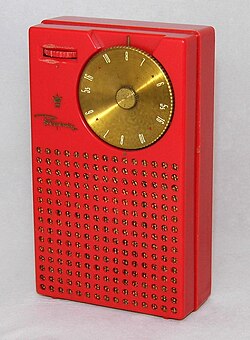
As the technology matured, radio expanded beyond entertainment into critical navigation systems. VOR systems became common in the 1960s, followed by LORAN in the 1970s. This evolution culminated in the 1987 launch of the Global Positioning System (GPS) satellite constellation.
Regulation and the Impact on Industry
The rapid growth of radio necessitated government oversight. The Wireless Ship Act of 1910 first mandated radio systems for certain ships to improve safety. Later, the Radio Act of 1927 established the Federal Radio Commission to assign frequencies and power levels, ensuring that stations did not interfere with one another.
The rise of free radio broadcasting had a profound impact on the music industry. As radio ownership jumped from 40% of homes in 1931 to 80% by 1938, record sales plummeted from $75 million in 1929 to $26 million in 1938, though the Great Depression also played a role in this economic decline.
| Era/Year | Key Development | Primary Impact |
|---|---|---|
| Late 1800s | Discovery of EM Radiation | Scientific proof of radio waves |
| 1907 | Transatlantic Service | Intercontinental wireless telegraphy |
| 1919-1921 | Public Audio Broadcasting | Radio becomes a mass entertainment medium |
| 1927 | Radio Act of 1927 | Federal licensing and frequency control |
| 1933 | FM Patent (Armstrong) | Reduced static and interference |
| 1954 | Transistor Radio (TR-1) | Portability and durability |
| 1987 | GPS Launch | Global satellite-based navigation |
Frequently Asked Questions
Who is credited with the first practical radio system?
Guglielmo Marconi is widely credited with developing the first practical wireless telegraphy system, establishing factories and high-powered stations for ship-to-shore and transatlantic communication.
What is the difference between AM and FM radio?
AM (Amplitude Modulation) was the early standard for broadcasting. FM (Frequency Modulation), patented by Edwin H. Armstrong in 1933, reduces static and interference from the atmosphere and electrical equipment by modulating the frequency of the wave instead of the amplitude.
How did the transistor change radio?
Transistors replaced bulky, fragile vacuum tubes. This allowed radios to become significantly smaller (pocket-sized), more durable, and more energy-efficient, leading to the mass-market penetration of portable radios in the 1950s.
Why did the music industry suffer when radio became popular?
As radio ownership increased, people could listen to music for free via broadcasts rather than purchasing physical records. This led to a sharp decline in record sales between 1929 and 1938.
What was the purpose of the Radio Act of 1927?
The act created the Federal Radio Commission to manage the airwaves. It gave the government the power to grant or deny licenses and assign specific frequencies and power levels to prevent stations from overlapping and interfering with each other.