FM Radio: The Technology, History, and Evolution of Frequency Modulation
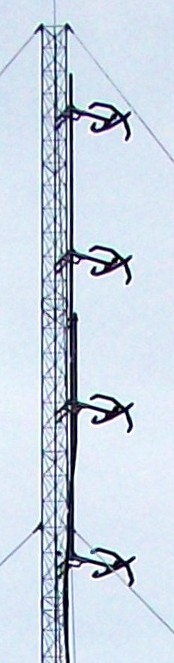
Frequency Modulation, commonly known as FM, is a method of encoding information on a carrier wave by varying its instantaneous frequency. Developed by Edwin Howard Armstrong in 1933, FM radio revolutionized the broadcasting industry by providing a high-fidelity alternative to Amplitude Modulation (AM), offering significantly better resistance to static and interference.
Unlike AM, which varies the strength of the signal, FM maintains a constant amplitude but shifts the frequency to represent the audio signal. This technical distinction allows FM to deliver clearer sound, making it the preferred standard for music and high-quality audio broadcasting globally.
Key Facts
- Inventor: Developed by Edwin Howard Armstrong in 1933.
- Primary Advantage: Superior rejection of radio frequency interference (RFI) and static compared to AM.
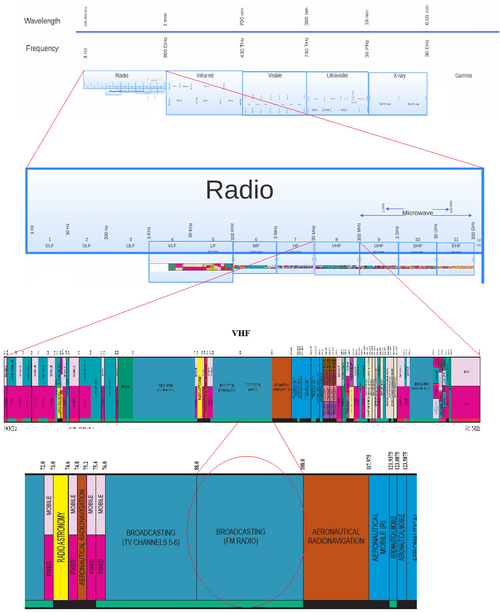
- Standard Band: Most commonly operates in the 88–108 MHz range.
- Stereo Standard: The Zenith-GE multiplex system became the global standard for stereo FM in 1961.
- Digital Transition: Norway became the first country to switch entirely to Digital Audio Broadcasting (DAB+) in 2017.
Broadcast Bands and Global Standards

The allocation of FM frequencies varies by region, often influenced by historical agreements and the import of hardware. In the Americas, the Philippines, and the Caribbean, stations typically use odd multiples of 100 kHz for their center frequencies. In contrast, parts of Europe, Africa, and Greenland use even multiples, while Italy utilizes 50 kHz spacing.
Brazil provides a unique example of spectrum evolution. Originally limited to the 88–108 MHz band, the Brazilian Ministry of Communications expanded the range to 76.1–108.0 MHz in 2021. This expansion allowed former AM stations in large cities to migrate to the FM band as analog television was phased out.
The Technology of FM Stereo
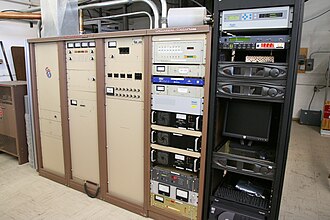
While early FM was monaural, the quest for stereo sound led to various competing systems in the 1950s. The FCC eventually approved the Zenith-GE system in April 1961 because it maintained compatibility with mono receivers.
The Multiplex Signal
To achieve stereo sound without breaking compatibility with older radios, FM uses a composite multiplex signal. This process involves algebraically encoding the left (L) and right (R) channels into a sum (L+R) and a difference (L−R) signal:
- Main Channel (L+R): Limited from 0 Hz to 15 kHz; mono receivers use only this signal.
- Pilot Tone: A 19 kHz signal used by stereo receivers to identify the transmission and regenerate the sub-carrier.
- Difference Signal (L−R): Amplitude modulated onto a 38 kHz suppressed-carrier signal, occupying the 23 kHz to 53 kHz range.
Noise Reduction and Interference
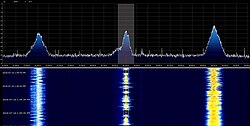
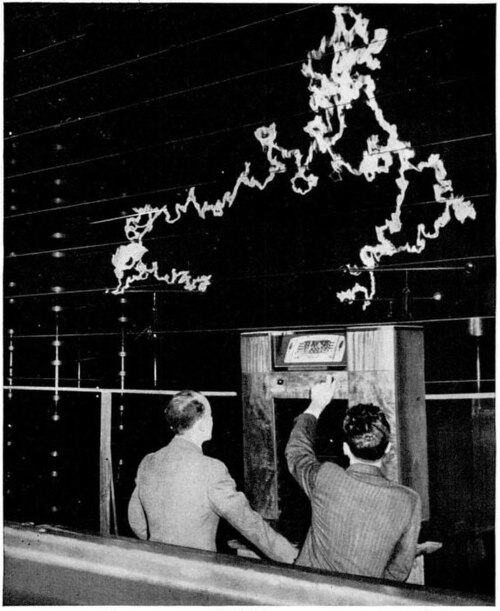
One of the most significant advantages of FM is its ability to ignore noise. In a famous 1940 General Electric demonstration, an FM receiver clearly reproduced music while a nearby million-volt arc caused a roar of static on a simultaneous AM receiver.
Historical Development and Global Adoption
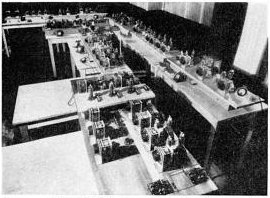
The journey of FM from an experimental prototype to a global standard spanned several decades. Edwin Armstrong's first prototype transmitter, licensed as W2XDG, operated from the Empire State Building between 1934 and 1935 at 41 MHz with 2 kW of power.
In the United States, the commercial FM band was formally established on January 1, 1941. Early stations often simulcast AM content or provided specialized orchestral and educational programming. In the United Kingdom, the BBC began FM broadcasting in 1955, later introducing the Zenith-GE stereo system for its Third Programme in 1966.
Other regions faced different challenges. In Greece, "pirate" stations dominated the FM spectrum in the mid-1970s before the national public broadcaster (EIRT) established official services. In New Zealand, the import of Japanese vehicles (which use the 76–90 MHz range) necessitated the use of FM expanders to access the local 88–108 MHz broadcasts.
![1940 advertisement featuring Edwin Armstrong's experimental station W2XMN in Alpine, New Jersey, USA. The tower still exists.[41]](/images/b6/b6/b6b68313608ff9ba6566335f12b87ca067395745190fccfa326bf3f20ffa900f.jpg)
Modern Usage and the Digital Shift
While FM remains widely used, the industry is shifting toward digital alternatives. Norway led this transition in 2017 by switching to DAB+, which allowed rural areas to access a more diverse range of content. Other countries, including some German states, have set target dates for FM switch-offs as far out as 2031.
Beyond professional broadcasting, small-scale FM technology persists in consumer electronics, such as microtransmitters used to stream audio from MP3 players to car radios.

FM Technical Summary
| Feature | Standard Specification | Notes |
|---|---|---|
| Common Frequency Range | 88–108 MHz | Varies by country (e.g., Brazil 76.1–108 MHz) |
| Channel Spacing | 100 kHz / 200 kHz | Italy uses 50 kHz; OIRT used 30 kHz |
| Stereo Pilot Tone | 19 kHz | Used to synchronize the 38 kHz sub-carrier |
| Audio Limit | 15 kHz | Protects the pilot tone and sub-carriers |
| Modulation Type | Frequency Modulation | Constant amplitude, varying frequency |
Frequently Asked Questions
Why is FM radio clearer than AM radio?
FM is more resistant to static and radio frequency interference (RFI) because it encodes audio by varying the frequency rather than the amplitude. Most electrical noise affects the amplitude of a wave, which AM receivers interpret as static, but FM receivers can ignore.
How does FM stereo work on a mono radio?
FM stereo uses a multiplex system where the left and right channels are combined into a sum signal (L+R). Mono radios only decode this sum signal, allowing them to play both channels through a single speaker without losing audio information.
What is the "pilot tone" in FM broadcasting?
The pilot tone is a precise 19 kHz signal transmitted at 8–10% of the overall modulation level. It tells the receiver that the broadcast is in stereo and provides the necessary phase reference to decode the 38 kHz stereo sub-carrier.
Which country was the first to stop using FM?
Norway was the first country to completely switch from national FM broadcasting to Digital Audio Broadcasting (DAB+) in 2017, although some local stations were permitted to continue until later dates.
Who invented FM radio?
FM radio was invented by Edwin Howard Armstrong in 1933. His work focused on reducing disturbances in radio signaling, leading to the development of frequency modulation.