Quilmes: A Journey Through History, Industry, and Culture
Located in the province of Buenos Aires, Quilmes is a city defined by a complex legacy of resilience, immigration, and industrial growth. From its origins as a forced settlement for indigenous people to its evolution into a modern urban center, the city reflects the broader historical currents of Argentina.
The Origins of Quilmes
The city takes its name from the Quilmes, a native tribe originally from the surroundings of Tucumán. In the 17th century, following repeated attempts by Spanish invaders to seize their lands, the tribe was defeated. In 1666, the Spanish authorities forced them to relocate to a reducción (a restricted colony) near Buenos Aires to ensure tighter control. This settlement was named Exaltación de la Santa Cruz de los Kilme.
The journey from Tucumán to the colony spanned 1,000 km (621 mi) and was conducted entirely on foot, resulting in the deaths of hundreds of Quilmes people. By 1810, the colony had been abandoned and became a ghost town. In 1818, the land was divided into parcels, and the town of Quilmes was officially established.
British Influence and Early Development
Quilmes played a strategic role during the first British invasion of 1806. Over a period of 46 days, British forces arrived from Montevideo via Quilmes before advancing toward Buenos Aires, where they were eventually defeated and expelled.
Beyond military conflict, British immigrants left a lasting mark on the community. By the 1830s, Irish and Scottish communities had established themselves in the area. A notable figure was Juan Clark, a Yorkshire native who served as the municipality's president in 1855. This British influence extended to education with the 1898 founding of St. George's College, a private institution led by Reverend Joseph Thomas Stevenson.
Industrialization and Urban Growth
The late 19th century brought a massive wave of immigration to Argentina, accelerating the growth of Quilmes. The city was so prominent that it was considered as a potential provincial capital during the Federalization of Buenos Aires in 1880, though the capital was ultimately established in La Plata.
Industry became a cornerstone of the local economy. In 1888, Otto Bemberg founded the brewery that would become Cerveza Quilmes, which remains a major employer today.
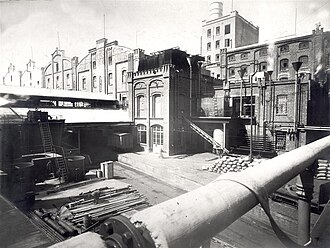
Other significant industrial contributors include the textile manufacturer La Bernalesa, glass maker Cattorini, Cerámica Quilmes (construction materials), and Rheem (climate control equipment).
The mid-20th century saw a shift toward aviation. In 1943, the Argentine Air Force established a 220 ha (540 acre) base in East Quilmes. A year later, Impa (Industria Metallurgica y Plastica Argentina) opened the country's first airplane plant. However, Impa faced controversy; it was blacklisted by the U.S. government due to ties with fascist figures in Argentina and Nazi-occupied Austria, and its aircraft were described by The New York Times as having an "antiquated design."
Modern Geography and Society
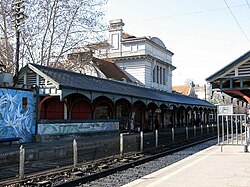
Today, the city is split into two primary sections, East and West, divided by the tracks of the Metropolitano passenger train line. While East Quilmes features wealthy residential areas and a bustling shopping district, the landscape changes as one moves toward the Río de la Plata. The river-adjacent neighborhoods are characterized by poverty and the presence of two large villas miseria (slums), which are frequently subject to severe flooding.
Sports and Culture
Quilmes is renowned for its sporting passion, particularly football. It is home to two of Argentina's oldest clubs: Quilmes Atlético Club, founded in the 19th century by Cannon J. T. Stevenson, and Club Atlético Argentino de Quilmes, which was founded later by Argentines who were excluded from the QAC.

The city's international sporting profile was further elevated when it was chosen by the FIH to host the 2014 Men's Hockey Champions Trophy.
Key Facts
- Indigenous Roots: Founded as a forced colony for the Quilmes tribe from Tucumán in 1666.
- Industrial Hub: Home to the Cerveza Quilmes brewery since 1888.
- Aviation History: Site of Argentina's first airplane plant (Impa) in 1944.
- Sports Legacy: Home to two of the oldest football teams in Argentina.
- Geography: Divided by the Metropolitano train line into East and West sectors.
| Year/Period | Event/Entity | Significance |
|---|---|---|
| 1666 | Exaltación de la Santa Cruz de los Kilme | Establishment of the forced indigenous colony. |
| 1806 | First British Invasion | British forces entered Buenos Aires via Quilmes. |
| 1818 | Town of Quilmes | Official establishment of the town. |
| 1888 | Cerveza Quilmes | Brewery founded by Otto Bemberg. |
| 1898 | St. George's College | Private educational institution established. |
| 1944 | Impa Plant | Argentina's first airplane manufacturing plant. |
Frequently Asked Questions
Who were the original inhabitants of Quilmes?
The city is named after the Quilmes, a native tribe from Tucumán who were forcibly relocated to a colony near Buenos Aires by the Spanish in 1666.
What is the significance of the Cerveza Quilmes brewery?
Founded in 1888 by Otto Bemberg, the brewery gave the city its global brand recognition and remains one of the most important employers in the area.
Why was the Impa airplane plant controversial?
Impa was blacklisted by the United States government because of its connections to fascist figures in Argentina and Nazi-occupied Austria.
What are the two main football clubs in the city?
The city is home to Quilmes Atlético Club (founded by Cannon J. T. Stevenson) and Club Atlético Argentino de Quilmes.
How is the city geographically divided?
Quilmes is divided into East and West sections by the tracks of the Metropolitano passenger train line.