Quaternary Period: The Age of Ice and Human Evolution
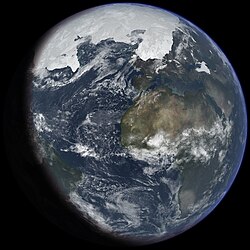
The Quaternary is the current and most recent period of the Cenozoic Era. Spanning from 2.58 million years ago to the present day, it represents the final chapter of the Phanerozoic eon. This period is most famously characterized by the Quaternary glaciation—a series of cyclic expansions and retreats of continental ice sheets that fundamentally reshaped the Earth's surface and influenced the evolution of life.
Divided into two primary epochs, the Quaternary begins with the Pleistocene (2.6 million to 12,000 years ago) and concludes with the Holocene (12,000 years ago to today). While scientists recently proposed a third epoch called the Anthropocene to mark human impact on the planet, this proposal was rejected by the International Union of Geological Sciences (IUGS) in 2024.
Key Facts
- Time Span: 2.58 million years ago to the present.
- Major Epochs: Pleistocene and Holocene.
- Defining Feature: Cyclic growth and decay of continental ice sheets.
- Atmospheric Oxygen: Approximately 20.8 vol % (modern levels).
- Mean Surface Temperature: Approximately 14 °C (0.5 °C above pre-industrial levels).
- Human Presence: The entire period coincides with the existence of recognizable humans.
Chronology and Research History
The term "quaternary" was first introduced by Jules Desnoyers in 1829 to describe sediments in France's Seine Basin that appeared younger than Tertiary rocks. Earlier, in 1759, Giovanni Arduino had suggested that northern Italy's strata could be divided into four "orders."
Defining the Quaternary has been a complex process for the International Commission on Stratigraphy (ICS). Originally, the Pleistocene was defined as starting 1.805 million years ago. However, to better align the time scale with the onset of Northern Hemisphere glaciation, the ICS revised the base of the Quaternary to 2.58 million years ago in 2009. This change incorporated the Gelasian Stage, which was previously part of the Pliocene Epoch.
The Global Boundary Stratotype Section and Point (GSSP)
To ensure international consistency, the lower boundary of the Quaternary is formally defined by a GSSP (a physical reference point in the rock record). For the Quaternary, this is located at the Monte San Nicola Section in Gela, Sicily, Italy. The boundary is marked by the base of the magnetic polarity chronozone C2r (Matuyama) and the extinction of specific haptophytes, Discoaster pentaradiatus and Discoaster surculus.
Geological and Environmental Changes
Because the Quaternary is geologically brief, there has been relatively little change in the position of the continents due to plate tectonics. However, the fluctuating sea levels caused by glacial cycles led to dramatic geographical shifts.
- Land Bridges: The Bering Strait periodically closed, creating a land bridge between Asia and North America. Similarly, the English Channel occasionally filled, connecting Britain to mainland Europe.
- Sea Transformations: The Bosphorus and Skagerrak straits emerged during glacial periods, turning the Black Sea and Baltic Sea into freshwater lakes before they were reflooded by rising seas.
- North American Landscapes: The Great Lakes and Hudson Bay were formed as a result of the Canadian Shield's readjustment following the last ice age. The American Northwest was also shaped by periodic flash flooding of the Scablands.
Climate and the Glacial Theory
The Quaternary is defined by the Quaternary Ice Age, a term coined by Schimper in 1839. This era is characterized by periodic glaciations where continental glaciers reached as far as 40° latitude.
The understanding of these cycles began in 1821 when Ignaz Venetz suggested glaciers had existed far from the Alps. This was later expanded by Louis Agassiz, who proposed a great glacial period with global effects, establishing the Glacial Theory. Modern science attributes these fluctuations to Milankovitch cycles—variations in the Earth's orbit and tilt that change the amount of solar radiation reaching the planet.
Flora and Fauna
The Quaternary witnessed the rise of modern humans, who evolved approximately 315,000 years ago. On land, mammals, flowering plants, and insects were the dominant life forms.
However, the Late Pleistocene was marked by a massive global extinction of megafauna (large mammals). Species such as mammoths, mastodons, sabre-toothed cats, and glyptodonts vanished worldwide. In North America, horses, camels, and American cheetahs also became extinct. Many of these giant mammals thrived in ice-free regions of Eurasia and North America but disappeared as the glacial period ended roughly 11,700 years ago.
Quaternary Summary Table
| Feature | Details |
|---|---|
| Time Range | 2.58 Ma to Present |
| Epochs | Pleistocene, Holocene |
| Primary Driver | Milankovitch cycles (Solar radiation) |
| Atmospheric CO2 | c. 250 ppm |
| Key Biological Event | Evolution of modern humans; Megafauna extinction |
| Lower Boundary GSSP | Monte San Nicola Section, Sicily, Italy |
Frequently Asked Questions
What is the difference between the Pleistocene and the Holocene?
The Pleistocene is the earlier, longer epoch (2.6 million to 12,000 years ago) characterized by repeated glacial cycles. The Holocene is the current interglacial epoch, beginning 12,000 years ago, featuring a more stable and warmer climate.
Why was the Anthropocene rejected as a formal epoch?
Although proposed to highlight the significant impact of human activity since the Industrial Revolution, the International Union of Geological Sciences (IUGS) rejected the Anthropocene as a formal geological epoch in 2024.
What are Milankovitch cycles?
Milankovitch cycles are periodic changes in Earth's orbit and axial tilt. These variations alter the distribution and intensity of incoming solar radiation, which serves as a fundamental control for the advance and retreat of glaciers.
Which animals went extinct during the Quaternary?
The Late Pleistocene saw the extinction of many large mammals, including mammoths, mastodons, sabre-toothed cats, and glyptodonts globally, as well as horses and camels specifically in North America.
How did the Quaternary affect the geography of North America?
The movement and melting of massive ice sheets created the Great Lakes and Hudson Bay through the readjustment of the Canadian Shield and caused flash flooding in the Scablands of the American Northwest.