Pyongyang: The Capital of Willows and North Korea's Central Hub
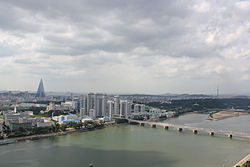
Known by its nickname, "Capital of Willows" (Ryugyong), Pyongyang serves as the directly governed capital of North Korea. Situated along the banks of the Taedong River, this sprawling metropolis is the political, economic, and cultural heart of the nation. With a population exceeding 3.1 million as of 2021, the city is a complex blend of historical significance and modern urban development.
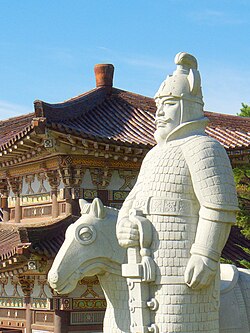
Key Facts
- Status: Directly governed city of North Korea
- Nickname: Capital of Willows (Ryugyong)
- Population: Approximately 3,157,538 (2021)
- Major River: Taedong River
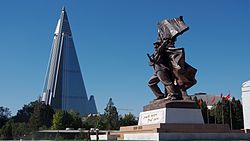
- Primary Landmark: Ryugyong Hotel
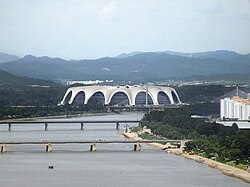
- Largest Stadium: Rungrado 1st of May Stadium
Geography and Climate
Pyongyang is located at coordinates 39°01′00″N 125°44′51″E, sitting at an elevation of just 1.8 meters above sea level. The city covers a direct area of 829.1 km², while its wider metropolitan area extends to 3,194 km².
The city experiences a distinct seasonal climate. Summers are warm and humid, with July seeing the highest average daily maximum temperatures around 29.1°C (84.4°F) and significant precipitation. Winters are cold, with January recording mean daily minimums of approximately −9.8°C (14.4°F), though record lows have reached as low as −26.5°C (−15.7°F).
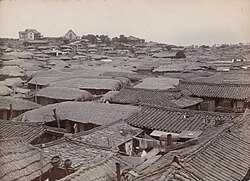
Urban Landscape and Landmarks
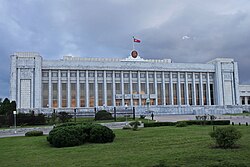
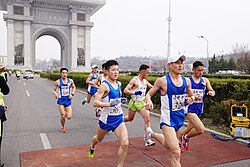
The skyline of Pyongyang is defined by massive monuments and unique architectural feats. One of the most recognizable structures is the Ryugyong Hotel, a towering skyscraper that dominates the view. Other significant landmarks include the Juche Tower, which commemorates the national philosophy of self-reliance, and the Arch of Triumph, a monument inspired by the Arc de Triomphe in Paris but built on a larger scale.
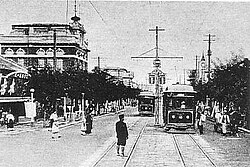
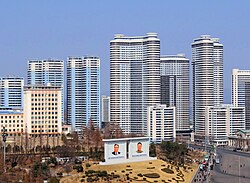
For sports and large-scale gatherings, the city hosts events at the Rungrado 1st of May Stadium. Located by the Taedong River, it holds the distinction of being the second-largest stadium in the world by seating capacity. The city also features the Kim Il Sung Stadium and various residential complexes like the Mansu Apartments.
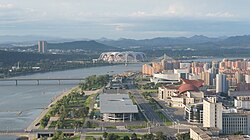
Administrative Structure and Districts
Pyongyang is organized into 19 districts (guyok), 2 counties, and one neighborhood. This administrative division allows for the management of its dense population, which has a density of roughly 3,808 people per km².
Major Districts
- Chung-guyok
- Moranbong-guyok
- Taesong-guyok
- Mangyongdae-guyok
- Sunan-guyok
- Hwasong-guyok
Culture, Education, and Daily Life
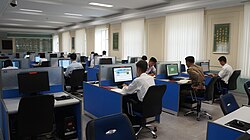
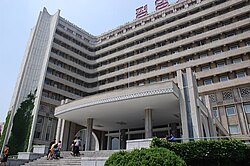
The city is a center for higher learning and specialized services. Kim Il Sung University is a primary institution for education and scientific research. In terms of healthcare, the city is home to facilities such as the Pyongyang Maternity Hospital.
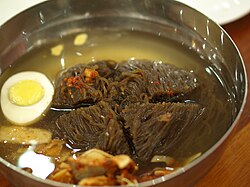
Cuisine also plays a vital role in the local identity. A famous specialty is Pyongyang raengmyŏn, a cold buckwheat noodle soup that originated in the city and remains a staple of the local diet.
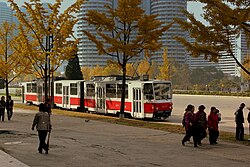
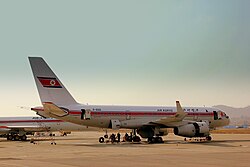
Transportation within the city includes the Pyongyang Metro and various tram services. For international travel, Sunan International Airport serves as the primary gateway, hosting carriers such as Air Koryo.
City Overview Summary
| Category | Details |
|---|---|
| Country | North Korea |
| Area (City) | 829.1 km² |
| Population (2021) | 3,157,538 |
| Time Zone | UTC+09:00 |
| ISO Code | KP-01 |
Frequently Asked Questions
What is the nickname of Pyongyang?
Pyongyang is known as the "Capital of Willows" (Ryugyong).
What is the most famous food in Pyongyang?
Pyongyang raengmyŏn, a cold buckwheat noodle soup, is a signature dish of the city.
How large is the Rungrado 1st of May Stadium?
It is the second-largest stadium in the world in terms of seating capacity.
What is the climate like in Pyongyang?
The city has distinct seasons, with cold winters and warm, humid summers characterized by significant rainfall in July.
What is the main river flowing through the city?
The Taedong River flows through the center of Pyongyang.