Puerto Bolívar: Colombia's Premier Coal Export Hub
Located in the northernmost reaches of South America, Puerto Bolívar is a critical maritime gateway situated in the Uribia Municipality of the La Guajira Department, Colombia. Positioned at the south head of Bahia Portete, this port serves as a vital economic engine for the region, characterized by its permanent winds and arid landscape. It is strategically located 75 km north of Uribia and 166 km from Riohacha.
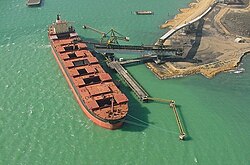
Key Facts
- Status: The largest port in Colombia and the largest coal-export port in Latin America.
- Location: Bahia Portete, La Guajira Department, Colombia.
- Primary Function: Exporting coal from the Cerrejón mine.
- Vessel Capacity: Capable of receiving ships up to 180,000 tonnes.
- Climate: Hot desert climate (Köppen BWh) with minimal annual rainfall.
History and Governance
The port was officially established on April 5, 1982, via decree No. 995 by President Julio César Turbay Ayala. Originally named the Harbormaster of Bahia Portete, its creation was intended to consolidate state presence in the region and enforce maritime legislation on both domestic and foreign vessels utilizing the quays of Portete and Puerto Nuevo.
In 1986, under the administration of President Belisario Betancur, the facility was renamed the Harbormaster of Puerto Bolívar, the name by which it is known today.
Industrial Infrastructure
Puerto Bolívar is a marvel of industrial logistics, designed specifically to handle massive volumes of mineral exports. Its infrastructure integrates rail, road, and sea transport to ensure efficient movement of goods.
Railway and Transport
The port is connected to the Cerrejón mine by a 150 km railway. Notably, this is the only standard gauge (1,435 mm) freight railway in Colombia, allowing for the transport of heavy loads over long distances.
Port Facilities
As the leading coal-export hub in Latin America, the port has utilized covered conveyor belts and a direct-loading system since 1985. These systems allow the port to accommodate massive vessels with capacities of up to 180,000 tonnes (approximately 200,000 short tons).
Air and Road Access
The site includes the Puerto Bolívar Airport, which features a 1,600-metre runway, though it remains a restricted flight area. Additionally, a 150 km motorway established in 1982 provides essential operational support and connects the southern and northern parts of the La Guajira Department.
Climate and Environment
Puerto Bolívar experiences a hot desert climate, classified as Köppen BWh. This environment is defined by high temperatures and very low precipitation for most of the year. Rainfall is primarily concentrated between September and November.
| Month | Mean Max Temp (°C) | Mean Temp (°C) | Mean Min Temp (°C) | Avg Rainfall (mm) |
|---|---|---|---|---|
| January | 31.4 | 28.0 | 24.6 | 4.8 |
| April | 32.9 | 29.2 | 25.6 | 6.9 |
| July | 34.5 | 30.5 | 26.6 | 11.0 |
| October | 32.1 | 29.5 | 26.0 | 95.2 |
| Yearly Avg | - | 29.4 | - | 330.8 |
Frequently Asked Questions
What is the primary purpose of Puerto Bolívar?
Puerto Bolívar serves as the largest coal-export port in Latin America, primarily facilitating the transport of coal from the Cerrejón mine to international markets.
What makes the railway at Puerto Bolívar unique in Colombia?
The 150 km railway connecting the port to the Cerrejón mine is the only freight railway in the country that uses the 1,435 mm standard gauge.
What is the maximum vessel size the port can handle?
The port is equipped to receive vessels with a capacity of up to 180,000 tonnes.
When was the port officially established?
It was created by decree on April 5, 1982, originally as the Harbormaster of Bahia Portete.
What is the weather like in Puerto Bolívar?
The area has a hot desert climate with very little rainfall, except for a brief rainy season occurring between September and November.