Project Gutenberg: The World's Oldest Digital Library
In an era of instant digital access, it is easy to forget that the concept of the eBook was pioneered decades ago. Project Gutenberg stands as the oldest digital library in existence, a massive volunteer-driven effort dedicated to digitizing and archiving cultural works. By focusing on public domain texts—works no longer protected by copyright—the project ensures that the world's literary heritage remains free and accessible to anyone with a computer.
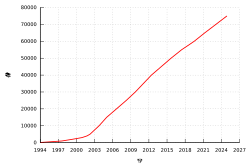
Founded on the principle of encouraging the creation and distribution of eBooks, Project Gutenberg provides an open-format layout that allows its vast collection to be read on almost any device. As of March 22, 2026, the library has grown to include nearly 78,000 items.
Key Facts
- Established: December 1971 by Michael S. Hart.
- Collection Size: Nearly 78,000 documents (as of March 2026).
- Core Criteria: Works must be in the public domain in the United States.
- Accessibility: All files are free and available in open formats.
- Governance: Managed by the Project Gutenberg Literary Archive Foundation, a 501(c)(3) non-profit.
The History of a Digital Pioneer
The project began in 1971 when Michael S. Hart, then a student at the University of Illinois, gained access to a Xerox Sigma V mainframe computer. Recognizing the immense value of the unlimited computer time he had been granted, Hart sought to "give back" by making the world's most important texts available to the public. His first act of digitization was the United States Declaration of Independence.
Hart's original ambition was bold: he aimed to make the 10,000 most consulted books available for little or no charge by the end of the 20th century. For nearly two decades, Hart manually entered text into the system. It wasn't until 1989 that the advent of image scanners and Optical Character Recognition (OCR)—software that converts images of text into machine-readable text—made large-scale scanning feasible.
As the project expanded, it evolved from a one-man effort into a global community. In the mid-1990s, volunteer Pietro Di Miceli developed the first Project Gutenberg website and online catalog, which helped the project gain widespread popularity. Michael S. Hart continued to lead the vision until his passing on September 6, 2011.
Scope and Collection
While primarily focused on the Western cultural tradition, Project Gutenberg's library is diverse. The collection consists mainly of novels, poetry, short stories, and drama, but it also includes reference works, cookbooks, and periodicals. While the majority of the content is in English, the library hosts significant numbers of works in various other languages.
Beyond traditional text, the library includes a small selection of non-text items, such as music-notation files, audio files, and movies. To maintain growth, the project adds an average of over 30 new eBooks every week.
| Feature | Details |
|---|---|
| Founder | Michael S. Hart |
| First Document | U.S. Declaration of Independence |
| Primary Format | UTF-8 Plain Text, HTML, ePub, PDF |
| Legal Status | Public Domain (US Law) |
| Hosting Partner | ibiblio (UNC Chapel Hill) |
Technical Evolution and Challenges
The project's commitment to accessibility means using the most universal formats. Most files are provided as plain text encoded in UTF-8. However, this simplicity has led to criticism; in 2000, the presentation was described as "bland" and difficult to read on screens. In response, the project began offering autogenerated HTML versions, as well as ePub and PDF formats.
This gap in styling led to the rise of sister projects like Standard Ebooks, which takes public domain titles and applies professional typography and design to improve the reading experience.
Copyright and Legal Hurdles
Navigating international copyright law has proven complex. Between 2018 and 2021, the Project Gutenberg website was blocked in Germany following a court order from S. Fischer Verlag. The dispute centered on the works of authors like Thomas and Heinrich Mann, which were in the public domain in the U.S. but still protected under German law. A settlement reached in October 2021 resolved the all-Germany block, though specific works by those authors remain blocked in Germany until their local copyrights expire.
Collaborations and Distribution
Project Gutenberg relies heavily on partnerships to scale its operations. A key collaborator is Distributed Proofreaders (DP), founded in 2000. DP allows volunteers to proofread scanned texts in small sections over the internet. By 2018, DP-contributed books made up nearly two-thirds of the entire collection.
In its early years, the project also focused on physical distribution for those without internet access. Between 2003 and 2010, volunteers produced and mailed approximately 40,000 CDs and DVDs containing thousands of eBooks. While free physical disc delivery ended by 2017, ISO images remain available for download.
Frequently Asked Questions
What is the criteria for a book to be added to Project Gutenberg?
The primary criterion is that the work must not be protected by copyright in the United States, meaning it must be in the public domain.
Is Project Gutenberg completely free to use?
Yes, all files are accessible for free under an open format layout, ensuring they can be used on almost any computer.
Who manages the legal and financial aspects of the project?
The Project Gutenberg Literary Archive Foundation, a 501(c)(3) non-profit corporation chartered in Mississippi, handles the project's legal needs and accepts tax-deductible donations.
What formats are the eBooks available in?
While the foundation uses UTF-8 plain text as a base, books are also available in HTML, ePub, and PDF versions to improve readability across different devices.
How does Distributed Proofreaders help the project?
Distributed Proofreaders allows a global network of volunteers to proofread scanned texts, which significantly increases the speed and variety of books added to the library.