President of Germany
The President of Germany, officially known as the Federal President of the Federal Republic of Germany (Bundespräsident der Bundesrepublik Deutschland), serves as the nation's head of state. While the role is primarily ceremonial, the president acts as a vital symbol of state unity and performs critical constitutional functions. The current officeholder is Frank-Walter Steinmeier, who first took office on March 19, 2017, and began his second five-year term on March 19, 2022.
The office was established on May 24, 1949, under the Basic Law (the German constitution), with Theodor Heuss serving as the inaugural holder. The position was designed to be distinct from the executive power held by the Chancellor, ensuring a balance of power within the federal government.
Key Facts
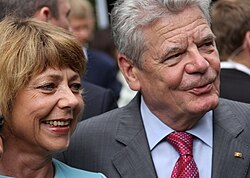
- Current President: Frank-Walter Steinmeier (since 2017).
- Term Length: 5 years, renewable once consecutively.
- Election Method: Secret ballot by the Federal Convention.
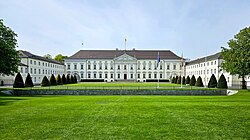
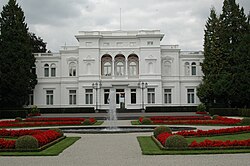
- Primary Residences: Schloss Bellevue (Berlin) and Villa Hammerschmidt (Bonn).
- Annual Salary: €276,000.
- Deputy: The President of the Bundesrat (ex officio).
The Presidential Election Process

The president is not elected by the general public but by a specially convened Federal Convention. This body is designed to mirror the political majority of both the Bundestag (the federal parliament) and the parliaments of Germany's 16 states.
The convention consists of all members of the Bundestag and an equal number of electors chosen by state legislatures. These state electors are not required to be politicians; prominent citizens are frequently appointed. Since German reunification, these conventions have typically exceeded 1,200 members.
Voting is conducted by secret ballot without debate. While the candidate backed by the governing coalition in the Bundestag usually wins, the secret nature of the vote allows for surprises. Historically, these elections have served as political barometers; a strong showing by an opposition candidate often signals a shift in public sentiment that could influence the next general election.
Duties and Constitutional Powers
The president's role is characterized by a mix of representative duties and specific legal authorities. While they do not manage day-to-day government operations, their signature is required for laws to take effect.
Executive and Legislative Functions
- Government Formation: Proposing the Chancellor to the Bundestag and appointing/dismissing the Chancellor and cabinet ministers.
- Legislative Oversight: Signing and promulgating laws. The president may veto a law if they believe it is manifestly unconstitutional.
- Parliamentary Authority: Convening the Bundestag and, under specific circumstances, dissolving it to call for snap elections.
- Emergency Powers: Declaring a legislative state of emergency when necessary.
Representative and Judicial Roles
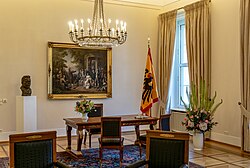
The president represents Germany both domestically and internationally. They are also responsible for awarding federal honors and exercising the power to pardon individual offenders on behalf of the Federation.
Presidential Office and Logistics
The president maintains two official residences: the primary seat at Schloss Bellevue in Berlin and a secondary seat at Villa Hammerschmidt in Bonn.
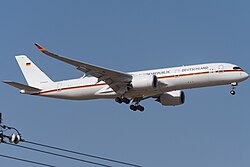
For transportation, the president utilizes a black German-made car with the distinctive number plate "0 – 1". For air travel, the president uses VIP aircraft operated by the Executive Transport Wing of the German Air Force, including the Airbus A350. When the president is on board, the flight uses the callsign "German Airforce 001".
Historical Context
The current office differs significantly from previous iterations of the German head of state. In the Weimar Republic (1919–1945), the president was directly elected by the people for a seven-year term and held considerably more executive power.
During the era of the German Democratic Republic (East Germany), the office of the President of the Republic existed until 1960, after which it was replaced by a collective head of state modeled on the Soviet system. The modern Federal Presidency was established in 1949 to ensure stability and prevent the concentration of power in a single individual.
Below is a summary of the presidential terms in the Federal Republic of Germany.
| President | Term Start | Party | Key Note |
|---|---|---|---|
| Theodor Heuss | 1949 | FDP | Inaugural holder |
| Richard von Weizsäcker | 1984 | CDU | Served two terms |
| Joachim Gauck | 2012 | Independent | First independent president |
| Frank-Walter Steinmeier | 2017 | SPD | Current incumbent |
Frequently Asked Questions
How is the President of Germany elected?
The president is elected by the Federal Convention, which consists of all members of the Bundestag and an equal number of electors chosen by the 16 state legislatures, via a secret ballot.
Can the President veto a law?
Yes, but typically only on the grounds of constitutionality. If the president believes a bill is manifestly unconstitutional, they may refuse to sign it, as Frank-Walter Steinmeier did with the "Hate Speech Act" in 2020 before it was amended.
What is the difference between the President and the Chancellor?
The President is the head of state, focusing on ceremonial, representative, and constitutional duties. The Chancellor is the head of government, wielding the actual executive power and managing the administration of the country.
How long is a presidential term?
A president is elected for a term of five years and may be re-elected once consecutively, for a maximum of ten years in office.
Who acts as president if the office is vacant?
The President of the Bundesrat serves as the deputy and assumes the duties of the president in the event of a vacancy or inability to serve.