German Chancellors: A History of Leadership from Bismarck to Merz
The office of the German Chancellor serves as the central pillar of Germany's executive power. From its inception in the 19th century to the modern democratic era, the role has evolved from a position appointed by monarchs to a leadership post accountable to the people through a parliamentary system. This journey reflects the turbulent and transformative history of the German nation-state.
Key Facts
- Otto von Bismarck was the first chancellor, serving both the North German Confederation and the German Empire.
- Angela Merkel holds the distinction of being the first female chancellor of Germany.
- Helmut Kohl presided over the historic reunification of Germany in 1990.
- The CDU (Christian Democratic Union) and SPD (Social Democratic Party) have been the dominant political forces in the Federal Republic.
- Friedrich Merz is the current incumbent chancellor.
The Early Eras: Empire and Republic
The office was established in 1867 within the North German Confederation. At this time, the chancellor was appointed by the Bundespräsidium (the Prussian king). Following the Franco-Prussian War, the Confederation evolved into the German Empire in 1871. During this period, the chancellor remained responsible only to the Emperor.
The political landscape shifted dramatically with the 1918 constitutional reform, which granted Parliament the power to dismiss the chancellor. Under the 1919 Weimar Constitution, the president appointed the chancellor, but the office became responsible to the Reichstag (the German parliament).
This democratic experiment was dismantled between 1933 and 1945 under the Nazi regime. Following the appointment of Adolf Hitler, the Enabling Act granted the chancellor dictatorial powers, effectively ending the Weimar Republic. After President Paul von Hindenburg died in 1934, Hitler merged the roles of president and chancellor into a single title: Führer und Reichskanzler.
The Federal Republic of Germany (1949–Present)
Following World War II and the Allied occupation, Germany was split into two states in 1949. The Federal Republic of Germany (West Germany) adopted the Basic Law, which established the chancellor as the most powerful political office, while reducing the role of the president. In contrast, East Germany (the German Democratic Republic) did not use the title of chancellor, instead utilizing a chairman of the Council of Ministers.
In 1990, the two states merged during German reunification, and the Federal Republic of Germany became the unified nation-state.
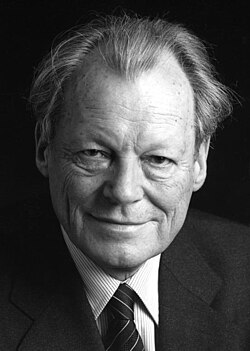
Since 1949, the office has been characterized by long tenures and a rotation between two primary parties: the center-right CDU and the center-left SPD. Leaders like Konrad Adenauer and Helmut Kohl provided decades of stability, while Angela Merkel broke gender barriers as the first woman to lead the country.
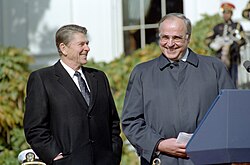
Comparison of Longest-Serving Modern Chancellors
The stability of the Federal Republic is best illustrated by the tenure of its longest-serving leaders, who have shaped Germany's role in the European Union and the global economy.
| Rank | Chancellor | Length of Tenure | Party |
|---|---|---|---|
| 1 | Helmut Kohl | 16 years, 26 days | CDU |
| 2 | Angela Merkel | 16 years, 16 days | CDU |
| 3 | Konrad Adenauer | 14 years, 31 days | CDU |
| 4 | Helmut Schmidt | 8 years, 138 days | SPD |
| 5 | Gerhard Schröder | 7 years, 26 days | SPD |
Frequently Asked Questions
Who was the first chancellor of Germany?
Otto von Bismarck was the first chancellor, beginning his tenure in 1867 with the North German Confederation and continuing through the establishment of the German Empire.
How did the role of the chancellor change after 1918?
The 1918 reforms and the subsequent 1919 Weimar Constitution shifted the chancellor's accountability from the Emperor to the Parliament (Reichstag), allowing the legislature to dismiss the head of government.
Who was the first female chancellor?
Angela Merkel was the first woman to hold the office of chancellor, serving from 2005 until 2021.
What happened to the office of chancellor in East Germany?
The office of chancellor was not reconstituted in East Germany; instead, the government was led by the chairman of the Council of Ministers.
Which political parties have most frequently held the chancellorship since 1949?
The Christian Democratic Union (CDU) and the Social Democratic Party (SPD) have been the primary parties, with the CDU holding the office for a significantly higher total number of days.