Precocial and Altricial Species: Developmental Strategies in Animals
In the natural world, animals employ vastly different strategies for bringing their young into the world. These strategies generally fall along a spectrum between two primary developmental states: precocial and altricial. While these terms describe the level of maturity a newborn possesses, they influence everything from parental care to survival rates in the wild.
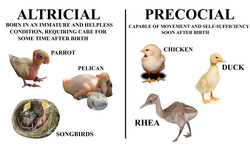
Precocial species are those born or hatched in a relatively mature and mobile state. These animals are typically nidifugous, meaning they are capable of leaving the nest shortly after birth. In contrast, altricial species are born underdeveloped and rely entirely on their parents for nourishment and protection. These two categories are not rigid boxes but rather a continuum of biological development.
Key Facts
- Precocial young are born with open eyes, body covering (hair or down), and the ability to move independently.
- Altricial young are born helpless, often blind and hairless, requiring extensive parental care.
- Superprecociality is an extreme form of precociality where young can fly or hunt almost immediately.
- Nidifugous refers to the behavior of leaving the nest early, while nidicolous refers to staying in the nest.
- In fish, these terms often relate to whether a larva possesses a functional stomach at first feeding.
Precocial Development: Ready for the World
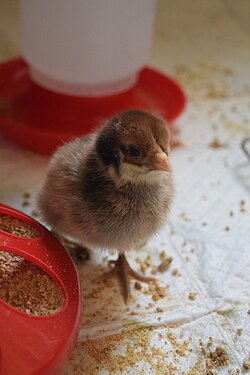
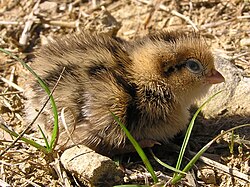
Precocial animals are designed for immediate survival. They typically possess larger brains at birth, open eyes, and a coating of hair or down. This allows them to flee from predators or defend themselves almost immediately.
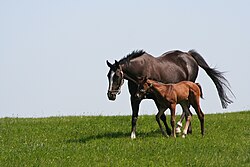
In the avian world, ground-nesting birds like turkeys and ducks exemplify this trait, with young often ready to leave the nest within one to two days. Among mammals, most ungulates (hoofed mammals) are precocial, gaining the ability to walk shortly after birth.
Superprecociality
Some species push this maturity to the extreme, a state known as superprecociality. Megapode birds, for instance, hatch with full-flight feathers and can fly on their first day. Historically, pterosaurs and Enantiornithes (extinct birds) exhibited similar capabilities.
The blue wildebeest provides a striking mammalian example. Calves can stand within an average of six minutes and walk within thirty. Within a single day, they can outrun a hyena. This gives them a significant evolutionary advantage over the hartebeest, their closest relative, whose calves take much longer to stand and cannot keep up with their mothers for over a week.
Other highly precocial animals include the black mamba, whose hatchlings are fully independent and capable of hunting small rats immediately.
Altricial Development: The Need for Care
Altricial species take the opposite approach. Their young are born immobile, often without hair or down, and are typically unable to obtain food or regulate their own body temperature. These newborns are entirely dependent on adult care for survival.
Common examples of altricial birds include owls, hawks, woodpeckers, and most songbirds. In the mammal kingdom, primates (including humans), domestic dogs, cats, and most rodents are altricial. Marsupials also follow this pattern.
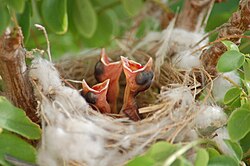
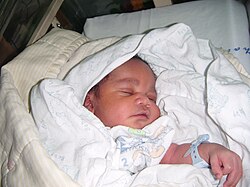
The level of helplessness varies. For example, newborn domestic cats cannot hear, see, or even defecate and urinate without external stimulation. The giant panda is the largest placental mammal to be born in this hairless, altricial state.
Comparing Developmental Strategies
The difference between these two paths often comes down to parental investment and environmental pressures. Precocial birds can provide protein-rich eggs, allowing the young to hatch in a more advanced "fledgling" stage. This reduces the amount of post-natal care the female must provide.
Altricial birds, however, produce smaller eggs with fewer nutrients. While this means the young are more vulnerable, they often grow faster than precocial young, which is hypothesized to be an evolutionary tactic to minimize the time spent as a helpless nestling exposed to predators.
In mammals, larger adult body sizes often favor precocial young and longer gestation periods, which may be linked to migratory behaviors. Conversely, altricial strategies are often found in territorial species, such as carnivores, where mothers can focus intense, personal care on a few offspring.
The Unique Case of Primates
Humans and other primates exhibit a hybrid pattern. While infants are born altricially—with minimal eyesight and fleshy bodies—this stage is brief. They quickly develop stronger bones and mature features. This rapid adaptivity allows simians to memorize learned behaviors as instinct between infancy and adolescence.
| Feature | Precocial | Altricial |
|---|---|---|
| Mobility at Birth | High (can walk/swim) | Low (immobile) |
| Eyes | Usually open | Usually closed |
| Body Covering | Hair or down present | Hairless or sparse |
| Parental Care | Minimal post-birth aid | Extensive and essential |
| Nest Behavior | Nidifugous (leaves nest) | Nidicolous (stays in nest) |
Frequently Asked Questions
What is the difference between precocial and nidifugous?
While often used interchangeably, they refer to different things: "precocial" describes the developmental stage (maturity), while "nidifugous" describes the behavior of leaving the nest shortly after birth.
Are all mammals either precocial or altricial?
Most mammals fall into one of these categories, but it is a continuum. Primates, for example, show a unique combination of both, starting very altricially but maturing rapidly in a way that differs from other altricial mammals like rodents.
Why do altricial birds grow faster than precocial ones?
It is hypothesized that altricial young grow faster to reduce the amount of time they spend in the nest, thereby minimizing their window of vulnerability to predators.
What is a superprecocial animal?
A superprecocial animal is one that is extremely mature at birth. An example is the megapode bird, which hatches with full feathers and can fly almost immediately.
How does precociality apply to fish?
In fish, the terms often refer to the digestive system. Precocial larvae have a functional stomach when they first begin feeding, whereas altricial fish do not.