Pre-Dreadnought Battleships of the Imperial Russian Navy
Before the advent of the "all-big-gun" dreadnought era, the Imperial Russian Navy relied on a diverse and often troubled fleet of pre-dreadnoughts—battleships characterized by a mix of heavy main batteries and smaller secondary guns. These vessels served as the backbone of Russian naval power across the Baltic, Black, and Pacific seas, witnessing the tumultuous transition from the 19th century into the era of modern industrial warfare.
Key Facts
- Diverse Fleet: Ships were distributed across the Baltic Fleet, Black Sea Fleet, and the Pacific Squadron.
- Technological Firsts: The Rostislav was the first capital ship in the world to burn fuel oil instead of coal.
- Design Flaws: The Borodino class featured tumblehome hulls (wider at the bottom than the top), which proved unstable during combat.
- Major Conflicts: These ships played central roles in the Russo-Japanese War, the Boxer Rebellion, and World War I.
- Tragic Ends: Many were lost during the Battle of Tsushima or scuttled during the Russian Civil War.
The Black Sea Fleet Pre-Dreadnoughts
The Black Sea Fleet utilized several distinct battleship designs, ranging from coastal defense concepts to full-scale seagoing warships.
Dvenadsat Apostolov and Tri Sviatitelia
The Dvenadsat Apostolov entered service in 1894 and spent much of her later life as a submarine depot ship after being decommissioned in 1911. Interestingly, she served as a cinematic stand-in for the title ship in the film The Battleship Potemkin before being scrapped in 1931.
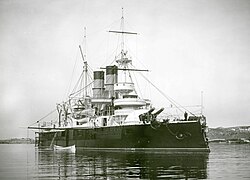
The Tri Sviatitelia served as a flagship during the pursuit of the mutinous Potemkin in 1905. During World War I, she engaged the German battlecruiser SMS Goeben twice without sustaining damage, though she was eventually relegated to coast bombardment duties due to her age.
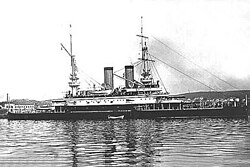
Rostislav and the Evstafi Class
The Rostislav was an experimental vessel that transitioned from a coastal defense design to a compact battleship. While she pioneered the use of fuel oil, her combat effectiveness was limited by 10-inch main guns, which were smaller than the Russian 12-inch standard.
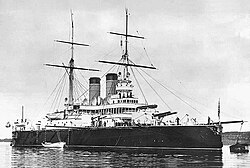
The Evstafi class, consisting of Evstafi and Ioann Zlatoust, represented the most modern ships in the Black Sea Fleet at the start of World War I. They were instrumental in forcing the SMS Goeben to disengage during the Battle of Cape Sarych in 1914.
The Baltic Fleet and the Pacific Campaign
The Baltic Fleet's pre-dreadnoughts faced some of the most grueling challenges in naval history, including the legendary 18,000-mile journey to the Far East.
The Borodino Class
The Borodino class is most remembered for its tumblehome design and its role in the Battle of Tsushima. Under Admiral Zinovy Rozhestvensky, these ships completed the longest coal-powered journey ever conducted by a steel battleship fleet during wartime.
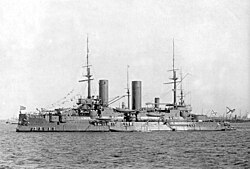
Navarin and Sissoi Veliky
The Navarin saw service in the Mediterranean and the Far East, participating in the suppression of the Boxer Rebellion in 1900. She met her end at the Battle of Tsushima after striking two Japanese mines.
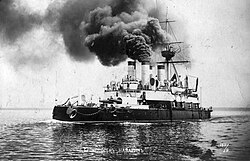
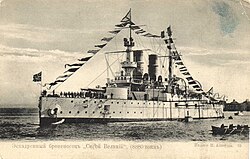
The Sissoi Veliky was plagued by construction faults from the start. Despite these issues, she served in the Mediterranean and China before being captured by the Japanese in 1905 after sustaining heavy damage and a torpedo hit to her steering.
Specialized Classes and Late Designs
Petropavlovsk and Peresvet Classes
The Petropavlovsk class (including Poltava and Sevastopol) was based at Port Arthur. The Poltava had a long second life, being captured by the Japanese (renamed Tango) and later sold back to Russia as the Chesma.
The Andrei Pervozvanny Class
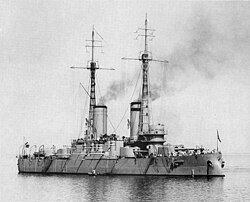
The Andrei Pervozvanny and Imperator Pavel I were the largest Russian battleships before the Gangut class. They were unique for their lattice masts (open-work steel towers) and a mix of 12-inch and quick-firing 8-inch guns. However, by the time they were completed in 1911, they were already eclipsed by British super-dreadnoughts.
The Potemkin, Retvizan, and Tsesarevich
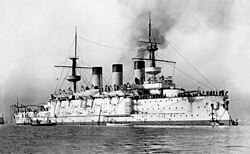
The Kniaz Potemkin Tavricheskiy became world-famous due to the 1905 mutiny. Meanwhile, the Retvizan was captured by the Japanese at Port Arthur, renamed Hizen, and served in the Imperial Japanese Navy until being sunk as a target in 1924.
Technical Specifications Summary
| Ship / Class | Main Armament | Armor | Displacement (Long Tons) | Max Speed |
|---|---|---|---|---|
| Dvenadsat Apostolov | 4 × 12 in | 14 in | 8,076 | 14.5 kn |
| Tri Sviatitelia | 4 × 12 in | 18 in | 13,318 | 16 kn |
| Rostislav | 4 × 10 in | 14 in | 10,520 | 15 kn |
| Borodino Class | 4 × 12 in | 7.64 in | 14,150 | 18 kn |
| Andrei Pervozvanny | 4 × 12 in | 8.5 in | 18,580 | 18.5 kn |
Frequently Asked Questions
What is a tumblehome hull?
A tumblehome hull is a design where the ship's sides slope inward as they rise above the waterline, making the deck narrower than the widest part of the hull. This was used in the Borodino class but was later discarded because it made ships unstable under combat conditions.
Which Russian ship was the first to use fuel oil?
The Rostislav was the world's first capital ship to burn fuel oil instead of coal for propulsion.
What happened to the Retvizan?
After the surrender of Port Arthur, the Retvizan was raised and repaired by the Japanese, who commissioned her as the Hizen. She served in the Imperial Japanese Navy until 1922 and was sunk as a gunnery target in 1924.
Why were the Andrei Pervozvanny class ships considered outdated upon completion?
Despite being the largest ships in the Russian Navy at the time, their long construction delays meant that by the time they entered service, the Royal Navy had already launched more advanced super-dreadnoughts like the Orion class.
What was the significance of the Borodino class's voyage?
The Borodino class participated in the longest coal-powered journey ever conducted by a steel battleship fleet during wartime, covering over 18,000 miles one way to reach the Far East.