Power Pop: The Evolution of a High-Energy Genre
Power pop is a vibrant fusion of melodic sensibilities and raw energy. Emerging from the intersection of 1960s pop and the grit of rock and roll, the genre is defined by its commitment to the hook—a catchy melodic phrase designed to capture the listener's attention immediately. While it has often struggled for critical respect, its influence persists in everything from the arena anthems of the 1970s to the pop-punk explosions of the 1990s.
The genre's roots are deeply embedded in the mid-1960s British Invasion, where American musicians were captivated by the blend of innocence and power found in early UK bands. It represents a rebellion against the perceived pretensions of progressive rock, opting instead for brevity, harmony, and high-volume excitement.

Key Facts
- Origin: Developed in the mid-1960s to early 1970s across the US and UK.
- Etymology: The term was coined in 1967 by Pete Townshend of The Who.
- Core Influences: Garage rock, beat music, rockabilly, doo-wop, and jangle pop.
- Commercial Peak: Late 1970s, coinciding with the rise of punk and new wave.
- Defining Characteristic: A mix of heavy guitar hooks and polished vocal harmonies.
The Birth of a Sound: 1960s Origins
The conceptual foundation of power pop began with the commercial ascent of the Beatles in America around 1964. The "Merseybeat" sound—characterized by jangly guitars and immaculate harmonies—provided the blueprint. In May 1967, Pete Townshend of The Who officially coined the term "power pop" to describe the music of the Small Faces and early records by the Beach Boys and the Beatles.
Townshend viewed this style as a more accessible alternative to the experimental directions rock was taking. Over time, the genre's roots were traced back to a variety of sources, including the early records of the Kinks, the Byrds, and the influence of girl groups and rockabilly.
The 1970s: Emergence and Arena Success
By the 1970s, power pop became a way for young musicians to recapture the spirit of the 1960s while pushing the sound in new directions. This era saw the rise of "second generation" acts who filled the void left by the Beatles' breakup in 1970.
Badfinger, the first band signed to Apple Records, were early purveyors of the sound, though they were often dismissed as imitators. The Raspberries, however, provided the definitive template for the genre with hits like "Go All the Way" (1972), blending heavy arena-rock hooks with teen-friendly choruses.
![Todd Rundgren's work with Nazz in the 1960s and as a solo artist in the 1970s was significant to the development of the genre.[9]](/images/51/fc/51fcf4d3a6fea77447d80bb7619b9375dafa6a852c4860f390476cb3d91328e5.jpg)
The Commercial Peak
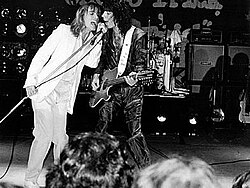
The late 1970s saw power pop align with the energy of punk and new wave. Bands like Cheap Trick, the Romantics, and Nick Lowe found significant success. Cheap Trick, in particular, elevated the genre to an arena level through massive touring and stage theatrics, achieving legendary status in Japan.
The "My Sharona" Backlash
The genre reached its absolute commercial zenith with the Knack's 1979 hit "My Sharona," which topped the Billboard Hot 100 for six weeks. However, the song's ubiquity triggered a severe critical and popular backlash. This reaction effectively ended the era's momentum, leading record companies to stop signing power pop groups and causing many original bands to dissolve.
Succeeding Waves and Modern Influence
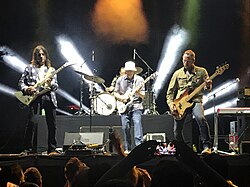
Despite the decline of the original movement, power pop survived as a cult favorite. In the 1990s, a new wave of alternative bands—including Jellyfish, the Posies, and Teenage Fanclub—revived the style, drawing inspiration from the 1960s artists who had influenced the 1980s.
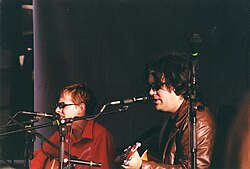
This revival eventually branched into pop-punk in the mid-1990s. Bands like Green Day and Weezer fused power pop's harmonic structures with the uptempo mood of punk rock, bringing the essence of the genre back into the mainstream.
Power Pop Summary
| Era | Key Characteristics | Notable Artists |
|---|---|---|
| 1960s (Origins) | British Invasion, Merseybeat, Jangly Guitars | The Beatles, The Who, The Beach Boys |
| Early 1970s (Emergence) | Beatles-style pop, Heavy hooks | Badfinger, The Raspberries, Big Star |
| Late 1970s (Peak) | New Wave fusion, Arena rock, High commerciality | Cheap Trick, The Knack, The Romantics |
| 1990s - Present | Alternative rock, Pop-punk fusion | Weezer, The Posies, Jellyfish, Green Day |
Frequently Asked Questions
Who coined the term "power pop"?
The term was coined in 1967 by Pete Townshend, the guitarist and songwriter for The Who, during an interview with the New Musical Express.
What defines the sound of power pop?
Power pop is characterized by a combination of melodic, catchy hooks, polished vocal harmonies, and the driving energy of loud, distorted guitars.
Why did the genre decline in the early 1980s?
The decline was largely triggered by a critical and popular backlash against the Knack's hit "My Sharona," which led record labels to lose interest in signing power pop acts.
How does pop-punk relate to power pop?
Pop-punk is an offshoot genre that emerged in the mid-1990s, combining the melodic harmonies of power pop with the faster tempos and aggressive mood of punk rock.
Which band is considered the most successful in power pop history?
Cheap Trick is widely regarded as the most successful act, having taken the genre to arena levels of popularity and achieving massive international success.