Pouākai and the Haast's Eagle: Legend and Reality of New Zealand's Giant Bird
In the rich tapestry of Māori mythology, few creatures are as formidable as the Pouākai (also spelled poukai). Described as a monstrous bird capable of hunting humans, this legendary creature has long fascinated historians and biologists alike. While the Pouākai exists in the realm of folklore, scientific evidence suggests that these myths may be rooted in the existence of a real, prehistoric predator: the Haast's eagle.
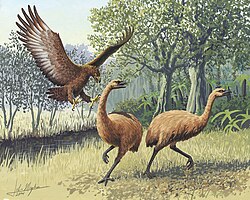
The Legend of the Pouākai
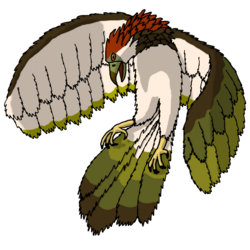
The Pouākai is a central figure in Māori folklore, depicted as a massive bird of prey. According to various legends, this creature was not merely a scavenger but a predator that killed and consumed humans. These stories serve as a cultural memory of a time when the skies of New Zealand were dominated by a predator of unprecedented size and power.
The Scientific Reality: Haast's Eagle
Modern paleontology identifies the likely inspiration for the Pouākai as the Haast's eagle, the largest known eagle species to have ever existed. This apex predator inhabited the east and northwest regions of New Zealand's South Island.
The sheer scale of the Haast's eagle allowed it to hunt prey that would be unthinkable for most modern raptors. It was capable of killing an adult moa—a large, flightless bird—that could weigh up to 230 kilograms (510 lb). Given this strength, researchers believe the eagle potentially possessed the capability to kill a human being.
The Path to Extinction
The Haast's eagle did not vanish immediately upon the arrival of the Māori; it survived for approximately two hundred years after human settlement. Evidence of the bird's presence persists in early rock-shelter paintings found in South Canterbury.
The decline of the species was caused by a combination of environmental and direct factors:
- Habitat Loss: By AD 1350, large areas of lowland habitat were destroyed through burning.
- Direct Hunting: Archaeological sites containing Māori artifacts have yielded Haast's eagle bones, indicating the birds were hunted.
- Loss of Prey: The eagle relied on large birds for food. The extinction of nine species of moa, as well as adzebills, flightless ducks, and flightless geese, deprived the eagle of its primary food sources.
Summary of the Haast's Eagle
| Feature | Details |
|---|---|
| Common Name | Haast's eagle / Pouākai (Mythological) |
| Classification | Bird of prey (Eagle) |
| Region | South Island, New Zealand |
| Primary Prey | Moa (up to 230 kg), adzebills, flightless waterfowl |
| Extinction Drivers | Overhunting, habitat loss, and prey depletion |
Key Facts
- The Pouākai is a monstrous bird from Māori mythology known for eating humans.
- The Haast's eagle is the largest eagle species ever known to science.
- It was capable of taking down prey weighing up to 230 kilograms.
- The species lived in the east and northwest of New Zealand's South Island.
- Extinction occurred roughly 200 years after Māori arrived in New Zealand.
Frequently Asked Questions
Did the Pouākai actually exist?
While the Pouākai is a mythological creature, it is widely believed to be based on the real-life Haast's eagle, which possessed the size and power described in the legends.
How large was the Haast's eagle's prey?
The eagle primarily hunted moa, some of which weighed as much as 230 kilograms (510 lb), along with other large flightless birds like adzebills and geese.
Why did the Haast's eagle go extinct?
The extinction was caused by the destruction of lowland habitats via burning, direct hunting by humans, and the extinction of its main prey, the moa.
Where can evidence of these eagles be found today?
Evidence includes bones found in Māori archaeological sites and depictions in early rock-shelter paintings in South Canterbury.
Could the Haast's eagle really kill a human?
Based on its ability to kill adult moa weighing over 200 kilograms, scientists suggest it potentially had the capability to kill a person.