Pop Music: The Evolution of a Global Phenomenon
Pop music, or simply pop, is a dynamic genre of popular music that emerged in its modern form during the mid-1950s across the United States and the United Kingdom. While it initially encompassed rock and roll and the youth-centric styles of the era, pop eventually diverged into its own identity. By the late 1960s, the term became associated with music that was more commercial, accessible, and ephemeral compared to the more experimental nature of rock.
Key Facts
- Origins: Modern pop emerged in the mid-1950s in the US and UK.
- Etymology: The term "pop song" first appeared in 1926 to describe music with popular appeal.
- Technological Drivers: 45 rpm records, television, and transistor radios revolutionized how pop was consumed.
- Global Reach: Pop has evolved into diverse regional scenes across Asia, Europe, Africa, and the Americas.
- Modern Trends: Recent decades have seen a shift toward electronic dance music (EDM) and a trend toward "sad yet danceable" tones.
Defining Pop Music
The definition of pop music has evolved alongside the industry. Music writer Bill Lamb defines popular music as the music since the industrialization of the 1800s that aligns most closely with the tastes of the urban middle class. Historically, the birth of the modern pop industry is linked to the recording milestones of the 1920s in genres like blues, country, and hillbilly music.
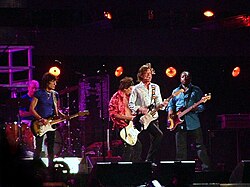
According to the New Grove Dictionary of Music and Musicians, the term originated in Britain in the mid-1950s to describe rock and roll and its influenced youth styles. The Oxford Dictionary of Music notes that while "pop" once referred to concerts for wide audiences, it now specifically denotes non-classical music, typically in song form, performed by global icons.
The Role of Technology and Media
Technological advancements have fundamentally reshaped how pop music is created and distributed. In the 1940s, improved microphone designs enabled a more intimate singing style. This was followed by the introduction of 45 rpm records, which revolutionized the dissemination of singles and fostered a star system based on records, radio, and film.
![Bing Crosby was the first performer to pre-record his radio shows and master his recordings onto magnetic tape.[31]](/images/02/b9/02b9442ceb1b5bb451e52d73bc4cac18ad21900939cabb93a7b73c6211538463.jpg)
The 1950s brought the widespread availability of television, forcing pop stars to develop a strong visual presence. By the 1960s, portable transistor radios allowed teenagers to listen to music independently of their parents. Later, in the early 1980s, the launch of music television channels like MTV prioritized artists with high visual appeal, such as Madonna and Michael Jackson.
Production techniques also evolved. Multi-track recording in the 1960s and digital sampling in the 1980s allowed for greater complexity. By 1967, a divide emerged between "progressive" pop—which sought to push artistic boundaries—and "mass/chart" pop, which focused on commercial appeal.
Stylistic Evolution and Diversity
Pop music is a sponge, absorbing influences from traditional pop, classical, folk, rock, country, and electronic music. Early American pop was influenced by Tin Pan Alley songwriting and Broadway theatre, while European counterparts included German Schlager and French Chanson.
A 2016 study in Scientific Reports analyzed over 464,000 recordings from 1955 to 2010, suggesting that contemporary pop uses a smaller variety of pitch progressions and less diverse instrumentation than the pop of the 1960s. Despite this, the genre continues to innovate.
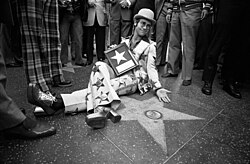
The 1980s saw a surge in digital recording and synthesizers, leading to the rise of synth-pop. By 2014, electronic dance music (EDM) had permeated global pop. Interestingly, researchers at the University of California, Irvine, concluded in 2018 that pop has become "sadder" since the 1980s, replacing brightness with electronic beats that make the music "sad yet danceable."
International Spread
Pop has a massive global footprint, with significant regional scenes in countries like South Korea, Japan, India, Brazil, and Mexico. Latin pop, for instance, gained early traction in the US via Ritchie Valens in the 1950s and later through artists like Selena in the 1980s and 90s. Modern hits like "Despacito" and "Macarena" demonstrate the record-breaking global success of Latin-influenced pop.

Pop in the 21st Century
The turn of the millennium brought a seismic shift as internet downloads began to replace physical sales. While this allowed indie artists to find fame outside the mainstream, it also led to challenges with music piracy. The era was defined by stars like Justin Timberlake, Christina Aguilera, and Britney Spears.
![Britney Spears has been named "Princess of Pop" for revitalizing teen pop in the 2000s.[57]](/images/db/fc/dbfccda2d6bbc659158c1afd8c378745383a0a20c3255b300ce55de5a31b0927.jpg)
By 2010, the influence of club culture surpassed radio in setting trends. This led to the rise of recession pop—music focused on escapism and partying as a response to the economic hardships of the Great Recession. Simultaneously, alternative pop, popularized by artists like Lana Del Rey and Lorde, introduced a moodier, more melancholic tone that influenced later stars like Billie Eilish and Taylor Swift.

Pop Music Summary
| Era | Key Characteristics | Primary Media/Tech | Notable Influence |
|---|---|---|---|
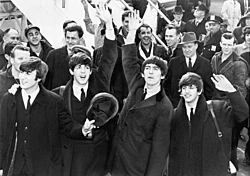
| 1950s-60s | Youth-oriented, Rock and Roll overlap | 45 rpm records, Transistor radios | Traditional Pop, R&B |
| 1970s-80s | Commercial, Synth-heavy, Visual focus | MTV, Synthesizers, Digital recording | Electronic music, Disco |
| 1990s-2000s | Teen pop, Genre-blurring, Digital shift | Internet downloads, CDs | R&B, Hip-hop, EDM |
| 2010s-Present | Recession pop, Alternative pop, EDM | Streaming, Social Media | Club culture, Indie pop |
Frequently Asked Questions
What is the difference between pop and rock?
Until the late 1960s, the terms were often used interchangeably. Eventually, pop became associated with more commercial, accessible, and ephemeral music, while rock often leaned toward more experimental or "progressive" styles.
How did technology change pop music?
Technology drove both production and consumption. Microphones allowed for intimate vocals, 45 rpm records made singles accessible, television created the "visual" pop star, and the internet shifted the industry from physical sales to digital streaming and discovery.
What is "poptimism"?
Poptimism is a trend among music publications and critics to embrace the artistic legitimacy of pop music, moving away from the historical bias that favored "art" music over commercial pop.
What is "recession pop"?
Recession pop refers to the style of pop music dominant in the early 2010s that focused on escapism and partying, largely as a psychological response to the economic troubles of the Great Recession.
Has pop music changed scientifically over time?
A 2016 study suggests that contemporary pop uses a smaller variety of pitch progressions and less diverse instrumentation compared to the 1960s, though it often features greater average volume.