Poole History: From Iron Age Settlement to Maritime Powerhouse
The story of Poole is one of resilience and adaptation, evolving from a prehistoric coastal outpost into one of England's most significant maritime hubs. For over 2,500 years, the area surrounding the modern town has been a focal point for human activity, shaped by its strategic access to the sea and the natural shelter of its harbour.
Ancient Origins and Early Settlements
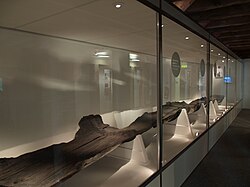
Human presence in the region dates back to the Neolithic period, with evidence found at Hengistbury Head in nearby Christchurch Harbour. By the 3rd century BC, the Durotriges—Celtic-speaking people—migrated from hilltop strongholds like Maiden Castle and Badbury Rings to settle the heathlands around Poole Harbour and the River Frome.
During the 1st century, the Romans arrived during their conquest of Britain. They established a presence at Hamworthy, utilizing an existing Iron Age settlement as a supply base for the fortress at Lake Farm in Ashington and a settlement at Vindocladia (Bradbury Rings).
The Anglo-Saxon Era and Viking Raids
The name "Poole" likely emerged during the post-Roman or Anglo-Saxon periods, derived from the late Brittonic or early Old English word pol, meaning a pool or creek. By the middle to late Anglo-Saxon period, the settlement was integrated into the Kingdom of Wessex, serving as a fishing base and a critical anchorage for ships traveling toward the town of Wareham.
This strategic location also made Poole a target for Norse invaders. The town faced two major Viking incursions: first in 876, when Guthrum's fleet used the harbour to attack Wareham, and again in 1015, when Canute used Poole as a base to launch his conquest of England and raid Wessex.
The Rise of a Medieval Port
Following the Norman conquest, Poole's importance grew as the nearby town of Wareham declined. While not explicitly listed in the Domesday Book, the town's growth is evident in later records. The first written mention of "La Pole" appears in 1196 in a document regarding St James's Chapel.
A pivotal moment occurred in 1248 when Sir William Longspée, the Lord of the manor, sold a charter of liberties to the town's burgesses to fund his participation in the Seventh Crusade. This granted Poole a degree of freedom from feudal rule, allowing the town to hold its own court and appoint a mayor.
Poole's status continued to rise through the following centuries:
- 1433: King Henry VI awarded the town staple port status, allowing it to export wool and granting permission to build a town wall.
- 1568: The Great Charter of Elizabeth I granted Poole legal independence from Dorset, making it a county corporate.
- English Civil War: Due to their puritan beliefs and opposition to King Charles I's "ship money" tax, Poole declared for Parliament. In 1646, the town's Parliamentary garrison captured the Royalist stronghold of Corfe Castle.
The Newfoundland Trade and Georgian Prosperity
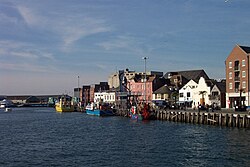
In the 16th century, Poole established lucrative trade routes with North American colonies, most notably the fisheries of Newfoundland. This trade peaked between the early 18th and early 19th centuries, operating on a "three-cornered route": ships carried salt and provisions to Newfoundland, transported dried and salted fish to Catholic Europe, and returned to Poole with olive oil, wine, and salt.
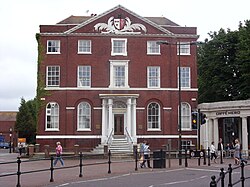
During this golden age, Poole possessed more ships trading with North America than any other English port. The resulting wealth transformed the Old Town, where medieval structures were replaced by elegant Georgian mansions and terraced housing.
This prosperity ended abruptly following the Napoleonic Wars and the War of 1812. The loss of Britain's monopoly over Newfoundland fisheries allowed other nations to offer cheaper services, leading to a rapid decline in Poole's merchant trade within a decade.
Industrialization and Modern Transition
The Industrial Revolution brought rapid urbanization to Poole. By the turn of the 19th century, 90% of the workforce was employed in harbour activities. However, the port faced a critical challenge: as ships grew larger, the shallow waters of Poole Harbour became inadequate. Business shifted to deepwater ports such as Southampton, Liverpool, and Plymouth.
The arrival of the railway—first at Hamworthy in 1847 and later in the town centre in 1872—effectively ended the era of coastal shipping. While Poole did not become a seaside resort like the emerging town of Bournemouth, it prospered by manufacturing goods to meet the demands of Bournemouth's rapid expansion.
Poole in the 20th Century
During World War II, Poole played a vital role in Operation Overlord. It served as the third-largest embarkation point for the D-Day landings, with 81 landing craft carrying the US Army Rangers and the 29th Infantry Division to Omaha Beach. The town also hosted a US Coast Guard rescue flotilla of 60 cutters.
The war left a scar on the town; German bombing killed 75 civilians and contributed to post-war economic decline. The 1950s and 60s saw aggressive redevelopment, where slum properties and many historic buildings were demolished to make way for modern housing. To prevent further loss of heritage, a 6-hectare Conservation Area was established in 1975.
In 1988, the town experienced the "Poole explosion," which necessitated the evacuation of 3,500 people—the largest peacetime evacuation in the UK since World War II.
Key Facts
- Ancient Roots: Inhabited for at least 2,500 years, with early Celtic settlement by the Durotriges.
- Maritime Peak: Once the leading English port for North American trade, specifically the Newfoundland fisheries.
- Political Autonomy: Became a county corporate in 1568 under the Great Charter of Elizabeth I.
- WWII Contribution: A major D-Day embarkation point for US troops heading to Omaha Beach.
- Modern Heritage: A 6-hectare Conservation Area was created in 1975 to protect remaining historic architecture.
| Era | Key Development | Primary Economic Driver |
|---|---|---|
| Iron Age / Roman | Settlement at Hamworthy | Military supply and local trade |
| Anglo-Saxon | Integration into Wessex | Fishing and anchorage |
| Medieval | Staple port status (1433) | Wool exports |
| 18th - Early 19th C. | Newfoundland Trade | Salted fish and European imports |
| 19th Century | Industrialization & Rail | Manufacturing for Bournemouth |
| 20th Century | WWII Logistics | Military embarkation and supply |
Frequently Asked Questions
What was the "three-cornered route" in Poole's trade?
It was a triangular trade pattern where ships sailed from Poole to Newfoundland with salt and provisions, carried dried and salted fish from Newfoundland to Europe, and returned to Poole with salt, olive oil, and wine.
Why did Poole lose its status as a major shipping port in the 19th century?
The primary reason was the increasing size of ships, which became too large for the shallow waters of Poole Harbour. This caused business to move to deepwater ports like Southampton and Liverpool.
What role did Poole play in the D-Day landings?
Poole was the third-largest embarkation point for Operation Overlord. It dispatched 81 landing craft carrying the US Army Rangers and the 29th Infantry Division to Omaha Beach.
How did Poole gain independence from the county of Dorset?
Poole was granted legal independence and made a county corporate in 1568 through the Great Charter of Elizabeth I.
What was the significance of the 1248 charter of liberties?
Sold by Sir William Longspée to fund his participation in the Seventh Crusade, this charter allowed Poole's burgesses to appoint a mayor and hold their own court, reducing feudal control.