Political Repression: Mechanisms of State Control and Social Impact
Political repression occurs when a state entity uses force to control its citizenry for political reasons. The primary objective is typically to restrict or prevent individuals from participating in the political life of their society, thereby diminishing their social standing and influence. By targeting those most likely to challenge the prevailing political ideology, governments aim to maintain absolute control and prevent the mobilization of anti-regime support.
In autocracies, repression is often viewed as a foundational element that establishes a power hierarchy between the leader and the people, contributing to the longevity of the regime. While most commonly associated with dictatorships and totalitarian states, repressive activities can also occur within democratic contexts, sometimes involving government agencies acting without broad state approval.
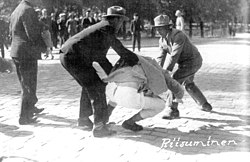
Key Facts
- Purpose: To neutralize political opposition and prevent challenges to the state's ideology.
- Methods: Ranges from covert surveillance and administrative blockages to violent extrajudicial punishments.
- Triggers: Political conflict and civil wars are the strongest predictors of increased state repression.
- Outcome: Can lead to state terrorism, genocide, or crimes against humanity when organized systematically by the state.
- Psychological Effect: Often results in preference falsification, where citizens publicly support a regime while privately opposing it.
Types of Repressive Tactics
Repression is generally categorized by how it is applied and whether the target is aware of the action.
Direct Repression
Direct repression involves obvious, often violent actions targeting specific political actors. In these cases, the target is fully aware of the harm being inflicted upon their life or livelihood. This can extend beyond national borders, particularly in personalist dictatorships where a lack of accountability allows leaders to initiate conflicts with external populations.
Indirect and Covert Repression
Indirect repression relies on the threat of violence, utilizing harassment, intimidation, and administrative blockages to control the population. Covert tactics, such as wiretapping and monitoring, rely on the fear of being caught. While direct repression allows the public to witness and potentially react to state violence, covert tactics often force dissidents to adopt less detectable methods of opposition.
The Role of Violence and State Terrorism
Violence is a frequent companion to political repression, used either to eliminate opposition members directly or to instill widespread fear. When these actions are sanctioned and organized by the state, they may escalate into state terrorism, politicide, or genocide.
In totalitarian regimes, these acts are carried out by a variety of apparatuses, including the secret police, the national army, paramilitary groups, and death squads. Some regimes may even frame the democratic exercises of other states as forms of state terrorism to justify their own security policies.
Repressive Success and Modern Monitoring
The success of a repressive regime is often measured by preference falsification—a phenomenon where an individual's public expressions diverge from their private beliefs. For example, in North Korea, 100% voter turnout in "no choice" elections is used by the state to identify defectors. Those who deviate face severe costs, including forced labor, torture, and prison camps.
Modern technology has significantly enhanced the ability of states to monitor their citizens. In the People's Republic of China, the state employs AI, facial recognition, iris recognition, and big data analysis. These tools are integrated into the Social Credit System and are supported by domestic technology companies such as Huawei, ZTE, Hikvision, and Sensetime.
Contemporary Case Studies
Political repression continues to manifest globally through legal and extrajudicial means:
- Turkey: In March 2025, Istanbul Mayor Ekrem İmamoğlu was arrested and indicted on 142 counts, with prosecutors seeking a prison term exceeding 2,000 years. Opposition leaders claim the move is politically motivated to prevent his 2028 presidential candidacy.
- Russia: Opposition leader Alexei Navalny was sentenced to nine years in prison in 2022 (later increased by 19 years) on fraud and contempt charges. Similarly, Crimean Tatar leader Ilmi Ümerov was convicted of "separatism" in 2017.
- Myanmar: Following the February 2021 military coup, former leader Aung San Suu Kyi was detained and convicted on multiple counts, receiving a total sentence of 33 years.
| Feature | Direct Repression | Indirect/Covert Repression |
|---|---|---|
| Visibility | High; obvious violent action | Low; hidden or administrative |
| Primary Tool | Physical force, imprisonment | Surveillance, intimidation, threats |
| Target Awareness | Immediate and clear | Based on the threat of discovery |
| Citizen Reaction | May spur mobilization via grievance | Leads to more discreet opposition |
Frequently Asked Questions
What is the Law of Coercive Responsiveness?
This term describes the social science finding that states frequently engage in repressive behaviors during times of civil conflict. When a regime's authority or legitimacy is threatened, it responds by suppressing dissidents to eliminate the behavioral threat.
How does repression affect dissident mobilization?
The effect is complex. While repression can reduce the capacity of challengers to organize, it can also be leveraged by dissidents to spur further mobilization by framing the state's violence as a new grievance.
What is preference falsification?
Preference falsification occurs when individuals hide their true political opinions and publicly express support for the ruling power to avoid the costs of defection or repression.
Can political repression happen in democracies?
Yes. Repressive activities have been documented in democratic contexts, including operations carried out by government agencies without full state approval, such as the FBI's COINTELPRO (1956–1971) and the Palmer Raids (1919–1920).
What is the difference between repression and state terrorism?
While repression is the general act of controlling citizenry by force, state terrorism occurs when that repression is systematically sanctioned and organized by the state to create a climate of fear or eliminate specific groups.