Plymouth Sutton and Devonport: A Constituency Profile
Located in the heart of Devon in South West England, Plymouth Sutton and Devonport is a constituency defined by its deep maritime roots and urban diversity. Encompassing the city centre of Plymouth and several key surrounding neighbourhoods, this area serves as a vital hub for defence, education, and industry.
The constituency covers a wide range of districts, including Devonport, Stonehouse, Lipson, Stoke, Keyham, Milehouse, Mannamead, Compton, Efford, Peverell, and Hartley. From the bustling city centre to the residential suburbs, the area reflects a complex blend of historical legacy and modern redevelopment.
Maritime Heritage and Urban Development
Plymouth is a historic port city whose identity is inextricably linked to the sea. Its strategic importance as a centre for shipbuilding and a primary naval base made it a significant target for the Luftwaffe during World War II. The resulting Plymouth Blitz caused widespread destruction, leading to extensive post-war redevelopment that shaped the city's current architectural landscape.
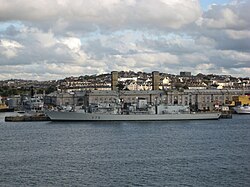
Today, the constituency is home to HMNB Devonport, which holds the distinction of being the largest naval base in Western Europe.
Education and Housing
The city centre hosts the University of Plymouth, which brings a vibrant academic community of approximately 18,000 students to the area. The residential character of the constituency is largely defined by dense terraced housing, originally constructed to house civilian workers for the dockyards.
Socio-economic conditions vary significantly across the region. While the northern suburb of Hartley is predominantly affluent, other areas—particularly the city centre, Devonport, and the post-war council estate of Efford—experience high levels of deprivation. Consequently, house prices in the constituency remain considerably lower than both regional and national UK averages.
Key Facts
- Major Landmark: HMNB Devonport, the largest naval base in Western Europe.
- Education: Home to the University of Plymouth with ~18,000 students.
- Demographics: 90% of the population identified as White in the 2021 census.
- Economy: High employment concentrations in defence, manufacturing, and tourism.
- Housing: Characterized by dense terraced housing and below-average UK house prices.
Demographics and Socio-Economics
The population of Plymouth Sutton and Devonport is characterized by a high number of students and a relatively low proportion of retirees. While residents are generally well-educated, the area faces several economic challenges. Income levels and homeownership rates are low, and the rate of child poverty exceeds the national average.
Employment is heavily tied to the city's industrial strengths, with many residents working in the defence, tourism, and manufacturing sectors. However, the percentage of residents claiming unemployment benefits is above average.
| Category | Detail |
|---|---|
| Primary Industries | Defence, Manufacturing, Tourism |
| Key Institution | University of Plymouth (~18,000 students) |
| Ethnic Composition (2021) | 90% White |
| EU Referendum (2016) | 52% Leave |
| Housing Trend | Below regional/UK average prices |
Political Landscape
Politically, the majority of the constituency is represented by the Labour Party at the local city council level. However, recent council elections have seen the emergence of representatives from Reform UK and the Green Party, indicating a diversifying political environment.
In the 2016 European Union membership referendum, an estimated 52% of voters in the constituency supported leaving the EU, a figure that mirrored the overall UK-wide result.
Frequently Asked Questions
What is the most significant military site in the constituency?
The most significant site is HMNB Devonport, which is the largest naval base in Western Europe.
How did World War II affect the city's layout?
The city suffered heavy bombing during the Plymouth Blitz, which destroyed much of the area and necessitated significant redevelopment after the war.
What are the primary employment sectors for residents?
A high proportion of the workforce is employed in the defence, manufacturing, and tourism sectors.
What is the demographic makeup regarding ethnicity?
According to the 2021 census, White people made up 90% of the population in the constituency.
How does the housing market compare to the rest of the UK?
House prices across Plymouth Sutton and Devonport are considerably lower than both the regional and UK national averages.