Plant Cuttings: The Science and Art of Vegetative Propagation
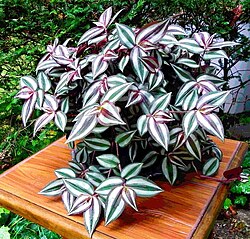
In the world of horticulture, a plant cutting is a fragment of a plant—typically a piece of stem, root, or leaf—used for vegetative (asexual) propagation. When placed in a suitable medium, such as moist soil, this piece can grow into a new, independent plant. This process is known as striking. Depending on the part used, a stem cutting will produce new roots, while a root cutting will produce new stems. Some specialized plants can even be grown from leaf pieces, which develop both roots and stems.
Essentially, propagating from cuttings is an ancient form of cloning. Because the offspring are genetically identical to the parent, growers can ensure that favorable traits and consistent quality are preserved across entire crops, making it an economically vital practice for commercial nurseries.
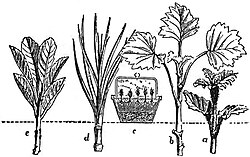
Key Facts
- Cloning: Cuttings produce genetically identical offspring, preserving the parent's advantageous traits.
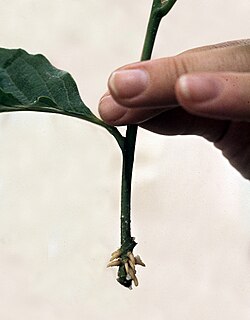
- Adventitious Roots: These are roots that form from non-root structures, such as stems or leaves, often as a wound response.
- Auxins: Plant hormones like indole-3-acetic acid (IAA) are essential for stimulating root formation.
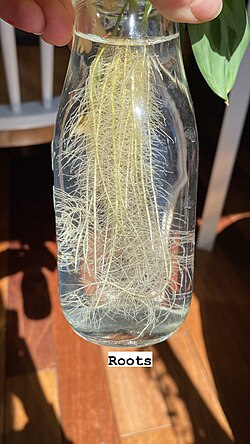
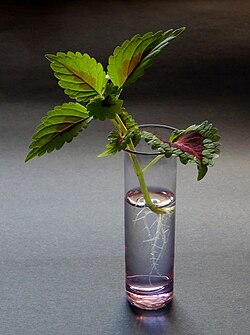
- Mediums: Cuttings can be rooted in soil, perlite, vermiculite, coir, rock wool, expanded clay pellets, or water.
- Environmental Control: High humidity and indirect light are critical for preventing dehydration in non-rooted cuttings.
Evolutionary Advantages in Succulents
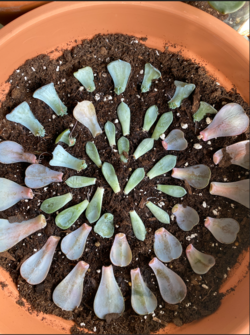
For succulents, vegetative reproduction is a survival strategy. In harsh environments with rocky or desert soils, seedlings from sexual reproduction often have low survival rates. However, plantlets formed from excised stem or leaf cuttings—which may break off naturally in the wild—are far more successful.
These cuttings possess stored water and carbon, providing the necessary resources for establishment. Furthermore, they retain epigenetic memory—heritable phenotypic patterns caused by histone modification and DNA methylation rather than DNA changes. This allows the new plant to retain stress-response priming, making it better suited to its environment than a seed-grown plant.
The Physiology of Rooting
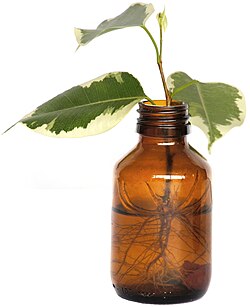
The formation of roots from a stem is a wound response known as adventitious root formation. Scientific research dating back to 1935 identified that auxin (specifically indolyl-3-acetic acid or IAA) is necessary for this process. When applied to a stem, auxin increases the average number of roots formed, even in species that do not normally root easily.
Propagation Techniques
The approach to taking cuttings varies based on the maturity of the plant tissue:
- Softwood cuttings: Taken from rapidly expanding stems with young leaves; these generally root easily.
- Semi-hardwood cuttings: Taken from stems that have finished elongating and possess mature leaves.
- Hardwood cuttings: Taken from fully matured stems, typically while the plant is dormant.
![Scheme of appropriate type of stem cuttings according to season.[26] Key: eq.:equinox, sol.: solstice, HW: hardwood, SR: semi-ripe, SW: softwood.](/images/11/54/11540bb13d241377e09334a51234a60d3716b25030db79764d8be32f2e75eb21.jpg)
Timing and Sizing
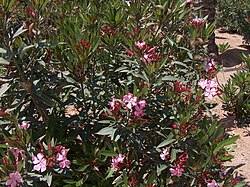
In temperate climates, timing is critical. Softwood cuttings should be taken in spring from upper branches (typically 5 to 15 cm long), while hardwood cuttings are taken in winter from lower branches (typically 20 to 25 cm long). For softwood, about two-thirds of the foliage should be removed; hardwood cuttings require complete foliage removal. The cut should be made immediately below a node, or up to 1/2 inch below it.
Rooting Mediums and Environment
Because cuttings lack a root system, they are prone to dehydration. They require a moist medium that is not waterlogged to avoid rot. While many use soil, others prefer water, provided the water is changed frequently to maintain oxygen levels and prevent bacterial buildup.
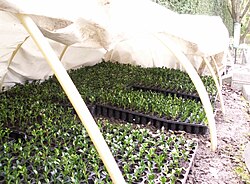
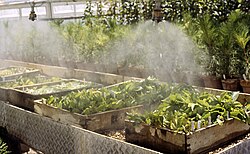
For softwood and semi-hardwood, a humid environment is maintained using plastic sheeting or confined spaces in partial shade. Misting is used to keep the medium moist. In professional greenhouses, automated misting may occur for 5–8 seconds every 5–10 minutes initially, gradually reducing as roots appear.
Rooting Aids and Hormones
To increase success rates, growers often use rooting hormones. Indole-3-butyric acid (IBA) is a common synthetic auxin applied as a powder, gel, or spray. Natural alternatives include:
- Willow water: A tea made from weeping willow bark or shoots soaked for 24 hours.
- Coco-grass: Extracts from the leaves and bulbs of Cyperus rotundus.
- Honey: Provides antiseptic and antifungal properties.
- Other aids: Cinnamon or aspirin dissolved in water.
Types of Cuttings
| Cutting Type | Source Material | Resulting Growth | Common Examples |
|---|---|---|---|
| Stem | Stem piece with at least one node | New roots (usually at the node) | Ficus, Monstera, Begonia |
| Root | Section of root buried in soil | New shoots | Poppy, Raspberry, Blackberry |
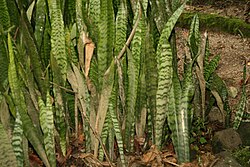
| Leaf | Leaf placed on moist soil | Both new stems and roots | African Violet, Snake Plant |
| Scion | Stem piece used for grafting | Fused growth with rootstock | Various grafted fruit trees |
Optimizing Results
Environmental factors significantly impact success. Air temperature for softwood and semi-hardwood is optimal at approximately 70°F (21.1°C); temperatures above 75°F (23.8°C) can encourage pathogens. Bottom heating of the soil to 20-22°C is ideal for root initiation. While light is necessary, direct sunlight must be avoided using shade curtains or semi-white plastic to prevent scorching.
Frequently Asked Questions
What is the difference between softwood and hardwood cuttings?
Softwood cuttings are taken from new, rapidly growing stems in the spring and root relatively easily. Hardwood cuttings are taken from mature, dormant stems in the winter and require different handling, including the complete removal of foliage.
Why are rooting hormones used?
Rooting hormones, such as IBA or natural willow extracts, mimic the plant hormone auxin. This signals the plant to initiate adventitious root formation, increasing the speed and success rate of the propagation process.
Can all plants be propagated by leaf cuttings?
No, leaf cuttings are specific to certain species, most notably succulents and some houseplants like the African Violet. These plants have the unique ability to regenerate both a root system and a stem from leaf tissue.
How do I prevent my cuttings from rotting?
To prevent rot, ensure the medium is moist but not waterlogged. If rooting in water, change the water frequently to maintain oxygen levels. In soil, using trays placed on stones can prevent capillary action from over-saturating the medium.
Why is indirect light important for cuttings?
Cuttings lack roots to absorb water quickly, making them highly susceptible to dehydration. Direct sunlight can increase the temperature of the plant tissue and cause it to dry out or burn before it can establish a root system.