Pill: A History of Pottery, Pilots, and Portishead Railway
Nestled along the banks of the Avon, the town of Pill possesses a rich heritage that spans from the medieval era to the industrial age. Its very name is derived from the Welsh word Pîl, meaning a tidal inlet or harbour, a fitting description for a settlement defined by its relationship with the water and the surrounding gorge.
The Legacy of Ham Green Pottery
Long before it became a residential hub, the area was a center for industrial-scale production. The name Crockerne Pill, which literally translates to 'pottery wharf,' reflects the significance of the local ceramics industry. Between 1100 AD and 1250 AD, the Ham Green Pottery produced wares that were exported by boat from the Pill shoreline.
The importance of this pottery extends far beyond local borders. Archaeological excavations have identified Ham Green pottery in locations as distant as Iceland and the Algarve region of Portugal. Because the period of manufacture is so precisely defined, these ceramics serve as a vital dating tool for archaeologists worldwide. While the Bristol City Museum holds a diverse collection of these artifacts, a large jug remains a prominent display piece at the M Shed.
Maritime Life and Local Reputation
Historically, Pill served as the primary residence for pilots—specialized mariners who guided vessels through the treacherous Avon Gorge to reach the Port of Bristol. As the shipping industry evolved in the 20th century, the port shifted its operations to Avonmouth and the Royal Portbury Dock.
In its heyday, the town was known for its vibrant, if rowdy, atmosphere, once boasting 21 public houses. This reputation for toughness was noted by John Wesley, the founder of the Methodist Church, who wrote in his journal on October 3, 1755, that Pill was famous for "stupid, brutal, abandoned wickedness," comparing it to the notoriety of Kingswood.
The Impact of the Portishead Railway
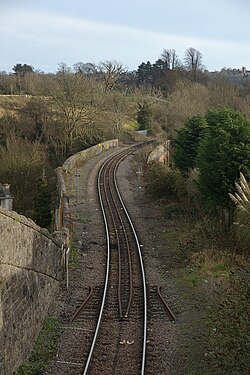
The landscape of Pill was permanently altered in the 1860s with the construction of the Portishead Railway line, connecting Bristol Temple Meads to Portishead. When the line opened to passengers in 1863, it required a straight and level path, which necessitated the demolition of numerous buildings and the consumption of many acres of farmland.
Despite the destruction, the railway brought social renewal. The navvies—the manual laborers who built the line—integrated into the community, marrying local women and settling in the area. Their influence persists today through family names that have remained in the village for over a century.
Vanishing Links and Modern Transitions
For centuries, a small ferry provided a vital transport link between Pill and Shirehampton, serving the parish of Easton-in-Gordano since medieval times. This connection ended in 1974 following the opening of the Avonmouth Bridge, which allowed pedestrians to cross the Avon. Over time, the unattended slipways have been largely reclaimed by river mud. This lost ferry and the village itself are immortalized in the song "Pill Pill" by Adge Cutler and The Wurzels.
The town's maritime safety role also saw a brief modern chapter when the Royal National Lifeboat Institution (RNLI) stationed an inshore lifeboat at Pill in 1971, though it was withdrawn by 1974.
Key Facts
- Etymology: "Pill" comes from the Welsh word for a tidal inlet; "Crockerne Pill" means pottery wharf.
- Pottery Era: Ham Green Pottery operated from 1100 AD to 1250 AD.
- Global Reach: Local pottery has been found as far away as Iceland and Portugal.
- Railway Opening: The Portishead Railway opened to passengers in 1863.
- Ferry Closure: The medieval ferry link to Shirehampton closed in 1974.
- Lifeboat Station: An RNLI inshore lifeboat operated in Pill from 1971 to 1974.
| Period/Year | Event/Feature | Significance |
|---|---|---|
| 1100–1250 AD | Ham Green Pottery | Industrial pottery exported internationally. |
| 1755 | John Wesley's Visit | Documented the town's rough reputation. |
| 1863 | Portishead Railway | Connected Pill to Bristol Temple Meads. |
| 1971–1974 | RNLI Station | Brief operation of an inshore lifeboat. |
| 1974 | Avonmouth Bridge | Led to the closure of the medieval ferry. |
Frequently Asked Questions
What is the significance of Ham Green pottery?
Ham Green pottery is highly valued by archaeologists as a dating tool because it was produced during a very precise window between 1100 AD and 1250 AD and distributed widely across Europe.
Why was the Portishead Railway controversial during construction?
The construction required a straight and level route, which led to the demolition of many local buildings and the loss of significant acreage of farmland.
Who were the pilots of Pill?
Pilots were maritime experts who lived in Pill and guided ships through the Avon Gorge to ensure they safely reached the Port of Bristol.
Why did the Pill to Shirehampton ferry close?
The ferry lost its trade and closed in 1974 after the opening of the Avonmouth Bridge provided a pedestrian alternative for crossing the river.
Where can I see artifacts from Pill's pottery history?
The Bristol City Museum holds a selection of pottery artifacts, and a large jug is on display at the M Shed.