Phylogenetics: Mapping the Evolutionary History of Life
In the vast complexity of the natural world, how do we determine how one species relates to another? The answer lies in phylogenetics, the scientific study of the evolutionary history of life. By utilizing phylogenetic inference—the process of using observable characteristics to deduce relationships—scientists can reconstruct the ancestral connections that bind all living things.
To perform these inferences, researchers rely on empirical data. This includes morphological traits (physical structures), DNA sequences, and protein amino acid sequences. The culmination of this work is the phylogenetic tree, a diagram that serves as a visual hypothesis of the evolutionary relationships among various organisms.
![One small clade of fish, showing how venom has evolved multiple times.[1]](/images/c9/ef/c9ef4cc08cc8cd0fb3b828f6f40bfa550892564ba43a2910b345925e33bdcd37.png)
The Structure of Phylogenetic Trees
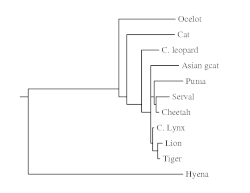
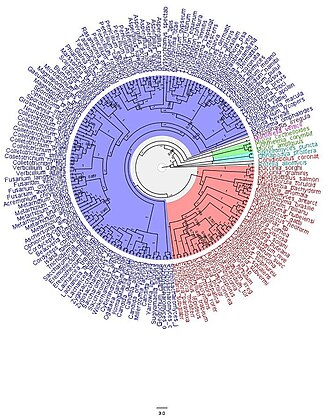
A phylogenetic tree is more than just a simple chart; it is a mathematical and biological model. The "tips" of the tree represent the entities being studied, which may include modern living taxa or ancient fossils. Depending on the goal of the research, these diagrams are categorized into two main types:
- Rooted Trees: These diagrams include a specific point that indicates a hypothetical common ancestor for all the taxa represented.
- Unrooted Trees: Also known as networks, these make no assumptions about the direction of character transformation and do not identify a specific origin or "root."
A Brief History of Evolutionary Mapping
The concept of mapping life through evolutionary lineages has evolved significantly over the last two centuries. Early pioneers began visualizing these connections long before the advent of modern genetic sequencing.
Early Visualizations
In the mid-19th century, geologists and biologists began experimenting with "Trees of Life." Edward Hitchcock produced one of the earliest paleontological attempts in 1840.
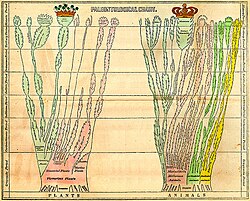
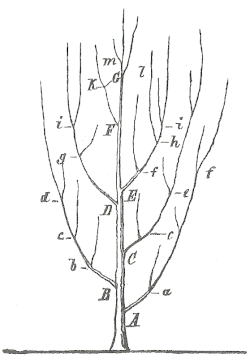
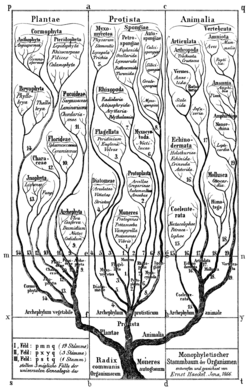
Later, in 1858, Heinrich Georg Bronn produced branching tree diagrams, followed by Ernst Haeckel in 1866, whose work provided influential phylogenetic suggestions during the formative years of evolutionary theory.
The Rise of Cladistics and Modern Methods
The mid-20th century brought more rigorous mathematical frameworks to the field. In 1960, Arthur Cain and Geoffrey Ainsworth Harrison coined the term "cladistic" to describe evolutionary relationships. By the late 1960s, terms like "cladogram" became standard in scientific literature.
As computational power increased, new methods emerged to refine these trees. Notable milestones include the development of the neighbor-joining method by Saitou and Nei in 1987 and the advancement of maximum likelihood approaches for DNA sequences in 1981.
![Percentage of inter-ordinal branches reconstructed with a constant number of bases and four phylogenetic tree construction models; neighbor-joining (NJ), minimum evolution (ME), unweighted maximum parsimony (MP), and maximum likelihood (ML). Demonstrates phylogenetic analysis with fewer taxa and more genes per taxon matches more often with the replicable consensus tree. The dotted line demonstrates an equal accuracy increase between the two taxon sampling methods. Figure is property of Michael S. Rosenberg and Sudhir Kumar as presented in the journal article Taxon Sampling, Bioinformatics, and Phylogenomics.[20]](/images/91/48/914808f508fde8e86c7e91b1dc0e6cc67b906794a885c4797eb9a1c4265b9d0c.png)
Diverse Applications of Phylogenetic Analysis
While rooted in biology, phylogenetic methods have expanded into numerous other disciplines, providing a framework for understanding how complex systems change over time.
Biological and Medical Sciences
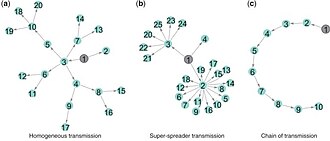
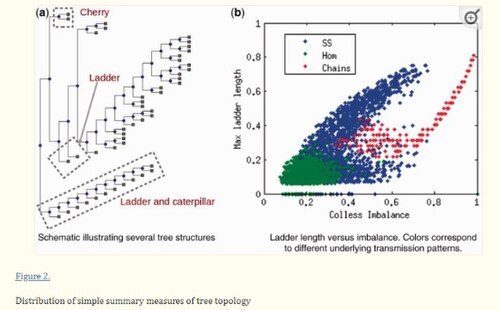
In biology, these analyses are essential for understanding biodiversity, ecology, and genomics. In pharmacology, they assist in drug discovery by tracing evolutionary paths. In epidemiology, phylogenetic trees are used to track the transmission of infectious diseases and pathogens.
Linguistics and Culture
Phylogenetics is not limited to organic life. Linguistic phylogenetics applies these same principles to study the evolution of languages, identifying cognates (words with a common origin) to map how language families expand and diverge. Similarly, researchers use these models to study cultural evolution, such as the transmission of traditions or even the evolution of folklore.
![Phylogeny of Indo-European languages including estimated timeline and examples of linguistic analysis. Words of the same color are thought to be cognates[92]](/images/45/08/45087c54b028d9abf04db9844551f5eb4bb78b0b6d56aba8315ab1476f20efb9.png)
Key Facts
- Phylogenetics uses DNA, protein, and morphological data to infer evolutionary history.
- Phylogenetic trees can be rooted (showing a common ancestor) or unrooted (showing relationships without directionality).
- The field utilizes cladistics to define evolutionary relationships.
- Methods range from neighbor-joining to maximum likelihood.
- Applications extend beyond biology into linguistics, epidemiology, and cultural studies.
Timeline of Key Evolutionary Milestones
| Year | Event/Development |
|---|---|
| 1837 | Darwin's notebooks show an evolutionary tree |
| 1840 | Edward Hitchcock's paleontological "Tree of Life" |
| 1866 | Haeckel's phylogenetic tree suggestions |
| 1960 | Coining of "cladistic" by Cain and Harrison |
| 1981 | Maximum likelihood approach for DNA sequences |
| 1987 | Introduction of the neighbor-joining method |
Frequently Asked Questions
What is the difference between a rooted and an unrooted tree?
A rooted tree identifies a specific common ancestor for all organisms in the diagram, providing a sense of evolutionary direction. An unrooted tree shows the relationships between organisms but does not specify a common ancestor or the direction of evolution.
How do scientists gather data for phylogenetic trees?
Scientists use empirical data, which can include physical characteristics (morphology), DNA sequences, and the amino acid sequences of proteins.
Can phylogenetics be used outside of biology?
Yes. It is used in linguistics to study language evolution, in epidemiology to track disease spread, and in cultural studies to model the evolution of traditions and ideas.
What is cladistics?
Cladistics is a method of classification that groups organisms based on their shared evolutionary relationships, a term coined in the early 1960s.
What are the "tips" of a phylogenetic tree?
The tips represent the observed entities being studied, which can be either currently living species (taxa) or extinct organisms represented by fossils.