Evolutionary History of Life on Earth: From Primordial Cells to Complex Organisms
The history of life on Earth is a vast, multi-billion-year saga of transformation. From the moment the planet formed approximately 4.54 billion years ago (Ga) to the complex ecosystems of the modern era, life has undergone continuous processes of change. Scientific evidence suggests that all present-day species share a common ancestor, having diverged through the intricate process of evolution.
Tracing these origins requires looking deep into the geological record, where chemical signatures and microscopic fossils provide clues to the earliest biological activity. While the exact mechanisms of the first emergence remain a subject of intense study, the timeline of life's progression is becoming increasingly clear.
![Evolutionary tree showing the divergence of modern species from their common ancestor in the center.[64] The three domains are colored, with bacteria blue, archaea green, and eukaryotes red.](/images/9f/dc/9fdcc9e04e9a8822da9e8eb540a4c5d4974663c0d16beb34a7b8718d4dda42ef.png)
The Dawn of Life: Earliest Evidence
![A slime mold solves a maze. The mold (yellow) explored and filled the maze (left). When the researchers placed sugar (red) at two separate points, the mold concentrated most of its mass there and left only the most efficient connection between the two points (right).[168]](/images/73/5e/735ee250f9e03e314dcc8a271af70cb329ba6b52036b61a39253b46245718939.png)
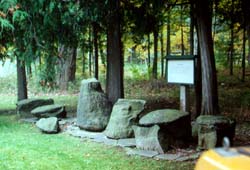
The earliest definitive evidence of life is found in 3.7 billion-year-old metasedimentary rocks in western Greenland, which contain biogenic carbon signatures and stromatolite fossils. Stromatolites are layered sedimentary formations created by the activity of microorganisms.
Other significant findings include:
- 4.1 billion-year-old rocks: Possible remains of biotic life discovered in Western Australia in 2015.
- 4.28 billion-year-old fossils: Microorganisms found in hydrothermal vent precipitates within the Nuvvuagittuq Belt. These may have existed shortly after the oceans formed 4.4 billion years ago, though some scientists suggest these may have originated from non-biological processes.
![Early diversification of life with Kandler's pre-cell theory (Kandler 1998, p. 22)[69]](/images/37/bc/37bc92b45e10bf776db1d99e8b037cd6ce61b0a3e20cab576e64f366f4f490f7.webp)
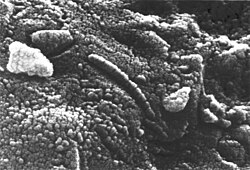
Microbial Dominance and the Oxygen Revolution
![Opabinia made the largest single contribution to modern interest in the Cambrian explosion.[191]](/images/01/ab/01ab0dbd55bcc663f0ba33b66ceb381faaffdf505f9bedd175927f49a444bf3c.png)
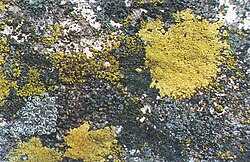
During the early Archean eon, life was dominated by microbial mats—communities of coexisting bacteria and archaea. These environments were the crucibles for many major evolutionary milestones.
Around 3.5 Ga, cyanobacteria evolved the ability to perform photosynthesis, a process that uses sunlight to produce energy. This biological innovation had a profound impact on the planet, as it released oxygen as a waste product. Initially, this oxygen was absorbed by various substances on the Earth's surface, but once those reductants were saturated, oxygen began to accumulate in the atmosphere. This led to the Great Oxygenation Event approximately 2.4 Ga.
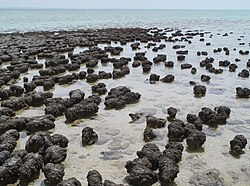
The Rise of Eukaryotes and Complexity
![Acanthodians were among the earliest vertebrates with jaws.[196]](/images/d5/8e/d58e42be6b0716efe80c8c9af5d30a6b6eb33bcf930f024f327966ab6e637c34.jpg)
The emergence of eukaryotes—complex cells containing specialized organelles—marks a massive leap in biological sophistication. The earliest evidence of these cells dates to 1.85 Ga. It is widely believed that eukaryotes arose through symbiogenesis, a process where different organisms live in close association. Specifically, anaerobic archaea and aerobic proteobacteria likely co-adapted to survive the increasing oxidative stress caused by rising oxygen levels.
The diversification of eukaryotes accelerated when mitochondria (the endosymbiont responsible for aerobic cellular respiration) provided a much more abundant source of biological energy. By roughly 1.6 Ga, some eukaryotes gained the ability to photosynthesize through endosymbiosis with cyanobacteria, giving rise to various algae that eventually became the planet's primary producers.
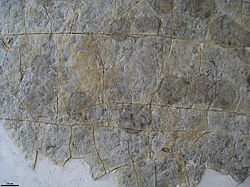
![Horodyskia may have been an early metazoan,[15] or a colonial foraminiferan.[161] It apparently re-arranged itself into fewer but larger main masses as the sediment grew deeper round its base.[15]](/images/56/4f/564fe114bd82fd3bbc0e00bb88e22e92731a7db4cbe15c2c06720522203c66a8.png)
Summary of Major Evolutionary Milestones
| Time Period (Ga) | Major Event/Development | Significance |
|---|---|---|
| ~4.54 Ga | Formation of Earth | The planetary foundation for life. |
| ~4.28 - 4.1 Ga | Earliest possible life | Potential microbial life in hydrothermal vents and Australian rocks. |
| ~3.7 Ga | Stromatolite fossils | Clear evidence of microbial life in Greenland. |
| ~3.5 Ga | Photosynthesis | Cyanobacteria begin producing oxygen. |
| ~2.4 Ga | Great Oxygenation Event | Oxygen accumulates in the atmosphere. |
| ~1.85 Ga | Eukaryote emergence | Development of complex cells with organelles. |
| ~1.6 Ga | Algal diversification | Eukaryotes gain photosynthetic capabilities. |
Key Facts
- Earth's Age: Approximately 4.54 billion years.
- Earliest Confirmed Life: Evidence of life exists in rocks dating back to 3.7 billion years ago.
- Oxygen Production: Cyanobacteria were responsible for the buildup of atmospheric oxygen via photosynthesis.
- Cellular Complexity: Eukaryotes emerged around 1.85 Ga through symbiogenesis.
- Energy Boost: The evolution of mitochondria provided the energy necessary for eukaryotic diversification.
Frequently Asked Questions
![Acanthostega changed views about the early evolution of tetrapods.[234]](/images/65/a7/65a7a12c467f2b9da2187a7801c83b046c7f2c15e86c96bb65458515285d42ab.jpg)
What are stromatolites?
Stromatolites are layered sedimentary structures formed by the trapping, binding, and cementation of sedimentary grains by biofilms of microorganisms, particularly cyanobacteria.
How did oxygen change the Earth?
The evolution of photosynthesis led to the Great Oxygenation Event around 2.4 Ga. This changed the atmosphere from an anaerobic (oxygen-free) environment to one that could support complex, aerobic life.
What is symbiogenesis?
Symbiogenesis is a theory explaining the origin of eukaryotic cells, suggesting that complex cells evolved when different single-celled organisms merged or lived together in a symbiotic relationship.
What is the difference between bacteria and eukaryotes?
Bacteria are simple, single-celled organisms without a nucleus or membrane-bound organelles. Eukaryotes are more complex cells that contain a nucleus and specialized structures like mitochondria.
How old is the oldest evidence of life?
While some potential evidence points to life as early as 4.28 billion years ago, the most widely accepted clear evidence of life comes from 3.7 billion-year-old rocks in Greenland.