Photomontage History: From Victorian Combination Printing to Digital Art
The human desire to create immersive, artificial realities is not a modern phenomenon. As noted by author Oliver Grau in Virtual Art: From Illusion to Immersion, the technical exploitation of new inventions to build virtual environments—such as dioramas made of composited images—has been a long-standing practice throughout history.
One of the most influential evolutions of this practice is photomontage: the process of making a composite photograph by combining two or more images. While we now associate this with digital software, its origins lie in the chemical darkrooms of the 19th century and the political upheavals of the 20th.
The 19th Century: The Era of Combination Printing
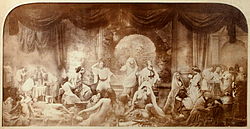
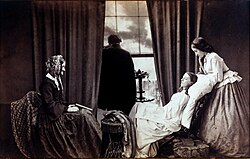
In the mid-Victorian era, photomontage was known as combination printing. Early pioneers used this technique to challenge the dominance of painting and theatrical tableau vivants (living pictures). Oscar Rejlander's 1857 work, "The Two Ways of Life," stands as one of the most famous early examples, followed by Henry Peach Robinson's "Fading Away" in 1858.
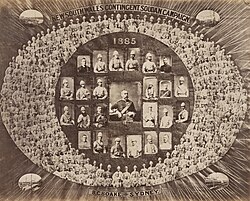
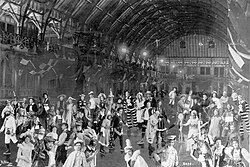
As the technique evolved, it found practical applications in North America. William Notman of Montreal utilized photomontage to document large social events that were too vast to be captured in a single film exposure. By the late Victorian and Edwardian eras, fantasy postcards became a popular trend, with firms like Bamforth & Co Ltd producing widely distributed works.
This trend peaked during World War I, where photographers across Europe—including France, Great Britain, Germany, Austria, and Hungary—created poignant postcards. These images often placed soldiers on one visual plane and their families or lovers on another. Some early fine-art examples also superimposed photographs onto watercolours, a method later revisited by George Grosz around 1915.
The 20th Century: Dadaism and Political Weaponry
Heartfield, Grosz, and the Berlin Dadaists
In May 1916, John Heartfield and George Grosz began experimenting with pasting pictures together in a South End studio. This practice, which they credited as the invention of "photomontage," became a cornerstone of the Berlin Club Dada (1916–1920). The Dadaists used the medium as a powerful tool to protest World War I and the interests they believed fueled the conflict.
John Heartfield, in particular, revolutionized the medium. He transformed book jacket design for the publishing house Malik-Verlag, becoming the first to use photomontage to tell a continuous story from the front cover to the back, enhanced by groundbreaking typography.
Between 1930 and 1938, Heartfield turned art into a weapon against fascism. He created 240 "Photomontages of The Nazi Period," which appeared on the covers of the AIZ magazine and on street posters across Berlin. His anti-fascist work was so effective that he became the fifth most wanted person on the Gestapo's list, forcing him to flee to Czechoslovakia in 1933.
Global Expansion and Diverse Styles
Other key figures in the Berlin Dada movement included Hannah Höch, who began experimenting in 1918 and integrated her montage style into knitting and embroidery patterns for Ullstein Verlag. Kurt Schwitters, Raoul Hausmann, and Johannes Baader also utilized the medium to create new visual subjects.
The influence of photomontage soon spread globally:
- Surrealism: European Surrealists, including Salvador Dalí, inherited the technique.
- Japan: The "New Photography" (Shinkō shashin) movement saw Harue Koga create montage-style paintings and Kansuke Yamamoto experiment with photographic collage, such as his 1953 work Reminiscence.
- Soviet Union: Russian Constructivists like El Lissitzky, Alexander Rodchenko, and the team of Gustav Klutsis and Valentina Kulagina used photomontage as government propaganda in journals like USSR in Construction.
By 1931, Germany hosted the world's first retrospective show of photomontage. During this time, the term photocollage emerged to describe more ambitious works that incorporated typography, brushwork, or physical objects.
Photomontage in the Americas
In the late 1930s, Spanish Civil War activist Josep Renau Berenguer moved to Mexico and produced Fata Morgana USA: the American Way of Life, a critical look at North American consumer culture. Simultaneously, Lola Alvarez Bravo explored social issues in Mexican cities through the medium.
In Argentina during the late 1940s, German exile Grete Stern contributed a series of photomontages titled Sueños (Dreams) to the magazine Idilio, focusing on psychoanalytical themes.
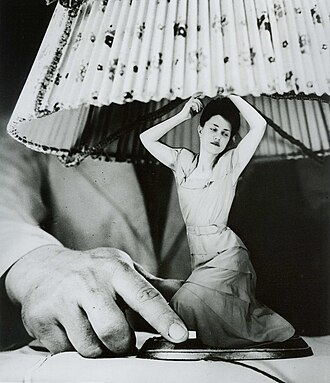
Postwar Evolution and the Digital Shift
By the late 1920s, the advertising industry began co-opting these artistic techniques. In the 1960s and 70s, Alfred Gescheidt used photomontage to create satirical posters and postcards for commercial art.
Jerry Uelsmann became a pivotal figure in the 1960s by using multiple enlargers to blend images. His analog techniques were so sophisticated that they influenced the naming of tools in modern digital software. In 1985, Uelsmann published a book on his methods, just two years before the launch of Adobe Photoshop.
The transition to digital was completed in 1995 when Adobe's Russel Brown introduced Photoshop to Uelsmann. While Uelsmann himself remained skeptical, his wife, Maggie Taylor, embraced the software, becoming a founder of the modern digital photomontage genre.
Key Facts
- Origin: Mid-19th century "combination printing" evolved into modern photomontage.
- Dadaism: John Heartfield and George Grosz are credited with inventing the modern form in 1916.
- Political Use: Heartfield used the medium to fight fascism, earning a spot on the Gestapo's Most Wanted List.
- Global Reach: The technique was adopted by Russian Constructivists for propaganda and Japanese modernists for avant-garde art.
- Digital Legacy: Jerry Uelsmann's analog techniques directly influenced the development of digital tools in Adobe Photoshop.
| Era | Primary Term/Style | Key Figures | Primary Purpose |
|---|---|---|---|
| Mid-Victorian | Combination Printing | Rejlander, Robinson | Artistic challenge to painting |
| 1916–1920s | Dada Photomontage | Heartfield, Grosz, Höch | Political protest and avant-garde art |
| Interwar Period | Constructivism / Propaganda | Rodchenko, Lissitzky | State propaganda (USSR) |
| 1960s–1980s | Analog Composite | Jerry Uelsmann | Fine art and commercial satire |
| 1990s–Present | Digital Photomontage | Maggie Taylor | Digital art and manipulation |
Frequently Asked Questions
What is the difference between photomontage and photocollage?
While often used interchangeably, "photocollage" typically refers to larger, more ambitious works that incorporate additional elements like typography, brushwork, or physical objects attached to the photographic base.
Who were the primary inventors of modern photomontage?
John Heartfield and George Grosz are credited with inventing the modern form of photomontage in May 1916 in a studio in the South End.
How was photomontage used as a political tool?
Artists like John Heartfield used it to create anti-fascist imagery and critique the Third Reich, while Russian Constructivists used it for Soviet government propaganda in publications like USSR in Construction.
How did analog photomontage influence Adobe Photoshop?
The techniques used by Jerry Uelsmann, specifically his use of multiple enlargers to blend images, influenced the conceptual design and the naming of tools within Photoshop.
What was the role of the Berlin Club Dada in this art form?
The Berlin Dadaists were instrumental in transforming montage into a modern art form, using it to protest World War I and the societal interests they believed caused the war.