Phonetic Transcription: Bridging the Gap Between Spelling and Sound
Have you ever wondered why the English words bough, tough, cough, though, and through look so similar yet sound completely different? This inconsistency occurs because standard orthography—the conventional spelling system of a language—often fails to keep pace with the evolving way we actually speak. To solve this, linguists use phonetic transcription, a visual representation of speech sounds using specific symbols.
By using a phonetic alphabet, researchers can create a direct, predictable link between a symbol and a sound, allowing them to study dialects, track language changes over time, and bypass the irregularities of standard writing.
Key Facts
- Phonetic transcription uses symbols to represent actual speech sounds rather than standard spelling.
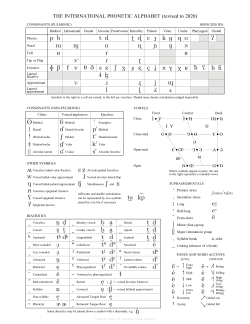
- The International Phonetic Alphabet (IPA) is the most widely recognized system for this purpose.
- Broad transcription focuses on general sounds, while narrow transcription captures fine articulatory details.
- Phonemic transcription represents abstract units of sound called phonemes.
- Transcription can be alphabetic (one symbol per sound) or analphabetic (complex sequences describing gestures).
Transcription vs. Orthography
Orthography is the written system we use in daily life, but it is often imperfect. In languages like English or Tibetan, spelling can be highly irregular. While some languages, such as Spanish or Italian, have a more consistent relationship between letters and sounds, many still rely on transcription to achieve a one-to-one correspondence between symbol and sound.
A true phonetic transcription must be universal; its symbols should denote the same phonetic properties regardless of which language is being transcribed. If a system is designed specifically for one language, it is considered an orthography rather than a true phonetic transcription.
Levels of Detail: Broad, Narrow, and Phonemic
Linguists categorize transcription based on how much detail is required. This exists on a continuum rather than as strictly separate categories.
Phonemic Transcription
This is a very broad form of transcription that ignores allophones—the slight variations in how a single sound is produced by different speakers or dialects. Instead, it focuses on phonemes, the abstract units of sound that distinguish one word from another.
Broad vs. Narrow Transcription
Broad transcription captures only the most noticeable phonetic features. It is commonly used in dictionaries because it remains applicable across various accents. In contrast, narrow transcription provides exact articulatory (how sounds are made) or acoustic details. Because narrow transcription requires many specialized symbols and diacritics (small marks added to symbols), it is typically reserved for specialized linguistic work.
For example, the word pretzel might be transcribed broadly as [ˈpɹɛts.l] or narrowly as [ˈpɹ̥ʷɛʔts.ɫ̩] to show precise features that even native speakers might not consciously notice.
Types of Notational Systems
Notations are generally divided into two main categories: alphabetic and analphabetic.
Alphabetic Notations
Alphabetic systems use a single simple symbol to represent each sound. The most famous is the IPA, but other traditions exist:
- Americanist Phonetic Alphabet: Developed by American linguists for Native American and European languages, this system uses existing typewriter characters and diacritics rather than unique IPA characters.
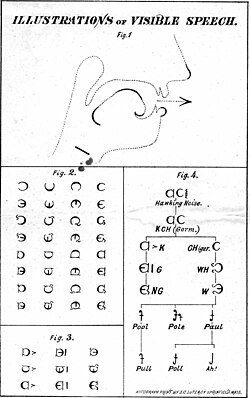
- Iconic Notation: In systems like Alexander Melville Bell's Visible Speech, the shapes of the characters visually represent the position of the articulators in the vocal tract.
Analphabetic Notations
Analphabetic notation is much more complex. Instead of one symbol per sound, it uses long sequences of symbols to describe the specific components of an articulatory gesture, much like a chemical formula describes a compound. While highly precise, these systems—such as those developed by Otto Jespersen or Kenneth Pike—are less common in practical fieldwork due to their complexity.
Summary of Transcription Methods
| System Type | Primary Characteristic | Common Use Case |
|---|---|---|
| Alphabetic | One symbol per sound | General linguistics and dictionaries |
| Iconic | Symbols mimic vocal tract shape | Visual representation of articulation |
| Analphabetic | Complex sequences of features | Highly detailed scientific description |
Frequently Asked Questions
What is the difference between a phoneme and an allophone?
A phoneme is an abstract sound unit that can change the meaning of a word. An allophone is a physical variation of that sound that does not change the word's meaning, often caused by different speakers or dialects.
Why are square brackets used in transcription?
The International Phonetic Association recommends using square brackets [ ] for phonetic transcriptions. Slashes / / are reserved specifically for phonemic transcription to indicate that the symbols represent abstract sound units.
What is the purpose of diacritics?
Diacritics are small marks added to phonetic symbols to provide extra detail, such as indicating whether a sound is nasalized or how long it is held. They are essential for narrow transcription.
Can transcription be used for languages other than English?
Yes. A fundamental principle of phonetic transcription is that it should be applicable to all languages, using symbols that represent the same phonetic properties globally.
What is "eye dialect"?
Eye dialect is a literary technique where nonstandard spelling is used deliberately to suggest a specific pronunciation or dialect in writing, though it is not a formal phonetic transcription.