Pedro Eugenio Aramburu: The Kidnapping and Assassination of a Former President
The assassination of Pedro Eugenio Aramburu on June 1, 1970, remains one of the most polarizing events in Argentine political history. A former de facto president and a high-ranking military officer, Aramburu's death was not merely a targeted killing but a calculated political statement by the Montoneros, a far-left guerrilla organization. This event triggered a chain reaction that destabilized the existing military government and signaled the beginning of an era of intense guerrilla warfare in Argentina.
Key Facts
- Target: Pedro Eugenio Aramburu, former de facto President of Argentina.
- Date of Death: June 1, 1970, at 7:00 a.m.
- Perpetrators: The Montoneros guerrilla organization.
- Operation Name: Operation Pindapoy.
- Location: A farmhouse in Timote, Carlos Tejedor Partido, Buenos Aires Province.
- Primary Motives: Revenge for the 1956 execution of General Juan José Valle and the kidnapping of Eva Perón's body.
The Rise and Rule of Pedro Eugenio Aramburu
Pedro Eugenio Aramburu was a lieutenant general in the Argentine Army who played a pivotal role in the Revolución Libertadora, the 1955 coup that overthrew President Juan Perón. While Eduardo Lonardi initially took the presidency, Aramburu rose to power in November 1955 after Lonardi clashed with other military leaders.
During his presidency from 1955 to 1958, Aramburu's administration was characterized by the brutal repression of Peronist militants. One of the most contentious actions of his tenure was the 1956 order to execute General Juan José Valle by firing squad following a rebellion against the government. After leaving office, Aramburu remained a prominent political figure, though his 1963 presidential bid ended in a third-place finish.
By 1966, the fragile democratic government of Arturo Umberto Illia was overthrown by General Juan Carlos Onganía, restoring military rule. By 1970, Aramburu was once again viewed as a potential candidate for the 1973 presidential elections, making him a high-value target for political opponents.
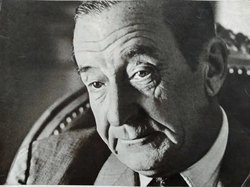
Operation Pindapoy: The Kidnapping
The Montoneros planned the abduction of Aramburu under the codename Operation Pindapoy (named after a citrus juice company). On May 29, 1970, two members of the organization disguised themselves as young military bodyguards to gain entry to Aramburu's Buenos Aires apartment. They kidnapped the 67-year-old general and transported him to a secluded farmhouse in Timote.
The Montoneros announced that the operation was carried out by the "Unit Command Juan José Valle" and declared that Aramburu would face a "revolutionary trial." The charges included the kidnapping of Eva Perón's body and the massacre of twelve civilians in General San Martín Partido.
Failed Negotiations
Aramburu's family sought help from the Curia and President Onganía. However, Onganía remained noncommittal, as the Montoneros had explicitly stated that negotiations with the regime were impossible. In desperation, Aramburu's wife approached Alejandro Agustín Lanusse, the Commander-in-Chief of the Army, who agreed to negotiate. These efforts proved futile.
The Execution and Immediate Aftermath
On June 1, 1970, at 7:00 a.m., Aramburu was executed by firearm. He was shot four times by Fernando Abal Medina, with Mario Firmenich and Esther Norma Arrostito also participating in the execution.
The reaction within Argentina was immediate and severe. President Onganía condemned the act, claiming the country was at war with foreign-influenced radicals, and reinstated capital punishment via decree on June 2. However, the military's anger was directed not only at the guerrillas but also at Onganía's perceived indifference during the kidnapping. This internal friction led to Onganía's removal from office on June 7, 1970, and his replacement by Roberto Marcelo Levingston.
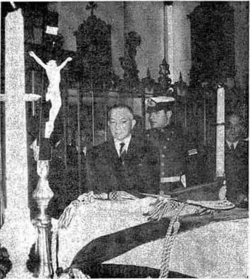
The Revolutionary Verdict
The Montoneros published their verdict in the media, stating that Aramburu was condemned to be "passed by the arms." They further stipulated that his remains would only be returned to his family once the remains of "beloved comrade Evita" (Eva Perón) were returned to the Argentine people.
Long-term Consequences and Controversies
For the Montoneros, the killing of Aramburu served as a public debut, announcing their existence and capabilities to the nation. This event sparked an increase in guerrilla activity across Argentina. Later, in 1974, Montoneros militants desecrated Aramburu's grave in La Recoleta Cemetery, snatching his body to pressure President Isabel Martínez de Perón to repatriate Eva Perón's remains from Spain.
Over time, alternative theories emerged regarding the assassination. Some investigative journalists and Aramburu's own son suggested that elements of Onganía's government may have collaborated with the kidnappers to eliminate Aramburu, whom Onganía suspected of plotting a coup. Other theories suggest military intelligence intended only to intimidate him, but he died during interrogation.
Summary of Key Events
| Date | Event | Significance |
|---|---|---|
| Nov 1955 | Aramburu becomes President | Establishment of a civic-military dictatorship. |
| 1956 | Execution of Juan José Valle | Primary motive for later revenge by Montoneros. |
| May 29, 1970 | Kidnapping (Op. Pindapoy) | Aramburu abducted from his home in Buenos Aires. |
| June 1, 1970 | Assassination | Aramburu executed by Montoneros in Timote. |
| June 7, 1970 | Fall of Onganía | Military Junta removes Onganía due to instability. |
| 1974 | Body Snatching | Aramburu's remains stolen from La Recoleta Cemetery. |
Frequently Asked Questions
Who were the Montoneros?
The Montoneros were a far-left Peronist guerrilla organization in Argentina that used kidnapping and assassination to combat military dictatorships and push for a revolutionary Peronist government.
Why did the Montoneros target Pedro Eugenio Aramburu?
The group cited revenge for the 1956 execution of General Juan José Valle and the kidnapping of Eva Perón's body. Later, leader Mario Firmenich suggested the goal was to prevent Aramburu from joining a moderate wing of Peronism, which would have neutralized the movement's revolutionary potential.
What was the political impact of the assassination?
The event led to the immediate downfall of de facto President Juan Carlos Onganía and marked the beginning of an escalation in guerrilla warfare and state repression in Argentina.
Was there any government involvement in the kidnapping?
While the Montoneros claimed full responsibility, some theories suggest that members of the Onganía administration collaborated in the operation to remove Aramburu as a political rival.
What happened to the memorials dedicated to Aramburu?
Many memorials have become sites of controversy. Some streets have been renamed, and in 2007, the Argentine Army renamed the schools previously named after Aramburu and Lonardi to honor Juan José Valle instead.