Patmos: The Legacy of St. John the Theologian and the Cave of the Apocalypse
The island of Patmos holds a profound place in Christian history, serving as the site where one of the most influential texts of the New Testament was conceived. Known for its rugged beauty and spiritual significance, the island is defined by the intersection of ancient prophecy, Byzantine architecture, and a living community that has persisted for centuries.
St. John of Patmos and the Divine Visions
St. John of Patmos—also referred to as John the Revelator, John the Divine, or John the Theologian—was a member of the inner circle of the twelve disciples of Jesus Christ. During the 1st century, under the Roman rule of Emperor Domitian, the Roman Empire viewed early Christians as a troublesome cult. Prophecy, whether practiced by Christians, Jews, or Pagans, was seen as a threat to imperial power and was often categorized alongside crimes like astrology and magic.
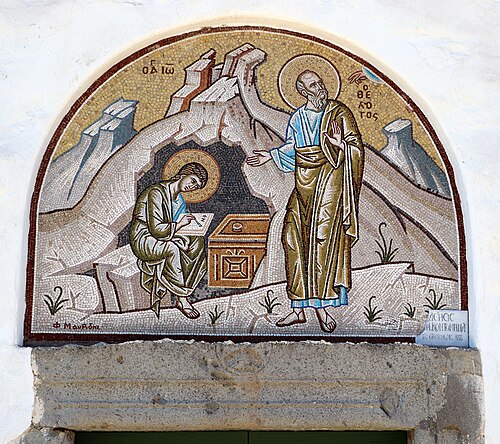
Because of these beliefs, St. John and many others were exiled to the rocky island of Patmos to serve prison sentences under harsh conditions. It was here that John sought refuge in a cave, accompanied by his disciple and scribe, Prochorus, who had also been exiled.
According to Christian tradition, John experienced a series of visions within this cave. He witnessed the destruction of the old Earth and the emergence of a new Earth, featuring the Holy City of Jerusalem descending from heaven. Tradition holds that the rock inside the cave was shredded, creating three thin openings that symbolize the Holy Trinity. Through these, John heard a voice instructing him to record his visions in a book and send them to seven churches. This site became known as the Cave of the Apocalypse, and the resulting writings formed the Book of Revelation.
The Monastery of St. John the Theologian
Perched at the highest point of the island is the Monastery of St. John the Theologian (or the Monastery of St. John the Divine). Founded in 1088, the monastery was established after the Byzantine Emperor Alexios Komnenos gifted the island to John Christodoulos, a soldier and priest. Christodoulos completed the majority of the construction within three years.
The monastery is designed as a polygonal castle, featuring towers and crenellations (the notched battlements atop a wall). This fortified exterior was a necessity to protect the site from piracy and potential attacks by the Seljuk Turks. Inside, the monastery houses a significant collection of liturgical art, icons, and ancient manuscripts.
The architectural layout includes several key structures:
- Katholikon: The main church of the monastery, located on the east side.
- Chapel of Panagia: A dedicated chapel within the complex.
- Refectory: The communal dining hall.
- Tzafara: A two-story arcade on the southern portion, rebuilt in dressed stone in 1698.
- Monastic Cells: White-walled living quarters lining the north and west sides of the courtyard.
In recognition of its historical and cultural importance, UNESCO declared the monastery a World Heritage Site in 1999.
The Settlement of Chóra
The growth of the monastery led to the development of Chóra, the main town of Patmos. Located 4 kilometers from the commercial port of Skala, Chóra surrounds the monastery at the island's peak. It is one of the few Greek settlements to have evolved uninterrupted since the 12th century.
The town expanded significantly in the 13th century and became a sanctuary for refugees from Constantinople by the 15th century, followed by settlers from Crete. Under Ottoman rule in the 16th and 17th centuries, Patmos evolved into a trading center. This prosperity is still visible in the town's architecture, characterized by narrow streets, small plazas, and exquisite white-washed houses built by wealthy merchants.
Chóra remains a center of spiritual life, containing numerous small churches from the 17th and 18th centuries filled with sacred paintings and icons. It is one of the rare places globally where early Christian religious ceremonies are still practiced. However, the town currently faces a modern challenge: the risk of inhabitant abandonment as interests shift toward transforming the historic settlement into a hub for mass tourism.
Key Facts
- Founder: John Christodoulos founded the monastery in 1088.
- UNESCO Status: The monastery was named a World Heritage Site in 1999.
- The Book of Revelation: Written by St. John of Patmos based on visions received in the Cave of the Apocalypse.
- Architecture: The monastery is built as a fortified polygonal castle to defend against pirates and Seljuk Turks.
- Chóra: A unique settlement that has been continuously inhabited since the 12th century.
| Feature | Significance | Key Period/Date |
|---|---|---|
| Cave of the Apocalypse | Site of St. John's visions and the Book of Revelation | 1st Century |
| Monastery of St. John | Fortified Greek Orthodox center and UNESCO site | Founded 1088 |
| Chóra | Main town and center of social/religious life | 12th Century onwards |
| Tzafara | Two-story arcade of the monastery | Rebuilt 1698 |
Theology of the Apocalypse
The concept of the apocalypse—the end of the world—is woven throughout the Gospels, with Jesus Christ warning his disciples of signs such as war and conflict. While the early church initially felt panic following the death of Christ, the belief in his resurrection temporarily discouraged apocalyptic fears.
This shifted when St. John of Patmos recorded his visions. By sending his writings to the churches, John reintroduced the possibility and fear of the apocalypse into Christian theology. The Cave of the Apocalypse thus stands not only as a physical landmark but as the origin of a major theological shift in the Christian faith.
Frequently Asked Questions
Why was St. John exiled to Patmos?
St. John was exiled by the Roman Empire under Emperor Domitian because the Romans viewed early Christians as a troublesome cult and considered prophecy to be a threat to their power, treating it as a crime similar to practicing magic or astrology.
What is the significance of the three openings in the cave?
In Christian tradition, the three thin openings in the rock of the cave symbolize the Holy Trinity.
What is the Katholikon?
The Katholikon is the main church of the Monastery of St. John the Theologian, located on the east side of the monastery complex.
How did the town of Chóra develop?
Chóra grew around the monastery starting in the 11th century, driven by pilgrims visiting the site of St. John's visions. It later expanded as a refuge for people from Constantinople and Crete, and eventually became a prosperous trading center under Ottoman rule.
Is the Monastery of St. John the Theologian protected?
Yes, the monastery was declared a World Heritage Site by UNESCO in 1999.