Pastoralism: The Global Practice of Nomadic Livestock Herding
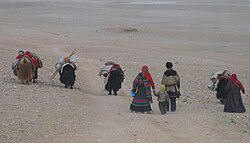
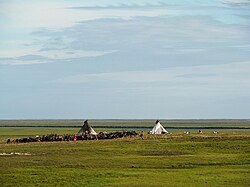
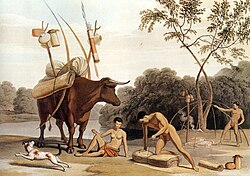
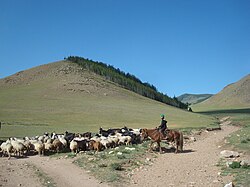
Pastoralism is a specialized form of animal husbandry where domesticated livestock are grazed on large, open vegetated lands known as pastures. Historically practiced by nomadic peoples, this way of life involves moving herds across vast territories to find sufficient forage. By converting uncultivated wild grasses into food, pastoralists create a sustainable livelihood in environments where traditional crop-growing is often impossible.
This practice is typically found in regions characterized by aridity, poor soil quality, or extreme temperatures. Because they operate on marginal lands, pastoral communities are uniquely vulnerable to the impacts of global warming and climate instability.
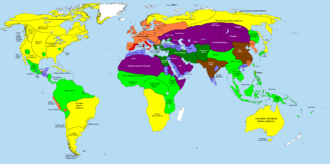
![Global map of pastoralism, its origins and historical development[1]](/images/81/96/8196f0deab6f20ecb1498bbf1f8f8fbd22e5b17955cc9278fe4b3f065dcf0589.gif)
Key Facts
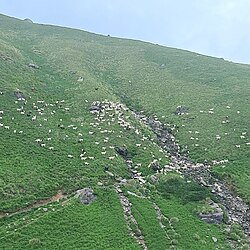
- Global Reach: Between 200 million and 500 million people practice pastoralism, spanning 75% of the world's countries.
- Land Use: Pastoralists manage approximately one-third of the Earth's terrestrial surface.
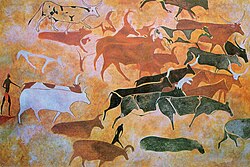
- Livestock Species: Common animals include cattle, camels, goats, yaks, llamas, reindeer, horses, and sheep.
- Productivity: Research indicates pastoralism can be 2 to 10 times more productive per unit of land than capital-intensive alternatives.
- Regional Presence: Major hubs include Africa, the Tibetan Plateau, the Eurasian Steppes, the Andes, Patagonia, and the Pampas.
The Mechanics of Pastoral Life
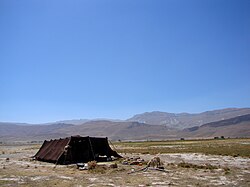
Resource Management
In uncultivated areas, livestock consume forage from marginal lands. Humans then survive on the resulting milk, blood, and meat. Beyond direct consumption, pastoralists trade by-products such as wool and milk for currency and other essential foods. While herding is the primary focus, some communities supplement their diet through fishing, hunting, gathering, or small-scale farming.
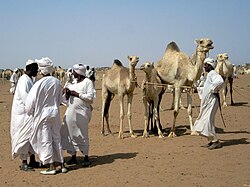
Mobility and Adaptation
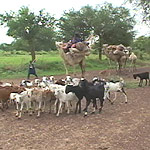
Mobility is the cornerstone of pastoralist survival. This includes daily movements and seasonal migrations known as transhumance—the planned movement of livestock between different pastures to match seasonal precipitation patterns. For example, in East Africa, specific animals are moved to different regions throughout the year based on rainfall.
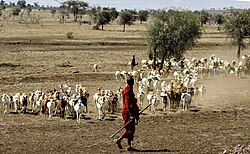
Environmental Knowledge
Pastoralists possess sophisticated "mental maps" of their environments, understanding which lands are valuable at specific times of the year. This deep ecological knowledge is often shared through vast networks of linked societies, allowing them to produce food in the world's harshest climates.
Ecological Impact and Land Management
Shaping the Landscape
Pastoralism actively shapes ecosystems. Grazing on savannas and woodlands can maintain biodiversity and prevent these areas from becoming dense shrublands or forests. In Mediterranean regions, appropriate levels of browsing can actually increase biodiversity. Some communities also use anthropogenic fire (human-started fire) to revitalize pastureland and prevent forest regrowth.
Genetic Conservation
Pastoralists play a critical role in maintaining farm animal genetic resources. By favoring local breeds that are naturally adapted to tolerate drought and disease, they preserve genetic diversity that is often lost in industrial farming systems that prefer exotic, high-yield breeds. This conservation is vital for long-term food security as climate change alters forage quality and disease patterns.
Challenges and Controversies
The Tragedy of the Commons
The "Tragedy of the Commons," a theory proposed by Garrett Hardin in 1968, suggests that shared property resources, like communal grazing lands, are prone to overuse and eventual ruin. While this theory argues that pastoral strategies can lead to environmental degradation, other research suggests that pastoralism is often a highly sustainable approach to land use in harsh environments.
Modern Pressures
Today, pastoralists face mounting pressures. In the Sahel and Horn of Africa, population growth, land degradation, and climate change have exacerbated violent conflicts between herders and farmers. In northern Kenya, the combination of the COVID-19 pandemic, recurring droughts, and climate change has pushed the resilience of these communities to a breaking point.
Summary of Pastoralism Characteristics
| Feature | Description |
|---|---|
| Primary Goal | Converting uncultivated plants into food via livestock. |
| Key Strategy | Mobility and transhumance to follow precipitation. |
| Environmental Role | Maintaining biodiversity and preventing shrub encroachment. |
| Economic Basis | Subsistence from milk, meat, and blood; trade of wool and hides. |
| Main Vulnerability | Climate change and marginalization by capital-intensive policies. |
Frequently Asked Questions
What is the difference between pastoralism and pastoral farming?
Pastoralism typically refers to the practice of releasing livestock onto large, open outdoor lands, often involving nomadic or semi-nomadic movement. Pastoral farming generally refers to raising livestock within a more fixed, farm-based structure.
What is transhumance?
Transhumance is the seasonal migration of livestock and their herders between different pastures, usually moving between lowland and highland areas to take advantage of seasonal weather and grass growth.
How does pastoralism affect biodiversity?
When practiced at appropriate levels, grazing and browsing can prevent landscapes from becoming overgrown forests or dense shrublands, which helps maintain the biodiversity of savannas and Mediterranean ecosystems.
Why are pastoralists more vulnerable to global warming?
Because pastoralists operate on marginal lands—areas with poor soil, extreme temperatures, or limited water—any shift in climate patterns can quickly deplete the fragile resources their livestock depend on for survival.
What are farm animal genetic resources?
These are the inherited genetic traits of livestock. Pastoralists conserve these resources by breeding local animals that are naturally resistant to local diseases and drought, rather than replacing them with exotic breeds.