Pardo Identity: The History and Evolution of Multiraciality in Latin America
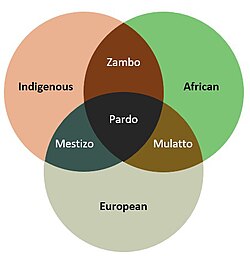
In the historical context of former Portuguese and Spanish colonies in the Americas, the term pardo (feminine: parda) describes individuals of triracial descent, combining European, Indigenous American, and African ancestry. While the term is most prominently recognized today in Brazil, its usage across the Americas reflects a complex history of social stratification, colonial administration, and evolving racial identities.
Key Facts
- Definition: Historically refers to triracial descendants of Europeans, Indigenous Americans, and Africans.
- Brazil: Currently used by the IBGE as a broad census category for multiracial Brazilians.
- Social Status: In the 18th century, unlike the term "negro," pardo carried no direct association with slavery.
- Regional Variation: In colonial Mexico, the term became nearly synonymous with "mulatto," while in Brazil, it often absorbed Indigenous identities.
- Political Influence: In the Caribbean and Northern South America, pardos achieved high military and political ranks and aided independence movements.
The Colonial Evolution of the Term
During the colonial era, racial labels were used to categorize the population based on ancestry. In some regions, pardos were distinguished from other mixed-race groups: mestizos (Indigenous and European), mulattos (African and European), and zambos (Indigenous and African). However, these definitions shifted over time. In colonial Mexico, the term pardo eventually lost much of its Indigenous connotation and became virtually synonymous with mulatto.
Interestingly, in the 18th century, pardo was sometimes the preferred label for blackness because it lacked the association with slavery tied to the word "negro." This distinction is evident in 18th-century Mexican casta paintings, which used "negro" to identify Africans paired with Spaniards, but never used "pardo" for that specific pairing.
Pardo Identity in Brazil
In Brazil, the term has maintained a broad meaning since the earliest days of colonization. As early as the letter by Pero Vaz de Caminha—the first description of Brazil by the Portuguese—Indigenous Americans were described as "pardo." Over time, the term expanded to cover a wide array of mixtures, including African/European, Asian/European, and complex blends of Indigenous, European, Asian, and African ancestries.
Historians such as Maria Leônia Chaves de Resende and Diogo de Vasconcelos note that pardo was frequently used to classify people with partial or full Indigenous ancestry. For instance, records from Minas Gerais and Campanha show individuals described as "freed pardo" who were explicitly identified as descendants of the "native gentiles of the land." Historian Muriel Nazzari further observed that in São Paulo, the pardo category effectively absorbed those of Indigenous descent who remained in the region.
Regional Perspectives: Caribbean, Northern South America, and Peru
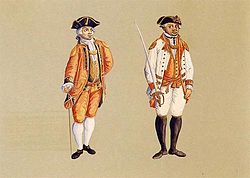
The experience of pardos varied significantly across the Spanish colonies. In the Caribbean and Northern South America—including Cuba, Santo Domingo, Puerto Rico, Venezuela, Colombia, Nicaragua, and Ecuador—pardos were often the children of formerly enslaved black people. These freed individuals leveraged their status to enter the military, eventually ascending to prestigious roles as senators, congressmen, and generals. They played a pivotal role in the fight for Latin American independence, fighting alongside the patriots.
In Peru, the term pardo refers to a specific mixture of Spanish and Indigenous American ancestry with a minor African contribution. This population is located exclusively along the coast, with the highest concentrations found between the regions of Tumbes and Ica.
Modern Classification in Brazil
Today, pardo remains a primary race/skin color category used by the Brazilian Institute of Geography and Statistics (IBGE) for national censuses. It serves as an umbrella term for multiracial Brazilians, including mulatos and cafuzos, as well as caboclos (assimilated Indigenous Americans mixed with Europeans or not).
The term first appeared in the Brazilian census of 1872. Although it was replaced by mestiço in 1890, and race questions were omitted entirely in 1900 and 1920 due to concerns over the accuracy of the answers, pardo eventually returned as a standard classification.
| Category | Description |
|---|---|
| Branco | White |
| Preto | Black |
| Pardo | Multiracial (includes mulatos, cafuzos, and caboclos) |
| Amarelo | Yellow (East Asian) |
| Indígena | Indigenous American |
Frequently Asked Questions
What is the primary definition of a pardo?
Historically, a pardo is a person of triracial descent, possessing ancestry from Europeans, Indigenous Americans, and Africans.
How did the term pardo differ from "negro" in the 18th century?
Unlike the term "negro," the label pardo did not have an association with slavery, making it a preferred term for some in the 18th century.
Who are the caboclos mentioned in the Brazilian context?
Caboclos are assimilated Indigenous Americans, whether mixed with Europeans or not, who fall under the broader pardo classification in the IBGE census.
What role did pardos play in Latin American independence?
In the Caribbean and Northern South America, pardos fought on the side of the patriots, contributing significantly to the victory of the independence movements.
How is the term pardo used in Peru?
In Peru, it describes a mixture of Spanish and Indigenous American ancestry with a small African contribution, primarily located in coastal regions from Tumbes to Ica.