Pamela C. Rasmussen: Redefining Ornithology and Avian Taxonomy
Pamela C. Rasmussen is a distinguished ornithologist whose work has fundamentally reshaped our understanding of bird species, particularly in Asia. Through a combination of rigorous museum specimen analysis and intrepid field research, she has uncovered lost species, identified new ones, and exposed one of the most significant frauds in the history of natural science.
Rasmussen's academic journey began at Walla Walla University, where she earned her M.S. in 1983. She later obtained her Ph.D. from the University of Kansas in 1990. It was during her doctoral studies that she focused on blue-eyed shags and was first introduced to evolutionary theory, a cornerstone of her subsequent scientific career. Her professional trajectory has seen her hold positions at prestigious institutions, including the Smithsonian Institution and Michigan State University.
Key Facts
- Major Publication: Co-authored Birds of South Asia: The Ripley Guide, the first field guide for the region to include sonograms.
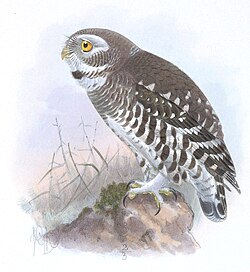
- Species Rediscovery: Located the forest owlet in 1997, a bird not seen since 1884.
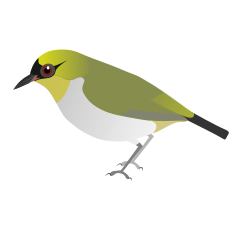
- Taxonomic Contributions: Described multiple new Asian species, including the Nicobar scops owl and the Togian white-eye.
- Scientific Integrity: Exposed the extensive specimen fraud perpetrated by Colonel Richard Meinertzhagen.
- Conservation Research: Conducted quantitative analysis on biodiversity hotspots to improve conservation tools.
The Birds of South Asia and the Ripley Guide
In 1992, Rasmussen became the assistant to S. Dillon Ripley, the former secretary of the Smithsonian. Ripley intended to create a definitive guide to the birds of South Asia, but following his illness, Rasmussen took leadership of the project. Collaborating with artist John C. Anderton, she produced Birds of South Asia: The Ripley Guide.
This comprehensive two-volume work covers 1,508 species across India, Bangladesh, Pakistan, Nepal, Bhutan, Maldives, the Chagos Archipelago, and Afghanistan. The guide is noted for its strict reliance on museum specimens for distributional data and its bold taxonomic approach, which introduced numerous species-level splits.
- Volume 1: A field guide featuring over 3,400 illustrations, 180 plates, and 1,450 color maps.
- Volume 2 (Attributes and Status): Provides detailed specimen measurements, identification data, habits, and over 1,000 sonograms (visual representations of sound).
Rediscoveries and New Species
Rasmussen is renowned for her ability to identify species through the study of museum specimens. In 1998, she described three new owls: the Nicobar scops owl (Otus alius), the Sangihe scops owl (Otus collari), and the cinnabar hawk owl (Ninox ios). In 2000, she described the Taiwan bush-warbler (Bradypterus alishanensis), and in 2008, she and her colleagues identified the Togian white-eye as a new species.
One of her most celebrated achievements was the 1997 rediscovery of the forest owlet (Athene blewitti). The species had been missing from scientific observation since 1884. Previous search efforts by experts like Salim Ali and S. Dillon Ripley had failed because they relied on fraudulent documentation provided by Richard Meinertzhagen. In November 1997, Rasmussen and Ben King successfully located the owl in western India after shifting their search west toward the site of an original specimen.
Exposing the Meinertzhagen Fraud
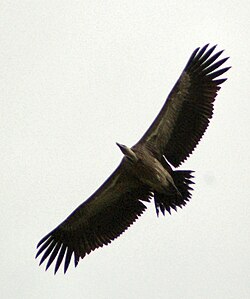
Rasmussen played a pivotal role in revealing the extent of the fraud committed by Colonel Richard Meinertzhagen, a once-eminent British ornithologist. While Meinertzhagen was highly respected during his life, analysis of his collection at the Walter Rothschild Zoological Museum in the 1990s by Alan Knox revealed that he had stolen museum specimens and falsified their documentation.
Rasmussen's research highlighted how this deception had misled ornithologists for decades, leading them to search for birds in the wrong geographical locations—as seen in the case of the forest owlet.
Biodiversity and Conservation Research
Beyond taxonomy, Rasmussen has contributed to the science of conservation. In 2005, she participated in a multi-institutional study on biodiversity hotspots. The team evaluated these areas based on species richness, the level of threat, and the number of endemic species (species found nowhere else).
The study found that these three criteria did not always overlap; only 2.5% of hotspot areas met all three criteria, while over 80% met only one. This suggested that different biological mechanisms drive different types of diversity, meaning that a single conservation strategy may not be effective for all types of hotspots.
| Category | Key Contribution | Impact |
|---|---|---|
| Taxonomy | Birds of South Asia: The Ripley Guide | Established a new evidence-base for South Asian avian distribution. |
| Discovery | Rediscovery of the Forest Owlet | Proven existence of a species thought lost since 1884. |
| Ethics | Meinertzhagen Fraud Exposure | Corrected historical records and specimen data. |
| Conservation | Biodiversity Hotspot Analysis | Demonstrated that richness, threat, and endemism vary geographically. |
Frequently Asked Questions
What is the significance of the Ripley Guide?
The Ripley Guide is a landmark two-volume work that provides the most detailed taxonomic and distributional account of birds in South Asia, notably introducing sonograms for the first time in a field guide for this region.
How did Rasmussen find the forest owlet?
Rasmussen and Ben King ignored fraudulent records and instead searched the area where an original specimen had been collected, eventually spotting and filming the owl in western India in 1997.
Who was Richard Meinertzhagen and why was he controversial?
He was a prominent British ornithologist who was later found to have stolen bird specimens from museums and falsified their origin data, which misled scientific research for years.
What did Rasmussen discover about biodiversity hotspots?
She found that species richness, threat levels, and endemism are not always found in the same locations, suggesting that different conservation tools are needed for different types of hotspots.
Which new species did Rasmussen describe?
She described several species, including the Nicobar scops owl, Sangihe scops owl, cinnabar hawk owl, and the Taiwan bush-warbler.