Paddy Mayne: The Legendary Irish Lion of the SAS
Few figures in military history embody the spirit of the maverick warrior as vividly as Lieutenant-Colonel Robert Blair Mayne. Known affectionately as "Paddy" or "The Irish Lion," Mayne was a man of immense physical presence and contradictory nature—a qualified solicitor and international rugby star who became one of the most decorated and daring operatives of the Special Air Service (SAS) during the Second World War.
Key Facts
- Full Name: Robert Blair Mayne
- Nickname: Paddy the Irish Lion
- Primary Unit: 1st Special Air Service (SAS) Regiment
- Key Achievements: Destroyed over 100 enemy aircraft in North Africa.
- Highest Honors: Companion of the Distinguished Service Order (DSO) with three Bars.
- Sporting Career: Played rugby union for Ireland and the British Lions.
Early Life and Sporting Prowess
Born on January 11, 1915, in Newtownards, County Down, Ireland, Mayne was a formidable physical specimen, standing 6 ft 3 in (1.91 m) and weighing 15.5 stone (98 kg). Before his military fame, he was an amateur boxing champion and a distinguished rugby player. In 1937, he earned his first cap for Ireland against Wales, eventually playing as a lock forward.
His athletic career peaked with his selection for the 1938 British Lions tour to South Africa. While he was praised by the press for being "outstanding" in the pack, Mayne was equally famous for his rambunctious behavior off the field, which included smashing up hotel rooms and sneaking away from formal dinners to hunt antelope.
The Path to the SAS
Mayne's military journey began in February 1939 with the Royal Ulster Rifles, followed by a commission in the Royal Artillery. He first saw combat in June 1941 as a second lieutenant with No. 11 (Scottish) Commando during the Syria–Lebanon campaign, where he distinguished himself during the Battle of the Litani River.
His transition to the SAS—then known as the "Parachute Unit"—was marked by controversy. Mayne was recommended to founder David Stirling by a friend, but his entry was clouded by an incident involving the assault of a fellow officer, Major Charles Napier. Reports suggest the conflict stemmed from Napier allegedly shooting Mayne's beloved dog. Despite this volatility, Mayne's courage made him an ideal candidate for the high-risk raiding operations Stirling envisioned.
Warfare in the Desert and Beyond
From late 1941 through 1942, Mayne became a terror to Axis forces during the Western Desert Campaign in Egypt and Libya. He pioneered the use of military jeeps for high-speed, hit-and-run raids on enemy airfields. The National Army Museum credits him with a personal tally of more than 100 aircraft destroyed.
One of his most significant successes occurred on July 26, 1942, at the Sidi Haneish Airfield. Leading eighteen armed jeeps, Mayne and his team destroyed up to 40 German aircraft while suffering minimal losses. This audacity earned him a reputation as one of the most effective raiders of the war.
Commanding the Special Raiding Squadron
Following the capture of David Stirling in 1943, Mayne was promoted to Major and given command of the Special Raiding Squadron (SRS). He led the unit through the Sicily and Italy campaigns. During the capture of the town of Augusta, Mayne personally led his men from landing craft under heavy machine-gun fire, securing vital stores and equipment from enemy demolition.
Operations in France and Germany
By 1944, as Lieutenant-Colonel, Mayne commanded 1 SAS Regiment during operations in France. He was instrumental in coordinating detachments during Operation Houndsworth and Operation Wallace, often penetrating German and American lines in broad daylight to lead reinforcements.
The Victoria Cross Controversy
In April 1945, during Operation Howard near Oldenburg, Mayne led two armored jeep squadrons through enemy lines, eliminated a machine-gun position, and rescued wounded men. Field Marshal Bernard Montgomery approved a recommendation for Mayne to receive the Victoria Cross (VC), the highest award for gallantry in the face of the enemy.
However, the award was subsequently downgraded to a third Bar of the DSO. This decision remains a point of historical contention. In 2005, over 100 MPs signed an Early Day Motion in the House of Commons calling for the reinstatement of the VC, arguing that prejudice had influenced the decision and that Mayne's actions deserved the highest honor.
Post-War Life and Legacy
After the war, Mayne returned to his professional roots as a solicitor and served as Secretary to the Law Society of Northern Ireland. However, the toll of the war was evident; he became increasingly withdrawn and struggled with the loss of his father in 1943.
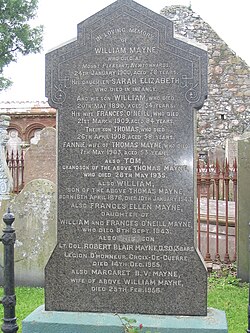
Tragically, Mayne's life ended prematurely. In the early hours of December 14, 1955, he died in a car accident in Newtownards after colliding with a farmer's vehicle. He was only 40 years old.
His legacy lives on in the military community. In 2003, a British Army base in Kuwait was named Camp Blair Mayne in his honor, serving as the site where Lieutenant-Colonel Tim Collins delivered his famous address before the invasion of Iraq.
| Category | Details |
|---|---|
| Military Rank | Lieutenant-Colonel |
| Key Units | Royal Ulster Rifles, 11 Commando, 1st SAS Regiment |
| Major Campaigns | North Africa, Sicily, Italy, France, Germany |
| Primary Awards | DSO & Three Bars, Legion of Honour, Croix de guerre |
| Civilian Profession | Solicitor |
Frequently Asked Questions
Why was Paddy Mayne known as the "Irish Lion"?
The nickname reflects both his Irish heritage and his fierce, courageous, and often aggressive nature both on the rugby pitch and the battlefield.
What was Mayne's contribution to SAS tactics?
Mayne pioneered the use of military jeeps to conduct surprise, high-mobility hit-and-run raids deep behind enemy lines, specifically targeting Axis airfields.
Why didn't Paddy Mayne receive the Victoria Cross?
Although recommended for the VC by Field Marshal Montgomery for his actions at Oldenburg, the award was downgraded to a third Bar of the DSO. Many contemporaries and later politicians believe this was due to personal prejudice.
What happened to Paddy Mayne after World War II?
He returned to Northern Ireland to work as a solicitor and became the Secretary to the Law Society of Northern Ireland before his death in a car accident in 1955.
How many aircraft did Paddy Mayne destroy?
According to the National Army Museum, Mayne had a personal tally of more than 100 aircraft destroyed during his raids in the Western Desert Campaign.