Owl of Athena: Symbolism of Wisdom from Antiquity to Philosophy
In the tapestry of Western symbolism, few images are as enduring as the little owl (Athene noctua). Traditionally associated with Athena, the Greek virgin goddess of wisdom, and her Roman counterpart, Minerva, this bird has evolved into a universal emblem of knowledge, perspicacity, and erudition. From the silver coins of ancient city-states to the complex treatises of German idealism, the owl represents the ability to see what others cannot.
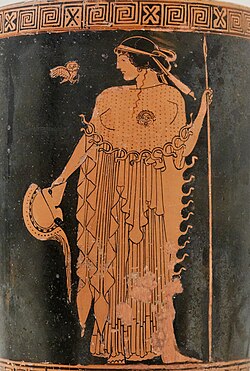
The Owl in Ancient Greece
The precise origins of the bond between Athena and the owl remain a subject of scholarly debate. Some mythographers, including David Kinsley and Martin P. Nilsson, suggest the connection may stem from a Minoan palace goddess associated with birds. Marija Gimbutas takes this further, tracing Athena's roots back to an Old European goddess of birds and snakes.
Other theories focus on the bird's natural traits or the local environment. Cynthia Berger suggests that the owl's ability to see in the dark served as a natural metaphor for wisdom. Conversely, William Geoffrey Arnott proposes a more practical origin: the sheer abundance of little owls in the region of Athens, a fact noted by ancient writers such as Aristophanes in The Birds and Lysistrata.
Regardless of its origin, the city of Athens adopted the owl as a symbol of allegiance to its patron goddess. According to the myth depicted on the West pediment of the Parthenon, Athena won the favor of the citizens by offering a gift more useful than that of Poseidon. This association became so ingrained that owls appeared on vases, weights, and prize amphoras for the Panathenaic Games.
In the realm of currency, the owl became the primary image on the obverse of the Athenian tetradrachm (a silver coin) after 510 BC. These coins were so widely recognized that they were commonly referred to as glaux (little owl) throughout the ancient world.
![Silver tetradrachm coin at the Museum of Fine Arts of Lyon depicting the owl of Athena (c. 480–420 BC). The inscription "ΑΘΕ" is an abbreviation of ΑΘΗΝΑΙΩΝ, which may be translated as "of the Athenians". In daily use the Athenian drachmas were called glaukes (γλαῦκες, owls). This silver coin was first issued in 479 BC in Athens after the Persians were defeated by the Greeks.[1]](/images/9c/30/9c3049816ed094d856b7b94e2d509e7ddec2137f47b8dca99717b5da540a273e.jpg)
The owl's presence extended beyond currency into military motivation. During the Battle of Salamis and the victory of Agathocles of Syracuse over the Carthaginians in 310 BC, owls flying through the ranks were interpreted as divine blessings from Athena.
Roman Adaptation and Folklore
The Roman world continued this association through Minerva. While the owl remained her sacred bird, Roman folklore introduced more ambivalent meanings. In Ovid's Metamorphoses, the owl is linked to Nyctimene, a cursed daughter of King Epopeus of Lesbos.
In daily Roman life, the owl was often viewed as a harbinger of death; a hooting owl perched on a roof was seen as an omen of doom, reportedly signaling the deaths of several Roman emperors, including Julius Caesar. Conversely, some believed that placing an owl's feather near a sleeping person could force them to reveal their secrets in their sleep.
Philosophical Evolution: From Aristotle to Hegel
The metaphor of the owl has shifted significantly within philosophical discourse. Aristotle's Metaphysics used a more negative epistemological analogy, comparing the day-blindness of bats to the limitations of human intellect—a view later transmitted through thinkers like Thomas Aquinas.
This changed in the 19th century with Georg Wilhelm Friedrich Hegel. He famously wrote that "the owl of Minerva spreads its wings only with the falling of the dusk." For Hegel, this meant that philosophy understands a historical condition only as it passes away. Philosophy appears in the "maturity of reality," providing understanding in hindsight once a formative process is complete.
Klaus Vieweg describes this as one of the most beautiful metaphors in the history of philosophy. Recent research suggests Hegel's affirmative take may have been influenced by the writings of Jacob Hermann Obereit and the influence of Goethe around 1795 in Jena.
Key Facts
- Species: The Athene noctua (little owl) is the specific bird associated with Athena and Minerva.
- Currency: The Athenian tetradrachm was known as the glaux (owl) due to its imagery.
- Roman Omens: In Rome, a hooting owl on a roof was considered a sign of impending death.
- Hegelian Metaphor: The "Owl of Minerva" symbolizes philosophy's role in understanding history in hindsight.
- Divine Gift: Athena's patronage of Athens was secured by providing a gift superior to Poseidon's.
| Culture/Era | Primary Meaning | Key Association |
|---|---|---|
| Ancient Greece | Wisdom & Patronage | Athena / Athenian Tetradrachms |
| Ancient Rome | Omens & Secrets | Minerva / Harbinger of Death |
| Aristotelian | Intellectual Limitation | Day-blindness analogy |
| Hegelian | Hindsight & Maturity | Philosophy at the end of an era |
Frequently Asked Questions
Why is the owl associated with Athena?
While uncertain, theories range from the owl's ability to see in the dark (symbolizing wisdom) to the high population of little owls in the region of Athens. Some scholars also link the association to earlier Minoan or Old European bird goddesses.
What is a "glaux" in the context of ancient Greece?
A glaux is the Greek word for "little owl." It became the common name for the Athenian tetradrachm silver coin because the owl of Athena was featured on its obverse.
How did the Roman view of the owl differ from the Greek view?
While both associated the bird with the goddess of wisdom (Minerva in Rome), Romans also viewed the owl as a dark omen. A hooting owl on a roof was often seen as a sign of death.
What does Hegel mean by the "Owl of Minerva"?
Hegel used the metaphor to explain that philosophy only understands a historical era once that era has reached its conclusion. Like an owl that flies at dusk, philosophy arrives when the "maturity of reality" is reached, allowing for retrospective understanding.
Did the owl of Athena have any military significance?
Yes. In various battles, such as the victory of Agathocles of Syracuse over the Carthaginians and the Battle of Salamis, the appearance of owls was interpreted by soldiers as a blessing from Athena.