Ottorino Respighi: The Master of Orchestral Color
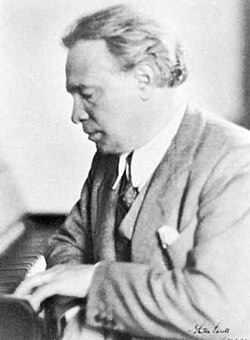
Ottorino Respighi (1879–1936) stands as one of the most influential Italian composers of the early 20th century. A versatile musician who excelled as a violinist, conductor, and musicologist, Respighi is best remembered for his ability to blend traditional Italian melodies with a lush, modern orchestral palette. While his body of work spans operas, ballets, and chamber music, he achieved international stardom through his vivid tone poems—orchestral works designed to evoke a specific image or narrative.
His most celebrated achievements are the "Roman Trilogy": Fountains of Rome (1916), Pines of Rome (1924), and Roman Festivals (1928). These pieces captured the essence of the Eternal City and established Respighi as a master of sonority and orchestral color.
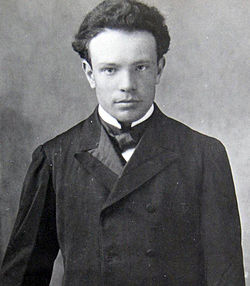
Key Facts
- Full Name: Ottorino Respighi
- Lifespan: July 9, 1879 – April 18, 1936
- Nationality: Italian
- Famous Works: Fountains of Rome, Pines of Rome, Roman Festivals
- Key Influence: Studied orchestration under Nikolai Rimsky-Korsakov
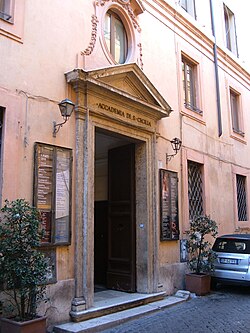
- Academic Role: Professor of composition at the Accademia di Santa Cecilia in Rome
Early Life and Education in Bologna
Born into a musical family in Bologna, Respighi's early education was shaped by his father's encouragement. He began formal studies in piano and violin, eventually enrolling at the Liceo Musicale di Bologna in 1891. His early career was marked by a significant international experience: serving as the principal violist for the Russian Imperial Theatre in Saint Petersburg during the winter of 1900.
It was in Russia that Respighi met the legendary composer Nikolai Rimsky-Korsakov. Over two winter seasons, Rimsky-Korsakov provided influential lessons in composition and orchestration (the art of assigning musical parts to different instruments). This mentorship culminated in Respighi's 1901 graduation piece, Preludio, corale e fuga, which was so impressive that his teacher, Martucci, declared him a master rather than a pupil.
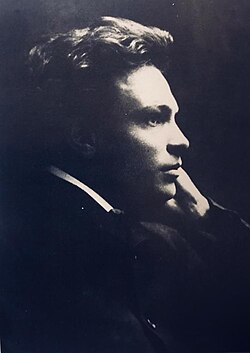
The Art of Transcription and the Move to Rome
Respighi developed a passion for reviving early music, creating transcriptions of 16th- to 18th-century Italian compositions. His 1906 version of Claudio Monteverdi's Lamento d'Arianna brought him his first taste of international success during a stay in Berlin in 1908. This period was pivotal, as he worked as an accompanist for soprano Etelka Gerster and collaborated with conductor Arthur Nikisch of the Berlin Philharmonic.
In 1913, Respighi relocated to Rome to serve as a professor of composition at the Liceo Musicale di Santa Cecilia. During this time, he married his student, the singer Elsa Olivieri-Sangiacomo. While he continued to teach until 1935, he eventually stepped away from his professorship in 1923 to focus on composing and touring.
International Fame and Global Inspiration
By the mid-1920s, Respighi's reputation had spread globally. He toured the United States and South America, often performing as a soloist for his own piano works. In December 1925, he premiered his Concerto in modo misolidio (written in the Mixolydian mode) at Carnegie Hall.
His travels often inspired his compositions. A 1927 trip to Rio de Janeiro led to the creation of Impressioni Brasiliane (Brazilian Impressions), a three-movement work reflecting local customs and styles. Similarly, his Trittico Botticelliano (1927) was inspired by the paintings of Sandro Botticelli.
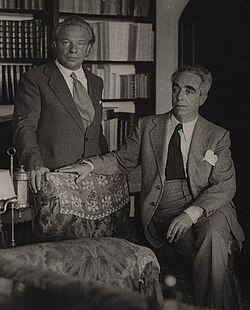
The peak of his orchestral output arrived with Roman Festivals in 1928. Composed in just nine days, the piece was premiered by Arturo Toscanini and the New York Philharmonic. Respighi believed this work represented the absolute limit of orchestral sonority and color, leading him to focus on smaller ensembles for the remainder of his career.
Final Years and Lasting Legacy
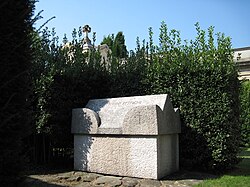
In 1932, Respighi composed Huntingtower: Ballad for Band, his only work for a wind band, as a tribute to John Philip Sousa. However, by 1935, his health began to fail. While working on his final opera, Lucrezia, he was diagnosed with bacterial endocarditis. He passed away in April 1936 at the age of 56.
His wife, Elsa, spent nearly 60 years after his death promoting his legacy. In recent years, composer Salvatore Di Vittorio has worked to complete Respighi's unfinished works, including the 1903 Violin Concerto in A major, which finally premiered in 2010.
Respighi's music continues to be studied for its technical brilliance and evocative power, as seen in his use of the Phrygian mode in the Trittico Botticelliano.
![Use of the Phrygian mode on A in Respighi's Trittico Botticelliano (Botticelli Triptych, 1927).[76] Playⓘ](/images/71/a5/71a510e2f20be69234030e1de6a63b9c9225ea4338924362a4d530f389fd20cd.png)
Summary of Major Works
| Category | Notable Works | Year(s) |
|---|---|---|
| Orchestral Tone Poems | Fountains of Rome, Pines of Rome, Roman Festivals | 1916, 1924, 1928 |
| Operas | La fiamma, Maria egiziaca, Lucrezia (posthumous) | 1934, 1932, 1937 |
| Ballets | La Boutique fantasque, Belkis, Regina di Saba | 1918, 1932 |
| Orchestral Suites | Impressioni brasiliane, Trittico Botticelliano | 1928, 1927 |
| Band Music | Huntingtower: Ballad for Band | 1932 |
Frequently Asked Questions
What are Respighi's most famous works?
His most famous works are the three Roman tone poems: Fountains of Rome, Pines of Rome, and Roman Festivals.
Who influenced Respighi's style of orchestration?
Nikolai Rimsky-Korsakov had a profound influence on Respighi, providing him with critical lessons in orchestration and composition during his time in Saint Petersburg.
Did Respighi write music other than orchestral pieces?
Yes, Respighi was a prolific composer of operas, ballets, choral songs, and chamber music, as well as transcriptions of 16th- to 18th-century music.
How did Respighi die?
Respighi died at the age of 56 due to bacterial endocarditis, an infection of the heart lining.
What is the significance of the "Roman Trilogy"?
These works brought Respighi international fame and are considered masterpieces of 20th-century orchestration, capturing the atmosphere and history of Rome.