Ottoman Architecture: From Early Anatolian Roots to Imperial Grandeur
Ottoman architecture is a sophisticated stylistic evolution that spanned over six centuries, from approximately 1300 to 1922. Emerging in northwestern Anatolia, it began as a synthesis of earlier Seljuk Turkish architecture, blended with Byzantine and Iranian influences and other Middle Eastern traditions. What started as a series of experiments with diverse building types eventually coalesced into a rationalist monumentality characterized by spatial unity and a profound expression of imperial power.
Key Facts
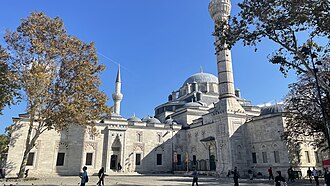
- Timeline: Active from circa 1300 to 1922.
- Core Influence: The Hagia Sophia served as a primary inspiration for the classical domed mosque.
- Master Architect: Mimar Sinan is the most influential figure of the classical period.
- Defining Feature: A high central dome often supported by semi-domes to create vast, open interior spaces.
- Stylistic Shifts: Evolved from early experimental forms to a Classical style, followed by the Ottoman Baroque and later Neo-Ottoman movements.
The Evolution of Ottoman Style
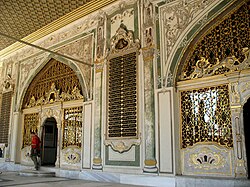
![The Fruit Room in the Harem of Topkapı Palace (1705)[126]](/images/97/d0/97d00285e209cdfa036071e186f60228391000f7552039dbe0cec9b9cd5d4131.jpg)
Early Ottoman Period (14th to 15th Centuries)
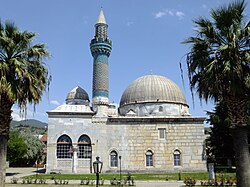
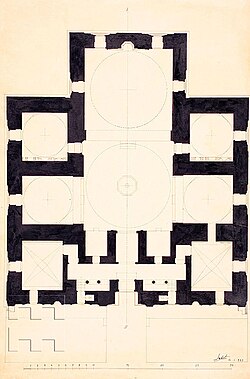
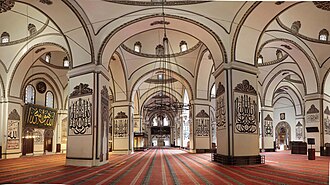
In its infancy, Ottoman architecture was characterized by experimentation. Early structures often utilized multiple domes or the "T-plan"—a layout featuring three domed iwans (vaulted halls open at one end) surrounding a central domed space. This period saw the transition from regional Anatolian styles to a more centralized imperial identity, particularly after the conquest of Constantinople in 1453.
The Classical Period (16th to 17th Centuries)
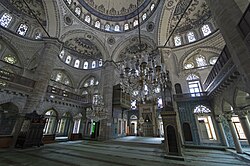
The Classical period represents the zenith of Ottoman architectural achievement. This era integrated native traditions with the monumental scale of the Hagia Sophia, resulting in mosques centered around a massive central dome. The goal was to create a unified interior space that could accommodate large congregations of worshippers.
The most pivotal figure of this era was Mimar Sinan. His masterpieces, including the Şehzade, Süleymaniye, and Selimiye mosques, refined the use of pendentives (triangular segments of a sphere that allow a circular dome to rest on a square room) and semi-domes to achieve unprecedented structural harmony.
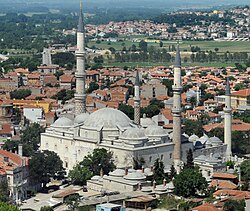
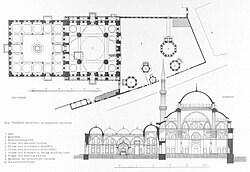

![Plan and elevation of the Kara Ahmed Pasha Mosque (1554), showing a hexagonal baldaquin support for the main dome,[212] one of several designs Sinan experimented with.](/images/04/aa/04aa29bb17a2dbd6209c38f27ccab60db6b2cb799f26547c6aac9b7e48e004f4.jpg)
The Baroque and Late Periods (18th to 20th Centuries)
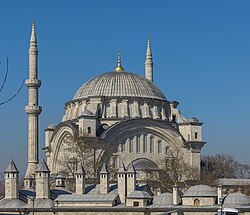
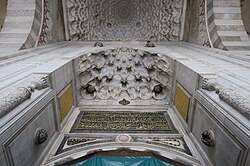
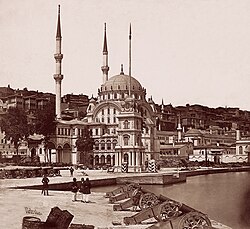
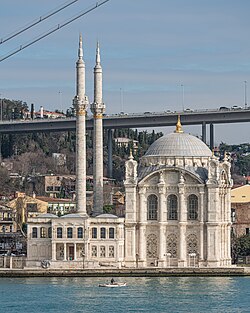
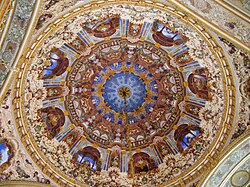
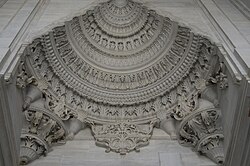
By the 18th century, the "Tulip Period" gave way to the Ottoman Baroque style. This movement marked a departure from classical norms, integrating European cultural influences. Traditional muqarnas (honeycomb-like carved ornamentation) were replaced by baroque moldings and acanthus friezes. The Nuruosmaniye Mosque stands as a primary example of this transition, signaling a rejection of the classical style in favor of a more ornate, European-influenced aesthetic.
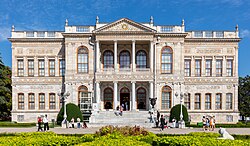
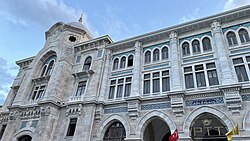
In the 19th and early 20th centuries, architecture became increasingly eclectic. The Dolmabahçe Palace exemplifies the shift toward Western imperial styles, while the Sirkeci Railway Station adopted an Orientalist approach. Later, the First National Architectural Movement sought a revival of Ottoman elements, blending them with modern needs.
Architectural Elements and Decoration
Tile and Painted Decoration
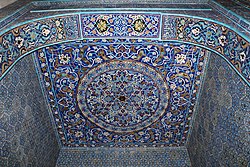
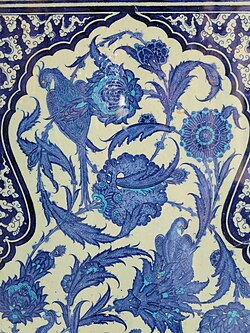
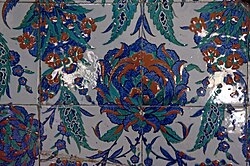
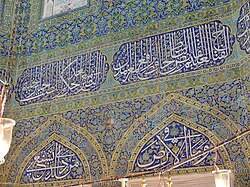
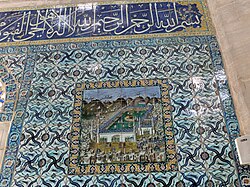
Ottoman interiors were renowned for their vibrant ceramics. Cuerda seca (a technique to keep different colored glazes from running) was used early on, eventually evolving into the world-famous Iznik tiles. These tiles often featured arabesque motifs, the saz style (characterized by long, serrated leaves), and depictions of nature.
Stone Carving and Woodwork
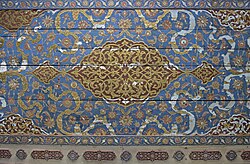
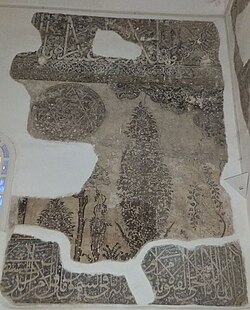
Stone carving was used extensively in portals and facades, while interiors often featured painted wooden ceilings. These ceilings frequently combined central medallions with "Chinese clouds" and other stylized motifs, reflecting the empire's vast trade networks.
Civic and Residential Architecture
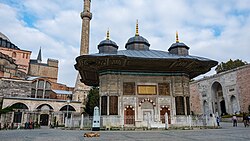
![Sebil of Abdülhamid I, Istanbul (circa 1780)[153]](/images/fa/db/fadb1fd2b293f64336424569e88ef3c59d505bd2c2c61755031c55011d21602a.jpg)
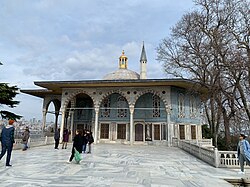
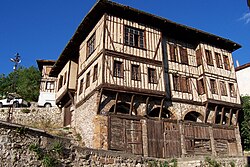
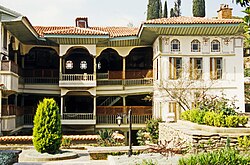
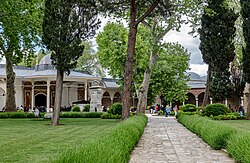
Beyond mosques, the Ottomans developed distinct styles for palaces, houses, and public works. The Topkapı Palace served as the imperial heart for centuries, featuring a series of courtyards and kiosks. Residential architecture, such as the traditional houses in Safranbolu, focused on privacy and adaptation to the local climate.
![Babüsselam, the gate to the Second Courtyard of the Topkapı Palace. The palace was established by Mehmed II in 1459. This gate may be one of the structures still partly dating to his reign.[57]](/images/e7/5a/e75abe418798d0a5b04f13ab9f6d8f1bb8952ae50791414cebee228aa94f0bcf.jpg)
Public infrastructure also flourished, including sebils (public water fountains) and khans (caravanserais for traders), which often integrated Ottoman domed units into local regional styles, such as those found in Syria.
![The Khan As'ad Pasha in Damascus (1753) is an example of the Ottoman penchant for domed units being integrated into local Syrian building styles.[305]](/images/e4/55/e455762b4a638a0eb85342de945e3e94aeeef5f6c8ff28a3d9b0147831e240e4.jpg)
Summary of Ottoman Architectural Eras
| Period | Key Characteristics | Notable Examples |
|---|---|---|
| Early (14th-15th C) | Experimental, T-plans, multiple small domes | Green Mosque (Bursa) |
| Classical (16th-17th C) | Centralized high domes, semi-domes, spatial unity | Süleymaniye Mosque |
| Baroque (18th-19th C) | European influence, ornate moldings, acanthus leaves | Nuruosmaniye Mosque |
| Late/Revival (19th-20th C) | Eclecticism, Orientalism, Neo-Ottomanism | Dolmabahçe Palace |
Frequently Asked Questions
![The Sirkeci Railway Station in Istanbul (1888–1890), designed in Orientalist style[196]](/images/43/60/43607627bc2a3ae103ae6a3d34445430021338c3b454963eb2062ef74de732e7.jpg)
![Stari Most (Old Bridge) in Mostar (1557–1566) is one of the most celebrated Ottoman monuments in the Balkans.[300]](/images/35/3a/353ac6c04951f1eeaae60687be500f8d8aa0f1755fa3d0b3706a9490fe9c0907.jpg)
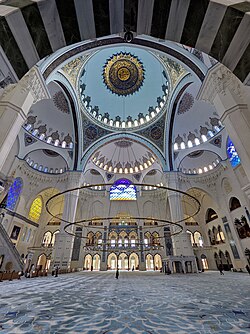
![The Kocatepe Mosque in Ankara (completed in 1987) is a modern imitation of classical Ottoman mosque design.[310]](/images/21/30/21307dc9b7ef103121124865df2db5a834b8d23ccfb58c8a3d57ba4fbfe3261b.jpg)
Who was the most important Ottoman architect?
Mimar Sinan was the preeminent architect of the classical period. He is credited with perfecting the domed mosque structure and creating iconic works like the Selimiye and Süleymaniye mosques.
How did the Hagia Sophia influence Ottoman design?
The Hagia Sophia provided a blueprint for the use of a massive central dome supported by semi-domes, which Ottoman architects adopted to create the vast, open prayer halls characteristic of the classical style.
What are Iznik tiles?
Iznik tiles are high-quality ceramics produced in the town of Iznik, known for their brilliant colors and intricate designs, including floral motifs and the saz style, used extensively to decorate mosques and palaces.
What is the difference between Classical and Baroque Ottoman architecture?
Classical architecture focused on rationalist monumentality and spatial unity using traditional Islamic and Byzantine forms. Ottoman Baroque integrated European decorative elements, replacing traditional muqarnas with curved moldings and ornate friezes.
What was a külliye?
A külliye was a grand social complex centered around a mosque, typically including other public buildings such as schools, hospitals, and kitchens to serve the community.