Understanding Nucleic Acid Sequences: The Blueprint of Life
At the heart of every living organism lies a complex set of instructions that dictate how it grows, functions, and reproduces. These instructions are written in the form of a nucleic acid sequence—a specific succession of bases within the nucleotides that make up DNA (deoxyribonucleic acid) and RNA (ribonucleic acid). By understanding the order of these bases, scientists can unlock the secrets of genetic diseases, evolutionary history, and the fundamental mechanisms of biology.
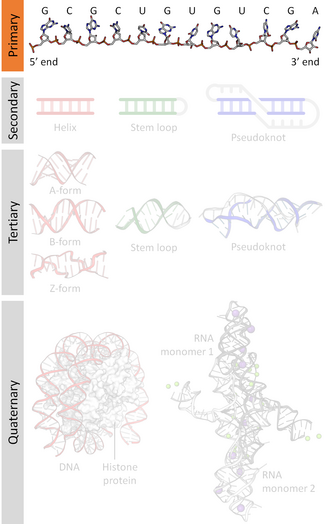
Key Facts
- Primary Structure: The linear sequence of nucleotides is known as the primary structure of a nucleic acid.
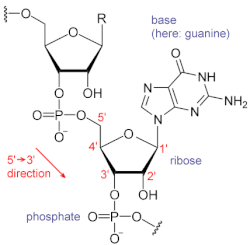
- Directionality: Sequences are conventionally read and written from the 5' end to the 3' end.
- The Bases: DNA uses adenine (A), cytosine (C), guanine (G), and thymine (T), while RNA replaces thymine with uracil (U).
- The Central Dogma: Genetic information flows from DNA to mRNA (transcription) and then to proteins (translation).
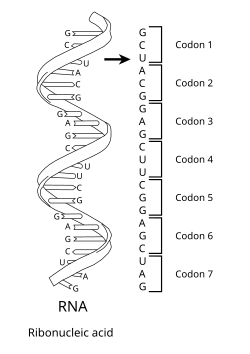
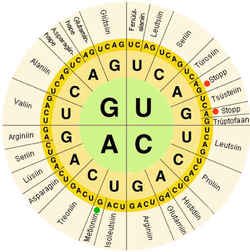
- Codons: A group of three nucleotides, called a codon, specifies a single amino acid in a protein.
The Building Blocks: Nucleotides and Structure
Nucleic acids are linear, unbranched polymers composed of repeating units called nucleotides. Each nucleotide is made of three essential components: a phosphate group, a sugar, and a nucleobase. The sugar varies depending on the molecule: DNA contains deoxyribose, while RNA contains ribose. Together, the phosphate and sugar form the "backbone" of the strand, to which the nucleobases are attached.
The arrangement of these bases constitutes the primary structure of the molecule. While nucleic acids also possess secondary and tertiary structures (such as the famous double helix of DNA), the primary sequence is what carries the actual genetic information. In double-stranded DNA, there are two strands: the sense strand (which contains the coding information) and the antisense strand (the complementary sequence).
Base Pairing and Complementarity
Nucleic acids rely on complementarity to function. This means specific bases always pair together: adenine (A) pairs with thymine (T) in DNA or uracil (U) in RNA, and cytosine (C) always pairs with guanine (G). For example, if a DNA sequence is TTAC, its complementary sequence is GTAA.
| Base Name | Symbol | DNA Pair | RNA Pair | Type |
|---|---|---|---|---|
| Adenine | A | Thymine (T) | Uracil (U) | Purine |
| Cytosine | C | Guanine (G) | Guanine (G) | Pyrimidine |
| Guanine | G | Cytosine (C) | Cytosine (C) | Purine |
| Thymine | T | Adenine (A) | N/A | Pyrimidine |
| Uracil | U | N/A | Adenine (A) | Pyrimidine |
The Language of Genetics: Notation and Modification
To represent these sequences, scientists use a standardized letter system. However, when a specific nucleotide at a certain position is unknown or variable, the International Union of Pure and Applied Chemistry (IUPAC) provides ambiguity codes. For instance, the letter "W" indicates that either adenine or thymine could occupy that position without affecting the sequence's function.
Beyond the standard bases, some nucleotides are modified after the chain is formed. In DNA, 5-methylcytidine (m5C) is common. RNA features a wider variety of modifications, including pseudouridine (Ψ), dihydrouridine (D), and inosine (I). Some modifications occur due to mutagens; for example, the deamination of adenine produces hypoxanthine, while the deamination of guanine produces xanthine.
Biological Significance and the Central Dogma
The primary purpose of a nucleic acid sequence is to provide the instructions for building proteins. This process follows the central dogma of molecular biology: DNA is transcribed into messenger RNA (mRNA), which then travels to the ribosome to be translated into a protein.
Translation occurs via codons—sequences of three nucleotides that each correspond to a specific amino acid. The genetic code ensures that the cell machinery incorporates the correct amino acids in the correct order to create a functional protein.
Sequence Determination and Digital Analysis
DNA sequencing is the laboratory process used to determine the exact order of nucleotides in a DNA fragment. Because the signal from small amounts of DNA can be too weak to measure, scientists use polymerase chain reaction (PCR) to amplify the sample. While DNA is sequenced directly, RNA must first be converted into DNA using an enzyme called reverse transcriptase before it can be sequenced.
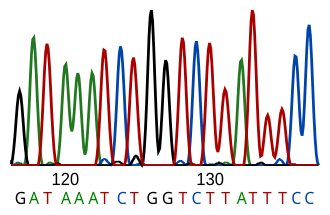
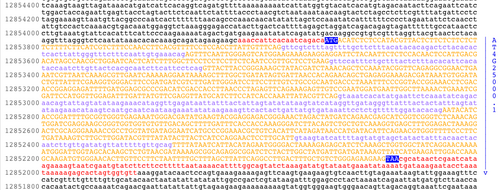
Once determined, these sequences are stored in silico (digitally). This allows researchers to use bioinformatics to analyze the data, identify functional motifs (such as the Shine-Dalgarno or Kozak sequences), and even synthesize new artificial DNA.
Sequence Alignment and Evolution
By aligning two or more sequences, bioinformaticians can identify regions of similarity. Mismatches in these alignments often represent point mutations, while gaps indicate insertions or deletions (indels). This analysis supports the molecular clock hypothesis, which suggests that the rate of evolutionary change is relatively constant, allowing scientists to estimate how long ago two species diverged from a common ancestor.
Practical Applications: Genetic Testing
The ability to analyze the human genome—which contains approximately 20,000 to 25,000 genes—has revolutionized medicine. Genetic testing is now used to:
- Diagnose inherited disorders and vulnerabilities to genetic diseases.
- Determine paternity and trace ancestral lineage.
- Identify mutant forms of genes associated with increased health risks.
- Develop targeted treatments for contagious diseases by studying pathogens.
Frequently Asked Questions
What is the difference between a sense and an antisense strand?
The sense strand is the DNA strand that contains the same sequence of bases as the transcribed mRNA (the coding strand). The antisense strand is the complementary strand; while it does not code for proteins itself, it serves as the template for mRNA synthesis.
How do scientists calculate the difference between two DNA sequences?
The percent difference is calculated by aligning two sequences and dividing the number of differing bases by the total number of nucleotides in the sequence. For example, three differences in a 10-nucleotide sequence result in a 30% difference.
What is a sequence motif?
A sequence motif is a short, recurring pattern of nucleotides that has a specific biological function. Examples include the Kozak consensus sequence and the RNA polymerase III terminator.
Can RNA be sequenced directly?
No, RNA is not sequenced directly. It must first be copied into a complementary DNA (cDNA) strand using an enzyme called reverse transcriptase, and that DNA is then sequenced.
What is sequence entropy?
Sequence entropy, or sequence complexity, is a numerical measure of the local complexity of a DNA sequence. It allows researchers to analyze sequences using alignment-free techniques to detect rearrangements or motifs.