Northern Territory Legislative Assembly: A History of Governance
The political landscape of the Northern Territory has evolved from direct federal oversight to a robust system of self-governance. This journey reflects a gradual shift in power from the Australian Commonwealth to the local residents of the Territory, culminating in the establishment of a fully elected representative body.
The Early Era of Federal Control
In 1911, South Australia transferred control of the Northern Territory to the Commonwealth. For several years, the federal government managed the region directly through a relevant minister, leaving the Darwin town council as the only elective body available to citizens.
Governance underwent a period of experimentation in 1927 when the region was split into two separate entities: the territories of North Australia and Central Australia. Each was governed by a four-member Advisory Council—a body designed to provide guidance rather than law-making power—which was composed of half-elected and half-appointed members. Additionally, the North Australia Commission was established to handle the development of the northern region.
These administrative divisions were short-lived. By 1931, the changes were reversed, and the Northern Territory was reformed under direct federal control. This arrangement persisted until 1947, when the Northern Territory Legislative Council was formed. Like the previous advisory councils, this body remained a hybrid of half-elected and half-appointed members.
The Rise of the Legislative Assembly
A significant turning point occurred in 1974 with the passage of the Northern Territory (Administration) Act 1974 (Cth) by the Australian federal parliament. This act created the Legislative Assembly, marking a departure from the Legislative Council by establishing a fully elected body. Initially consisting of 19 members, the Assembly lacked substantial power until the Territory was granted limited self-government in 1978.
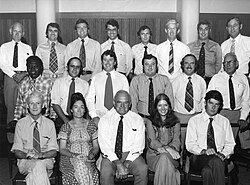
As the region grew, so did its representation. By the 1983 election, the number of members in the Legislative Assembly was increased to 25 to better serve the population.
Political Shifts and Party Dominance
From its inception until 2001, the Legislative Assembly was dominated by the conservative Country Liberal Party (CLP), which has been affiliated with the federal Liberal–National coalition since 1979.
The political tide turned in 2001 when the Labor Party (ALP) secured a one-seat majority. This victory saw Clare Martin become the first female Chief Minister and the first Labor leader to head the Territory's government. The ALP's influence peaked in the 2005 election, where they won 19 seats compared to the CLP's 4. Following Martin's resignation in 2007, Paul Henderson took over as leader and maintained a one-seat majority in the 2008 election.
The following years were marked by political volatility. Labor's majority fluctuated due to members moving to the cross-benches as independents, specifically Marion Scrymgour and Alison Anderson. The CLP returned to power in 2012 under Terry Mills with 16 seats. However, the CLP's tenure was unstable; after Terry Mills resigned in 2013, Adam Giles took leadership. The party's majority dwindled to a single seat in 2014 following defections to the Palmer United Party, eventually falling into minority government status by July 2015.
Modern Governance and Recent Leadership
The 2016 election resulted in a landslide victory for Labor, led by Chief Minister Michael Gunner. During this period, the role of the Speaker—the presiding officer of the Assembly—saw several changes. Kezia Purick, a former CLP member turned independent, served as Speaker from October 2012 through the 2016 election. She resigned in 2020 following an ICAC (Independent Commission Against Corruption) investigation into allegations of corrupt conduct.
Following Purick's resignation, Chansey Paech served as Speaker until September 2020, when he joined Gunner's cabinet. Ngaree Ah Kit then served as acting speaker before being substantively elected on October 20, 2020. The most recent shift occurred in the 2024 election, which saw a landslide defeat for the ALP and the return of the CLP to power under Chief Minister Lia Finocchiaro. Robyn Lambley, a CLP-turned-independent, was appointed Speaker of the Assembly following this victory.
Key Facts
- 1911: Commonwealth government takes control from South Australia.
- 1974: The Legislative Assembly is created as a fully elected body.
- 1978: Limited self-government is granted to the Northern Territory.
- 2001: Clare Martin becomes the first female and first Labor Chief Minister.
- 2024: The CLP returns to power under Chief Minister Lia Finocchiaro.
| Period/Year | Governing Body | Composition/Status |
|---|---|---|
| 1911–1927 | Federal Minister | Direct Commonwealth rule |
| 1927–1931 | Advisory Councils | Half-elected, half-appointed |
| 1947–1974 | Legislative Council | Half-elected, half-appointed |
| 1974–Present | Legislative Assembly | Fully elected |
Frequently Asked Questions
When did the Northern Territory get a fully elected government?
The Legislative Assembly was created in 1974 via the Northern Territory (Administration) Act 1974 (Cth), replacing the partially appointed Legislative Council with a fully elected body.
Who was the first female Chief Minister of the Northern Territory?
Clare Martin became the first female Chief Minister in 2001 after the Labor Party won a one-seat majority.
How many members are in the Legislative Assembly?
The Assembly initially had 19 members upon its creation in 1974, but this number was increased to 25 for the 1983 election.
What is the role of the Speaker in the Assembly?
The Speaker is the presiding officer of the Legislative Assembly. Recent Speakers have included Kezia Purick, Chansey Paech, Ngaree Ah Kit, and Robyn Lambley.
Which parties have historically controlled the NT government?
The government has primarily been controlled by the Country Liberal Party (CLP) and the Australian Labor Party (ALP).