Mac OS X Server: The Evolution of Apple's Server Ecosystem
Mac OS X Server represents a significant chapter in Apple's history, providing the infrastructure necessary for businesses and developers to manage networks, host websites, and coordinate users. Built upon Darwin—an open-source foundation utilizing open industry standards and protocols—this software powered everything from the rack-mounted Xserve computers to standard Mac Pros and Mac Minis.
Over two decades, the product evolved from a standalone operating system into a specialized application, adapting to the shift from PowerPC to Intel processors and the rise of mobile device management.
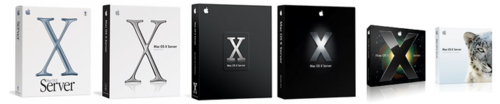
Key Facts
- Foundation: Based on the open-source Darwin core.
- Hardware: Primary OS for Xserve; optionally available for Mac Pro and Mac Mini.
- Architecture Shift: Transitioned from PowerPC to Intel with version 10.4.7.
- Database Change: Switched from MySQL to PostgreSQL starting with OS X Lion.
- End of Life: The Server app ceased support after macOS Monterey.
The Early Era: Rhapsody and the 10.0 Transition
Mac OS X Server 1.0 (Rhapsody)
Released in March 1999, version 1.0 arrived two years before the consumer version of Mac OS X. It was based on Rhapsody, a hybrid of NeXT Computer's OPENSTEP and Mac OS 8.5.1. To maintain compatibility, it featured the Blue Box, a runtime layer that allowed legacy Mac OS applications to run in separate windows.
Early features included Apple File Services, NetBoot, and WebObjects, though the system notably lacked support for FireWire devices. The lineage of this era concluded with version 1.2v3.
The Cheetah and Puma Updates (10.0–10.1)
The transition to the 10.x series began with 10.0 (Cheetah) in May 2001, introducing the Aqua user interface and a suite of open-source tools including Apache, PHP, MySQL, and Tomcat. This was quickly followed by 10.1 (Puma) in September 2001, which focused on stability, faster file transfers, and the introduction of RAID 0 and RAID 1 storage configurations.
Maturation and Enterprise Features (10.2–10.4)
Jaguar and Panther (10.2–10.3)
Versions 10.2 (Jaguar) and 10.3 (Panther) marked a shift toward modern directory services. Apple began deprecating the NeXT-based NetInfo architecture in favor of Open Directory, which utilized LDAP (Lightweight Directory Access Protocol). These versions introduced the Workgroup Manager for easier configuration and integrated Samba version 3 for better compatibility with Windows environments.
Tiger (10.4) and the Intel Transition
Released in 2005, Mac OS X Server 10.4 (Tiger) expanded capabilities with 64-bit application support, Xgrid, and security tools like SpamAssassin and ClamAV. A pivotal moment occurred on August 10, 2006, with the release of version 10.4.7, the first Universal Binary version capable of running on both PowerPC and Intel processors.
The Peak of Standalone Server OS (10.5–10.6)
Leopard Server (10.5)
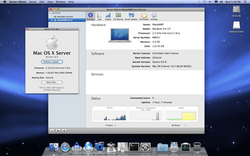
Leopard Server, released in 2007, was the final major version to support PowerPC hardware. It completely removed NetInfo and introduced FreeRADIUS for network authentication and Ruby on Rails, the web application framework used by platforms like GitHub.
Snow Leopard Server (10.6)
Snow Leopard Server (2009) transitioned to a full 64-bit operating system, allowing the kernel to address up to 16 TB of RAM on compatible systems. It introduced a suite of specialized servers:
- iCal Server 2: Enhanced CalDAV support and push notifications.
- Address Book Server: CardDAV-based contact synchronization for Macs and iPhones.
- Wiki Server 2: Added server-side Quick Look and iPhone compatibility.
- Mobile Access Server: Acted as a reverse proxy with SSL encryption for secure remote access to corporate networks.
The Transition to the Server App
Starting with OS X Lion in 2011, Apple moved away from selling a separate server operating system. Instead, server functionality was offered as an add-on via the Mac App Store. This shift significantly lowered the cost of entry for administrators.
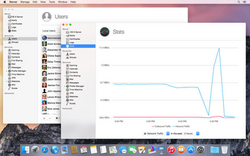
During this period, Apple replaced MySQL with PostgreSQL due to licensing changes following Oracle's acquisition of Sun Microsystems. The software also evolved to include iOS mobile device management. However, by version 5.7 (2018), Apple began stripping away open-source services like Mail, DNS, and DHCP, leaving only Profile Manager, Open Directory, and Xsan.
The product line officially reached its end as the Server app does not support versions of macOS newer than Monterey.
Summary of Mac OS X Server Evolution
| Version/Era | Key Milestone | Notable Feature |
|---|---|---|
| 1.0 (Rhapsody) | Initial Release | Blue Box for legacy apps |
| 10.0 - 10.1 | Aqua UI | Apache, PHP, MySQL integration |
| 10.2 - 10.3 | Directory Shift | LDAP-based Open Directory |
| 10.4 (Tiger) | Hardware Transition | Universal Binary (Intel/PowerPC) |
| 10.5 (Leopard) | Modern Web | Ruby on Rails & FreeRADIUS |
| 10.6 (Snow Leopard) | 64-bit Architecture | Mobile Access Server |
| Lion to Monterey | App Store Model | iOS Device Management |
Frequently Asked Questions
What was the purpose of the Blue Box in Mac OS X Server 1.0?
The Blue Box was a runtime layer that allowed users to run legacy Mac OS-based applications within a separate window on the Rhapsody-based system.
Why did Apple switch from MySQL to PostgreSQL in OS X Lion?
The switch occurred after Oracle Corporation acquired Sun Microsystems, leading to concerns over MySQL's licensing restrictions and the independence of its development model.
Which version of Mac OS X Server first supported Intel processors?
Version 10.4.7 was the first Universal Binary release, providing support for both Intel and PowerPC processors.
What happened to the standalone Server OS after Snow Leopard?
Starting with OS X Lion, Apple stopped selling a separate server operating system and instead sold server components as an add-on application through the Mac App Store.
Does the Server app work with the latest versions of macOS?
No, the Server app does not support versions of macOS newer than Monterey, marking the end of the product line.