Understanding NOAA: The Backbone of American Weather and Ocean Science
The National Oceanic and Atmospheric Administration (NOAA) serves as the United States' primary guardian of oceanic and atmospheric data. From predicting life-threatening hurricanes to monitoring the health of our oceans, NOAA provides the critical scientific foundation required to protect lives, property, and the national economy. Operating under the U.S. Department of Commerce, this agency integrates diverse scientific disciplines to understand the complex systems that govern our planet.

Key Facts
- Founded: October 3, 1970
- Headquarters: Silver Spring, Maryland
- Parent Agency: U.S. Department of Commerce
- Core Mission: Providing weather, hydrologic, and climate forecasts and warnings.
- Workforce: Approximately 12,000 civilian employees and 321 NOAA Commissioned Corps members.
A Deep History of Scientific Service
While NOAA was officially formed in 1970, its roots stretch back over two centuries. The agency is the successor to several foundational federal organizations, including the United States Coast and Geodetic Survey (established in 1807), the Weather Bureau (1870), and the Bureau of Commercial Fisheries (1871).
In 2007, the agency marked a significant milestone by celebrating 200 years of service as the successor to the U.S. Survey of the Coast. This long lineage of surveying, weather monitoring, and fisheries research has evolved into the modern, multi-faceted scientific powerhouse seen today.
Organizational Structure and Leadership
NOAA operates from a massive 1.2 million-square-foot campus in Silver Spring, Maryland. This consolidated headquarters houses over 40 sub-agencies and offices, ensuring that various scientific disciplines can collaborate effectively.
The NOAA Commissioned Corps
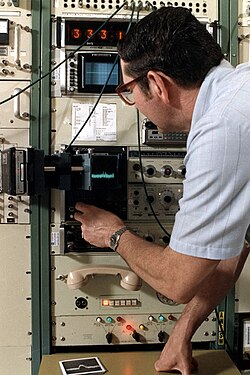
A unique aspect of the agency is the NOAA Commissioned Corps. This is a uniformed service of highly trained officers who support NOAA’s research and operational missions, providing a specialized workforce for maritime and atmospheric tasks.
Agency Leadership
As of late 2025, the agency is led by Neil Jacobs, who serves as the NOAA Administrator and Under Secretary of Commerce for Oceans and Atmosphere. His leadership follows a period of transition involving several acting administrators and changes in the federal administration.
Core Services and Scientific Divisions
NOAA’s work is distributed across several specialized child agencies, each focusing on a specific pillar of Earth science.
National Weather Service (NWS)
The NWS is perhaps the most visible arm of the agency. It is responsible for issuing daily weather and river forecasts, as well as critical advisories, watches, and warnings. To manage this massive undertaking, the NWS utilizes:
- 13 River Forecast Centers (RFCs)
- More than 120 local weather forecast offices (WFOs)
- The ability to issue over 45,000 severe weather warnings annually
National Environmental Satellite, Data, and Information Service (NESDIS)
NESDIS manages the sophisticated satellite networks that provide the data necessary for modern forecasting. This includes geosynchronous satellites (satellites that appear stationary relative to a point on Earth) and polar-orbiting satellites. Since 1983, NOAA has also held operational responsibility for the Landsat satellite system.
Oceanic and Atmospheric Research
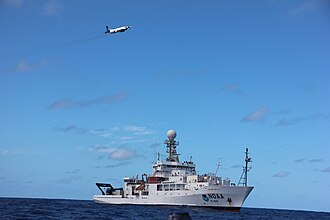
The Office of Oceanic and Atmospheric Research drives the agency's scientific discovery. Notable contributions include the Arctic Report Card, an annual update on the environmental impacts in the Arctic, and pioneering work in tropical atmosphere-ocean studies through the TAO array.
Agency Overview Summary
| Category | Details |
|---|---|
| Established | October 3, 1970 |
| Headquarters | Silver Spring, Maryland |
| Estimated Budget (2022) | $6.9 billion |
| Primary Parent Agency | U.S. Department of Commerce |
| Key Sub-Agencies | NWS, National Ocean Service, National Marine Fisheries Service |
Frequently Asked Questions
What is the purpose of the NOAA Commissioned Corps?
The NOAA Commissioned Corps is a uniformed service consisting of specialized officers who support the agency's scientific, oceanic, and atmospheric missions through technical and operational expertise.
How does NOAA protect the public from severe weather?
Through the National Weather Service, NOAA issues daily weather and river forecasts, as well as critical watches and warnings. They manage a network of local offices and river forecast centers to provide timely alerts for severe weather events.
What role do satellites play in NOAA's mission?
Satellites managed by NESDIS provide essential data for weather prediction and environmental monitoring. This includes both polar-orbiting and geosynchronous satellites that track atmospheric and oceanic changes from space.
Is NOAA an independent agency?
Currently, NOAA is part of the U.S. Department of Commerce. While there have been legislative proposals to make it an independent agency to ensure consistent funding and authorization, it remains under the Department of Commerce.
What is the significance of the Arctic Report Card?
The Arctic Report Card is an annual publication compiled by NOAA scientists that tracks the ongoing environmental changes and impacts on communities within the Arctic region.