Nine-Primaried Oscines: Classification and Evolution of a Diverse Bird Group
In the vast world of avian taxonomy, the nine-primaried oscines represent a significant group of bird families within the suborder Passeri (oscines) of the order Passeriformes. These birds are defined by a specific anatomical trait: they possess only nine easily visible primary feathers on each wing. While most species actually have a tenth primary feather, it is greatly reduced and largely concealed from view.
The composition of this group has evolved as scientific understanding has progressed. Today, it is primarily recognized as consisting of seven major families—Fringillidae, Emberizidae, Cardinalidae, Thraupidae, Passerellidae, Parulidae, and Icteridae—alongside several smaller families.
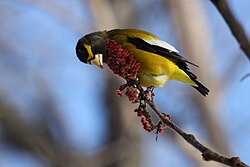
Key Facts
- Defining Feature: Only nine primary feathers are clearly visible on each wing.
- Scope: The superfamily Emberizoidea (New World nine-primaried oscines) comprises approximately 870 species, representing about 8% of all bird species.
- Distribution: Most diverse in northern South America, but widespread across the New World, including the Antilles, Galápagos, and Tristan da Cunha.
- Old World Presence: The Emberizidae (buntings) and Calcariidae (longspurs and snow buntings) have successfully colonized the Old World.
The History of Classification: From Wallace to Modernity
Wallace's Tanagroid Passeres
In 1874, the renowned British naturalist Alfred Russel Wallace attempted to classify passerines based on the number of primary feathers. He established a group called the Tanagroid Passeres, which included ten families. These included groups such as the Motacillidae (wagtails and pipits), Hirundinidae (swallows and martins), and Ampelidae (waxwings).
Modern Taxonomic Shifts
Modern phylogenetic analysis has refined Wallace's original list. Only six of his original ten families are now included in the nine-primaried oscines: Mniotiltidae, Coerebidae, Drepanidae, Tanagridae, Fringillidae, and Icteridae. The other four families were found to be less closely related than previously thought.
Current classification distinguishes between the broader group and the New World nine-primaried oscines. When the family Fringillidae is omitted, the remaining families are categorized as the superfamily Emberizoidea.
Diversity and Distribution of the Emberizoidea
The superfamily Emberizoidea is divided into 16 families, showing immense diversity in species count and geography. While their stronghold is northern South America, they have expanded into various isolated environments, such as Darwin's finches in the Galápagos.
| Family | Common Examples | Approx. Species Count |
|---|---|---|
| Thraupidae | Tanagers and allies | 383 |
| Fringillidae | Finches and euphonias | 228 |
| Passerellidae | New World sparrows, bush tanagers | 136 |
| Parulidae | New World warblers | 119 |
| Icteridae | Grackles, New World blackbirds and orioles | 109 |
| Cardinalidae | Cardinals | 53 |
| Emberizidae | Buntings | 44 |
Other specialized families include the Calcariidae (6 species), the Spindalidae (4 species), and the Phaenicophilidae (4 species). Some families, such as the Teretistridae (Cuban warblers), are tentatively placed within this group based on their close relationship to the Zeledoniidae (wrenthrush).
Frequently Asked Questions
Why are they called "nine-primaried" if they have ten feathers?
They are named for the nine primary feathers that are easily visible. In reality, most species possess a tenth primary feather, but it is so reduced in size that it remains largely concealed.
What is the difference between the general group and the New World nine-primaried oscines?
The general group includes the family Fringillidae. When Fringillidae is excluded, the remaining families are referred to as the New World nine-primaried oscines, which form the superfamily Emberizoidea.
Where are these birds most commonly found?
They are most diverse in northern South America, though they are widespread throughout the New World, including the Greater and Lesser Antilles and remote islands like the Galápagos.
Which families of this group are found in the Old World?
The Emberizidae (buntings) and the Calcariidae (longspurs and snow buntings) are the two families that have colonized the Old World.