Nicasio Oroño: A Legacy of Institutional Leadership in Santa Fe
Nicasio Oroño was a pivotal figure in the institutional development of Argentina, particularly within the province of Santa Fe and the city of Rosario. His career spanned several decades of nation-building, during which he transitioned from local administration to high-ranking national legislative and executive roles.
Foundations of Rosario's Organization
Oroño's influence on the city of Rosario began in 1854 when he submitted a proposal for the city's institutional organization to Justo José de Urquiza, the president of the Argentine Confederation (the precursor to the modern Argentine Republic). Upon the approval of this proposal, Oroño was appointed Customs Administrator on August 17, 1854, a role of significant economic importance at the time.
Following the law that granted Rosario official city status, Oroño was appointed political chief of the city by the governor of Santa Fe, José María Cullen, who was also his brother-in-law. During his tenure as political chief, Oroño established a city vigilance service and oversaw the opening of the Provincial Hospital of Rosario.
National Legislative Contributions
Beyond local governance, Oroño played a critical role in shaping the legal framework of the nation. In 1853, alongside Marcelino Freyre, he represented Santa Fe in the Assembly responsible for drafting the Argentine Constitution.
His legislative experience continued in 1862 when he was elected to the Chamber of Deputies. However, his tenure there was short-lived, as he resigned in 1865 to assume a higher executive office.
Governor of Santa Fe and National Senate
In 1865, Nicasio Oroño was chosen to replace Patricio Cullen as the Governor of Santa Fe Province. During his term, which lasted until 1868, he focused heavily on the institutionalization of the province, creating stable structures for local governance.
After completing his gubernatorial mandate, Oroño was elected as a national senator. In this capacity, he became a proponent for the expansion and population growth of the country, viewing territorial development as essential for national progress.
Later Career and Final Years
After a period of political inactivity, Oroño returned to public service in 1891 as the director of the Office of Lands and Colonies of the Nation. This tenure ended prematurely due to political disagreements with President Luis Sáenz Peña.
In his final years, Oroño remained active in constitutional matters. In 1899, he served as a constitutional deputy for the convention that sanctioned the provincial constitution of Santa Fe in 1900. He was elected as a national deputy once more in 1902, serving until his death two years later.
Key Facts
- Constitutional Role: Represented Santa Fe in the 1853 Assembly that wrote the Argentine Constitution.
- Gubernatorial Term: Served as Governor of Santa Fe from 1865 to 1868.
- City Impact: Proposed the institutional organization of Rosario and established its first vigilance service.
- Public Health: Oversaw the opening of the Provincial Hospital of Rosario.
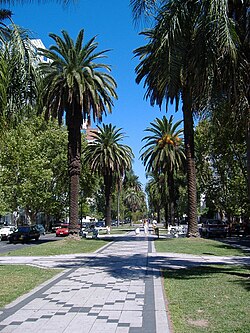
- Commemoration: A major street in Rosario was renamed Oroño Boulevard in 1904 in his honor.
| Period/Year | Position/Role | Key Achievement/Context |
|---|---|---|
| 1853 | Constitutional Assembly Member | Drafted the Argentine Constitution |
| 1854 | Customs Administrator | Managed early trade administration in Rosario |
| 1862–1865 | Member of the Chamber of Deputies | National legislative service |
| 1865–1868 | Governor of Santa Fe | Focused on provincial institutionalization |
| Post-1868 | National Senator | Promoted national expansion and population |
| 1891 | Director, Office of Lands and Colonies | Managed national land and colonization |
| 1902–1904 | National Deputy | Final elected term before death |
Frequently Asked Questions
What was Nicasio Oroño's contribution to the city of Rosario?
Oroño proposed the institutional organization of the city, served as its Customs Administrator and political chief, established a vigilance service, and oversaw the opening of the Provincial Hospital of Rosario.
When did Nicasio Oroño serve as Governor of Santa Fe?
He served as Governor from 1865 to 1868, succeeding Patricio Cullen and preceding Mariano Cabal.
Did Nicasio Oroño help write the Argentine Constitution?
Yes, in 1853, he represented Santa Fe in the Assembly that wrote the Argentine Constitution, working alongside Marcelino Freyre.
Why was Oroño removed from the Office of Lands and Colonies?
He was removed from the position in 1891 due to political differences with President Luis Sáenz Peña.
How is Nicasio Oroño remembered in Rosario today?
The Municipality of Rosario honored his legacy in 1904 by renaming a major street as Oroño Boulevard.