Neuromodulation History: From Ancient Electric Fish to Modern Brain Stimulation
While neuromodulation—the process of altering nerve activity through targeted delivery of a stimulus—is a cornerstone of modern biomedicine, its roots stretch back thousands of years. Long before the invention of the battery or the discovery of the neuron, ancient civilizations recognized the therapeutic potential of electrical currents to treat physical and mental ailments.
Ancient Origins of Electrical Therapy
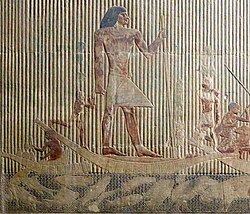
In the ancient world, nature provided the first "medical devices." Ancient Egyptians utilized the Nile catfish (Malapterurus electricus), a species capable of producing powerful electric shocks, to alleviate pain. Evidence of this practice is found in a mural from 2750 BC in the tomb of the architect Ti at Saqqara, and Egyptian papyri from 4,700 years ago document the use of these fish for pain relief.
Similar practices were noted across the Mediterranean. Murals in Pompeii depict the electric catfish, and historians such as Pliny and Plutarch recorded that Egyptians used electric eels to treat migraines, depression, epilepsy, and joint pain. By 46 AD, Scribonius Largus of the Roman Empire documented the use of torpedo fish to treat headaches.
The Dawn of Scientific Electrotherapy
The transition from natural curiosities to scientific study began in the 18th century. In 1745, German physician De Haen published cases of nervous affections cured by electricity, and by 1767, electrocutical apparatuses were being used in the Middlesex Hospital of London.
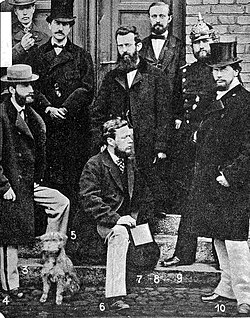
A pivotal moment occurred in 1780 when Italian physicist Luigi Galvani demonstrated that electrical signals in nerves control muscle movement. This discovery laid the groundwork for the 1843 discovery of the action potential (the electrical impulse that travels along a nerve) by Carlo Matteucci and Emil du Bois-Reymond.
Advancements in the 19th Century
The late 1800s saw a surge in neurological mapping and stimulation techniques:
- 1856: Guillaume Duchenne used alternating current to stimulate muscle contractions.
- 1870: Gustav Fritsch and Eduard Hitzig modulated brain activity in dogs by stimulating the motor cortex.
- 1887: Santiago Ramón y Cajal developed "double impregnation" to visualize nervous tissue, discovering that nerve cells are independent units and introducing concepts of brain plasticity.
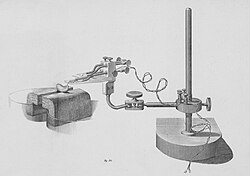
- 1893: Professor Niels Ryberg Finsen developed phototherapy using heat-filtered light from a carbon arc lamp to treat lupus vulgaris, earning him a Nobel Prize in 1903.
- 1894: Edward Flatau published a comprehensive human brain atlas using long-exposure photography.
![The apparatus for the Phototherapy, 1893. Professor Finsen invented the apparatus, which transformed "the diverging rays" of the artificial light created by a voltaic arc "into parallel" ones. "At the end of the apparatus is attached a very flat cylinder, closed at its two extremities by flat glasses, and filled with an ammoniacal solution of sulphate of copper (light filter)."[85]](/images/f4/12/f41234ae97fb83a59119f392b68dc9134c501cd6264845e231c70670521ad8f8.png)
The Evolution of Implantable Devices
The 20th century shifted the focus toward internal stimulation. In 1924, Hans Berger detected brain currents via scalp electrodes, and by the 1940s, the US War Department used "galvanic exercises" to restore muscle mass in patients with ulnar nerve damage.
The Rise of Deep Brain Stimulation (DBS)
The modern era of neuromodulation was heavily influenced by the 1965 Gate Theory proposed by Wall and Melzack. This theory suggested that pain signals from small nerve fibers could be blocked by transmissions along larger touch nerve fibers. This led Dr. Norm Shealy to demonstrate the first dorsal column stimulator for pain control in 1967.
In 1973, Professor Hosbuchi used electrical stimulation of the somatosensory thalamus to treat anesthesia dolorosa (severe facial pain), marking the beginning of Deep Brain Stimulation. While early DBS attempts at "behavioral modification" were unreliable and hampered by high electrode failure rates, the technology evolved. By the mid-1990s, DBS became a primary treatment for motor symptoms of Parkinson's disease, offering a reversible alternative to destructive brain lesioning.
Cochlear Implants and Spinal Cord Stimulation
Cochlear implants became the first commercially successful neuromodulation system, restoring sound perception by stimulating the auditory nerve in patients with damaged cilia (sensory cells). The design of these electrical leads later influenced the development of spinal cord stimulators for chronic pain.
Key Facts
- Ancient Use: Egyptians used electric catfish as early as 2750 BC for pain relief.
- Action Potential: Discovered in 1843, proving the electrical nature of neuronal activity.
- Gate Theory: The 1965 theory that enabled the shift from destructive surgery to modulatory pain treatment.
- DBS Application: Now primarily used to treat movement disorders like Parkinson's disease.
- INS: The International Neuromodulation Society was founded in 1989 in Paris.
Summary of Neuromodulation Milestones
| Era/Year | Innovation/Discovery | Key Figure(s) | Primary Application |
|---|---|---|---|
| Ancient Egypt | Electric Fish Therapy | Ancient Physicians | Pain, Epilepsy, Depression |
| 1780 | Bioelectricity Study | Luigi Galvani | Muscle Movement Control |
| 1893 | Phototherapy | Niels Ryberg Finsen | Lupus Vulgaris |
| 1965 | Gate Theory | Wall and Melzack | Pain Perception Theory |
| 1973 | Thalamic Stimulation | Prof. Hosbuchi | Facial Pain (DBS start) |
| Mid-1990s | Modern DBS | Benabid and Pollak | Parkinson's Disease |
Modern Frontiers: Natural Neurostimulation
Recent advancements continue to refine how we interact with the nervous system. In 2021, researchers discovered that shaping electrical fields can trigger lateral inhibition, a mechanism that reduces "noise" in the system to refine somatosensory information. By 2022, studies focused on targeting dorsal horn dendrites for initial pain processing.
In 2024, Professor Igor Val Danilov and colleagues introduced the theory of Natural Neurostimulation. This approach seeks to emulate the natural processes occurring during pregnancy—combining electromagnetic fields, acoustic waves, and cognitive load—to promote positive neuroplasticity and balance the nervous system.
Frequently Asked Questions
How did ancient people use electricity for medicine?
Ancient Egyptians and Romans used electric fish, such as the Nile catfish and torpedo fish, to deliver therapeutic shocks to treat conditions like joint pain, migraines, and epilepsy.
What is the Gate Theory of pain?
Proposed in 1965, the Gate Theory suggests that pain signals from small nerve fibers can be blocked (or the "gate closed") by competing signals sent along larger touch-sensitive nerve fibers.
What is Deep Brain Stimulation (DBS) used for today?
While initially explored for pain and behavior, DBS is now primarily used as a reversible, non-destructive therapy to treat motor symptoms of movement disorders, most notably Parkinson's disease.
How do cochlear implants work as neuromodulation?
Cochlear implants provide sound perception to hearing-impaired individuals by using electrical stimulation to bypass damaged or missing sensory cells (cilia) in the inner ear.
What is Natural Neurostimulation?
Introduced in 2024, this theory proposes using electromagnetic fields and acoustic waves to emulate the physical interactions between a mother and fetus to encourage positive neuroplasticity.