Neotropical Realm: Biodiversity and Biogeography of the Americas
The Neotropical realm is one of the eight primary biogeographic realms that divide Earth's land surface. Spanning a vast array of latitudes, it encompasses the tropical terrestrial ecoregions of the Americas and the entirety of the South American temperate zone. From the humid lowlands of Mexico to the rugged peaks of the Andes and the temperate forests of the south, this realm is a cornerstone of global biodiversity.
Geographically, the realm includes South America, Central America, the Caribbean Islands, and portions of southern North America. In Mexico, this includes the Yucatán Peninsula, southern lowlands, and most east and west coastlines, including the southern tip of the Baja California Peninsula. In the United States, the Neotropical designation extends to South Florida and coastal Central Florida.
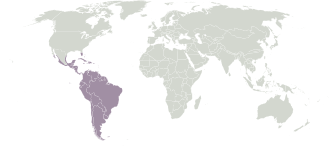
Key Facts
- Global Biodiversity Hub: Contains more tropical rainforest than any other biogeographic realm.
- Avian Diversity: Boasts 31 endemic bird families, more than double that of any other realm.
- Aquatic Richness: Home to 63 endemic fish families and subfamilies, with over 5,700 species.
- Geologic History: Originally part of the supercontinent Gondwana before separating approximately 110 million years ago.
- Biotic Exchange: The formation of the Isthmus of Panama 2–3 million years ago triggered the Great American Interchange.
Biogeographic Boundaries and History
The Neotropical realm is defined by distinct similarities in flora and fauna, which differ significantly from the Nearctic realm (most of North America) due to millions of years of geographic isolation. This separation ended with the creation of the Isthmus of Panama roughly two to three million years ago.
This land bridge precipitated the Great American Interchange, a pivotal event where species migrated between continents. Ancestors of the armadillo and Virginia opossum moved north, while ancestors of camelids, such as the llama, moved south. Over time, many South American species faced extinction due to competition with these northern arrivals.
Major Ecological Regions
The World Wide Fund for Nature (WWF) organizes the realm into bioregions—clusters of ecoregions with strong taxonomic affinities. The realm is characterized by its immense variety of biomes, including tropical rainforests, savannas, and temperate forests.
![The outlined ecoregions of the Neotropical realm, each of a colored biome. Note that this realm has 11 of 14 biomes, or major habitat types, as defined by Olson & Dinerstein, et al. (2001).[1] The biomes not present are temperate coniferous forests, taiga and boreal forest, and tundra. Rock and Ice, or Abiotic Land Zones](/images/2b/91/2b9123140f5c4f6c106bda08a3a43b88f0d4317af118c00031f610d2662153b9.webp)
Amazonia and the Orinoco
The Amazonia bioregion is dominated by tropical moist broadleaf forests, most notably the Amazon rainforest, which stretches from the Andes to the Atlantic. It also contains tropical savannas and dry forests. Similarly, the Orinoco region consists of humid forested broadleaf forests and wetlands, primarily covering the Orinoco River drainage basin in Venezuela and Colombia, as well as Trinidad and Tobago.
The Andes and Southern South America
The Central Andes span southern Ecuador, Chile, Peru, western Bolivia, and parts of Argentina. To the north, the Northern Andes in Ecuador and Colombia feature complex oceanic terranes. In the far south, the temperate rain forests—such as the Valdivian and Magellanic subpolar forests—serve as a refuge for ancient Antarctic flora, including the southern beech (Nothofagus) and the monkey-puzzle tree (Araucaria araucana).
Eastern South America and the Caribbean
Eastern South America is a mosaic of the Caatinga xeric shrublands, the Cerrado grasslands of the Brazilian Plateau, and the Pantanal and Chaco grasslands. The Atlantic forests of eastern Brazil remain distinct from Amazonia, separated by the Caatinga and Cerrado. The realm also encompasses the diverse island ecosystems of the Caribbean.
Endemic Flora and Fauna
The Neotropics are renowned for endemism—species found nowhere else on Earth. This is particularly evident in the bird and fish populations.
Unique Animal Groups
- Birds: Includes hummingbirds, wrens, toucans, and rheas.
- Mammals: Unique groups include the Order Xenarthra (sloths, anteaters, armadillos), New World monkeys, and Caviomorpha rodents (capybaras, chinchillas).
- Fish: Notable endemics include the red-bellied piranha, electric fishes (Gymnotiformes), and armored catfishes.
- Other: Poison dart frogs, caimans, and a vast array of specialized butterflies (such as Morpho and Heliconiini).
Botanical Significance
As of 1984, the Neotropics were recorded to have 92,128 species of flowering plants. Many globally essential crops originated here, including the potato, tomato, maize, cacao, cassava, and quinoa.
| Category | Key Examples / Details |
|---|---|
| Primary Biomes | Tropical rainforest, Savanna, Temperate rain forest, Xeric shrublands |
| Endemic Mammals | Sloths, Armadillos, New World Monkeys, Capybaras |
| Economic Plants | Maize, Potato, Cacao, Tomato, Cotton |
| Key Event | Great American Interchange (2-3 million years ago) |
| Major Bioregions | Amazonia, Orinoco, Central Andes, Eastern South America |
Human and Ecological Conservation
The rainforests of the Neotropical realm are not only biodiversity hotspots but also homes to numerous indigenous peoples. In South America alone, between 350 and 400 indigenous languages persist, though this is a significant decline from the estimated 1,500 present at the time of European contact. The expansion of urbanization, roads, and forest industries continues to threaten both the ecological integrity of the realm and the traditional cultures of its inhabitants.
Frequently Asked Questions
What is the Neotropical realm?
It is one of Earth's eight biogeographic realms, encompassing South America, Central America, the Caribbean, and parts of southern North America (including South Florida and southern Mexico).
What was the Great American Interchange?
It was a massive biotic exchange that occurred 2 to 3 million years ago when the Isthmus of Panama formed, allowing animals to migrate between North and South America.
Which biomes are missing from the Neotropical realm?
According to the Olson & Dinerstein classification, the realm lacks temperate coniferous forests, taiga/boreal forests, and tundra.
Why is the Neotropical realm so biodiverse?
Its diversity is attributed to its vast tropical rainforests, its long period of isolation after breaking away from Gondwana, and the subsequent influx of species during the Great American Interchange.
What are some economically important plants from this region?
Many global staples originated in the Neotropics, including maize, potatoes, tomatoes, cacao (chocolate), and cassava.